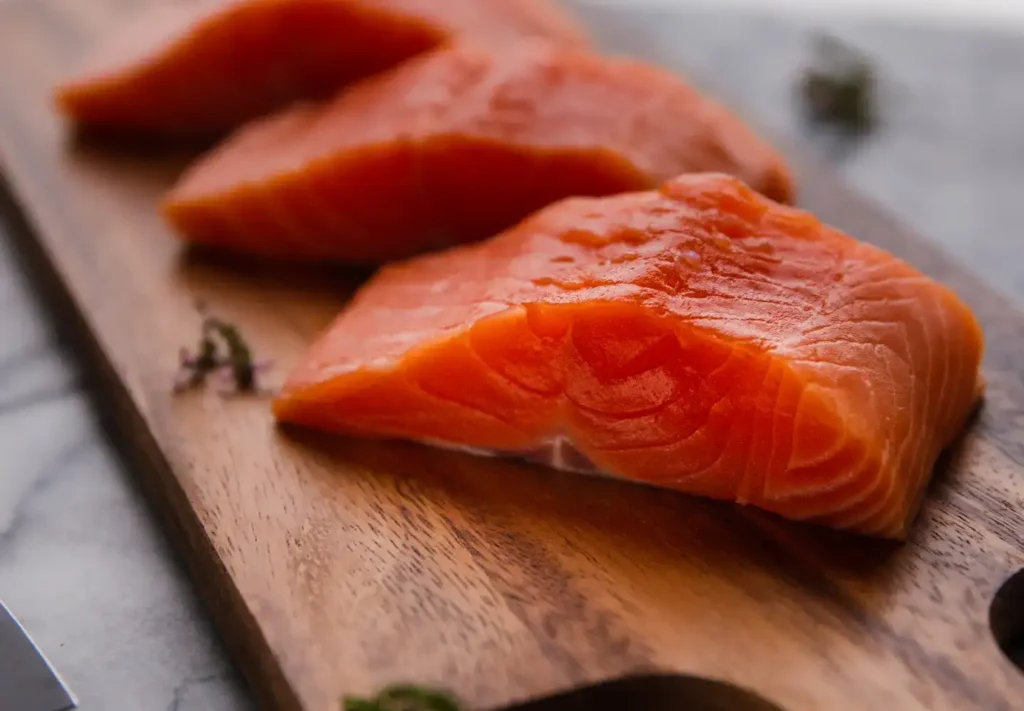
When it comes to dry brine vs wet brine fish, both methods use salt to improve flavour and texture. The difference is not just in how they are applied. It comes down to how salt interacts with the proteins in fish and how that affects moisture during cooking.
Choosing the right method can change how your fish flakes, how juicy it feels, and how forgiving it is in the pan. Whether you are working with salmon, haddock, or another species, understanding these two approaches will help you cook fish more consistently and with better results.
What is a dry brine?
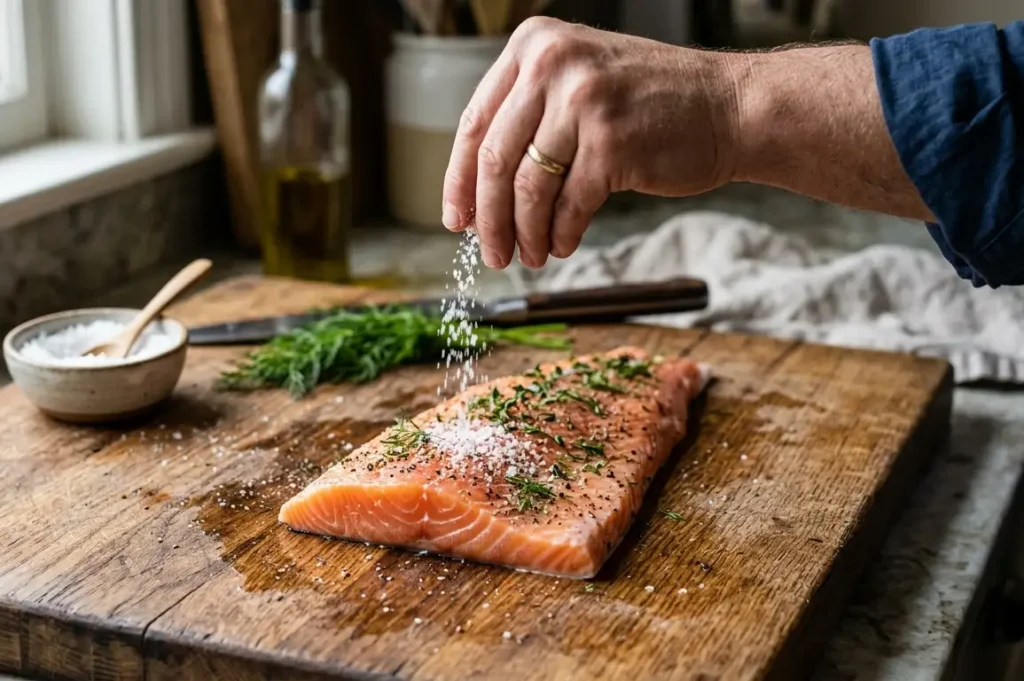
A dry brine involves applying salt directly to the surface of the fish and letting it rest before cooking. At first, the salt draws moisture out of the fish and creates a thin layer of liquid on the surface. That liquid dissolves the salt and is then partially reabsorbed back into the flesh.
As this happens, the salt begins to alter the structure of the fish’s proteins. These proteins loosen from their original shape and then reconnect in a tighter and more organized network. Because this process happens without excess surrounding water, the final result is a firmer texture and a more concentrated flavour.
Dry brining also leaves the surface of the fish relatively dry. This makes it ideal for high heat cooking methods like pan searing or roasting, where a good surface matters.
What is a wet brine?
A wet brine is a saltwater solution that the fish is submerged in for a short period of time. In this case, both salt and water move into the fish at the same time. The salt still affects the proteins in a similar way, but the presence of additional water changes the final result.
Because the fish absorbs extra moisture, the protein network that forms is more hydrated and less dense. This leads to a softer and more delicate texture. While some flavour dilution can occur, the added moisture makes the fish more resistant to drying out during cooking.
Wet brining is often used when the goal is to maximize juiciness or reduce the risk of overcooking.
Dry brine vs wet brine fish: Key differences
Both methods rely on salt, but the outcomes are noticeably different.
| Dry Brine | Wet Brine | |
|---|---|---|
| Method | Salt applied directly | Salt dissolved in water |
| Water content | Same or slightly reduced | Increased |
| Texture | Firmer | Softer |
| Flavour | More concentrated | Slightly diluted |
| Surface | Dry | Moist |
| Cooking performance | Better for searing | More forgiving |
| Margin for error | Lower | Higher |
Why dry brining makes fish firmer
The difference in dry brine vs wet brine fish comes down to how salt affects proteins. Fish muscle is made up largely of water and proteins that hold that water in place.
When salt is applied, it disrupts the forces that keep those proteins in their original shape. The proteins loosen and expose new areas that can interact with each other. As they reconnect, they form a new structure that is slightly tighter and more organized than before.
Because this happens in an environment with less free water, the proteins are closer together. The result is a denser structure that feels firmer to the touch and holds its shape better during cooking.
Why wet brining makes fish more forgiving
Wet brining follows a similar process at the protein level, but the surrounding environment is different. The fish is immersed in water, and that water becomes part of the final structure.
This means the fish starts with more moisture. As it cooks, it can lose some of that water and still remain juicy. The texture also changes more gradually, which makes it harder to accidentally overcook.
Even though wet brined fish can lose more total water during cooking, it still feels tender because it began with a higher water content.
Does fish gain or lose weight when brined?
Weight changes are a useful way to understand dry brine vs wet brine fish.
Wet brined fish typically gains weight because it absorbs water from the brine. This increase is often in the range of 3 to 8 percent depending on time and concentration.
Dry brined fish usually stays close to its original weight or loses a small amount. Some moisture is pulled out and not fully reabsorbed, and a portion can evaporate. The typical change is around 1 to 5 percent loss.
The key difference is that wet brining adds water, while dry brining improves how fish retains its existing moisture.
How long to brine fish
Fish is delicate, so timing is important.
Dry brine timing
- 15 to 30 minutes for most fillets
- Up to 1 hour for thicker cuts
Wet brine timing
- 15 to 30 minutes in a standard brine
- Up to 45 minutes at most
Leaving fish in either brine for too long will begin to cure it rather than simply season it.
How to cook fish after brining
After brining, preparation before cooking is just as important as the brine itself.
For dry brined fish, pat the surface dry and cook using high heat. Pan searing or roasting works well and helps develop a better exterior.
For wet brined fish, pat it very dry before cooking. Use moderate heat to preserve its softer texture and prevent excess moisture from interfering with the cooking process.
Do I Season Again After Brining?
Whether you should season fish again after brining depends on how much salt was used and which method you chose. Both dry brining and wet brining already introduce salt into the fish, so adding more salt before cooking can easily lead to over-seasoning. In most cases, it is best to skip additional salt and instead focus on other flavours like pepper, herbs, citrus, or butter. If you do want to add more salt, keep it very light and adjust after cooking if needed. This approach gives you better control and prevents the fish from becoming too salty.
Which method should you use?
Choosing between dry brine vs wet brine fish depends on your goal.
Use dry brine if you want:
- A firmer texture
- More concentrated flavour
- Better results when searing or roasting
Use wet brine if you want:
- Extra moisture
- A softer texture
- More flexibility while cooking
Cooking with high-quality fish matters
No matter which method you choose in the dry brine vs wet brine fish debate, the quality of the fish makes a huge difference. A clean, well-raised salmon will respond better to both methods and deliver a noticeably better final result.
If you want to put this into practice, start with Sustainable Blue Atlantic salmon, known for its clean flavour and consistent texture. It is ideal for both dry brining and wet brining, depending on the result you want.
Final thoughts on dry brine vs wet brine fish
Both methods work, but they serve different purposes.
Dry brining improves structure and flavour by changing how proteins hold onto water. Wet brining increases moisture and gives you more room for error during cooking.
If your goal is to highlight the quality of the fish, dry brining is often the better choice. If you want a more forgiving result, wet brining gives you that buffer.
Understanding the difference between dry brine vs wet brine fish allows you to choose the right approach every time and cook with more confidence.