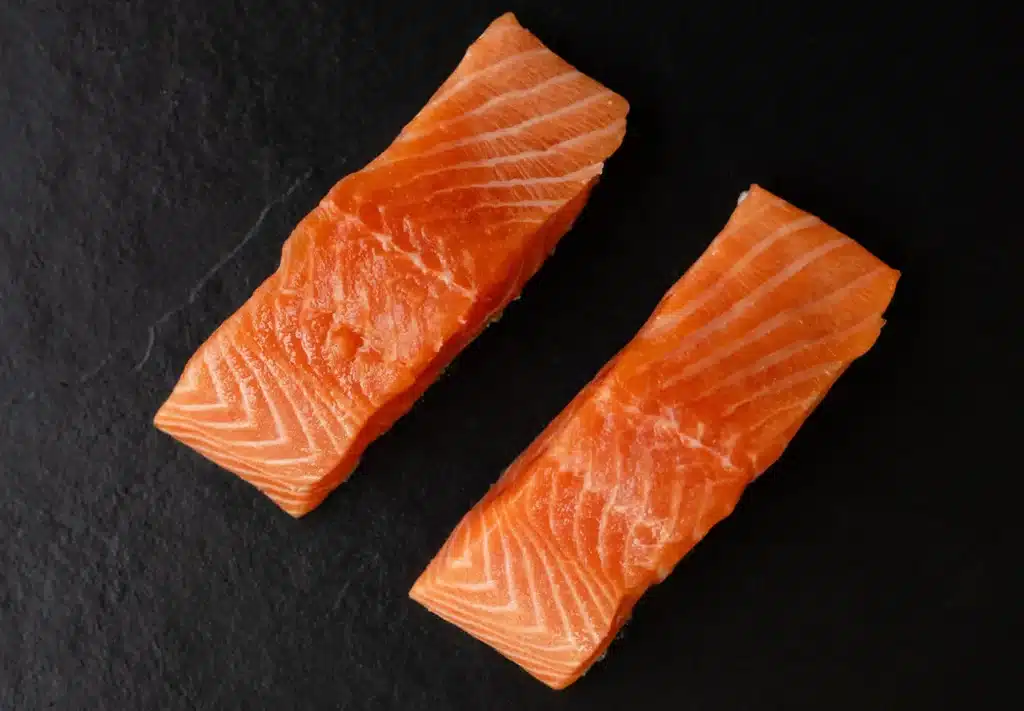
If you’ve ever wondered how to cook salmon so it turns out tender, flaky, and full of flavour, you’re in good company. Salmon is one of the most versatile fish in the kitchen. You can bake it, pan-sear it, or even use the air fryer for a quick weeknight meal.
Learning how to cook salmon properly helps you preserve its natural richness and nutrition and waste less of a premium ingredient.
At Afishionado, we believe every meal starts with sustainable choices. Our Sustainable Blue Atlantic salmon is responsibly farmed in Canada, frozen at peak freshness, and the closest-to-wild salmon on the farmed market.
Tip 1: How to cook salmon in the oven (even, reliable results)
If you want consistent results, baking is the most forgiving way to master cooking salmon in the oven.
- Preheat to 400°F (200°C).
- Lightly oil a parchment-lined baking sheet.
- Season with salt, pepper, and a drizzle of olive oil.
- Bake about 10 minutes per inch of thickness or until it flakes and reaches 145°F/63°C.
- Flake the thickest part with a fork; it should separate easily but stay moist.
Pro tip: Bake skin-on to lock in moisture.
Tip 2: How to cook salmon in a pan (for crispy skin lovers)
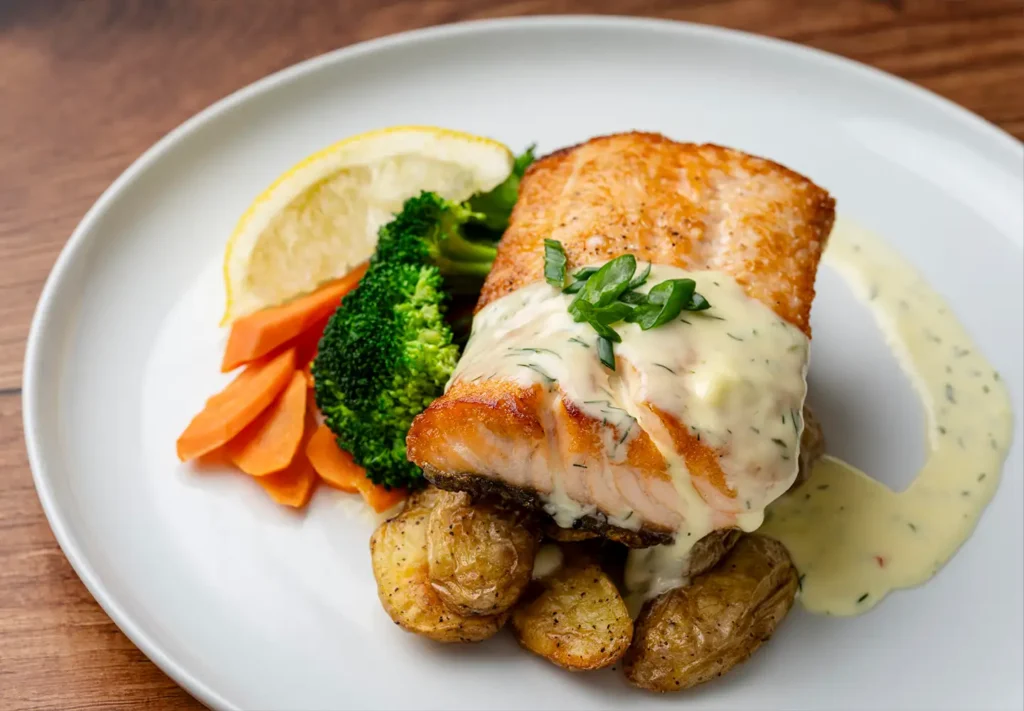
For restaurant-quality texture, you’ll want to learn how to cook salmon in a pan.
- Pat both sides very dry.
- Heat a non-stick or cast-iron pan over medium-high.
- Add a little oil; place salmon skin-side down.
- Press gently for the first 10–30 seconds to prevent curling.
- Cook ~4–5 minutes skin-side, then flip 30–120 seconds to finish.
- Aim for 145°F/63°C for food safety (chefs may go lower for texture at their own risk).
Tip 3: How to cook salmon in an air fryer (quick & delicious)
Short on time? Here’s how to cook salmon in an air fryer.
- Preheat to 390–400°F (200°C).
- Brush fillets with oil and seasoning.
- Cook ~8–10 minutes (thickness-dependent) until opaque/flaky or 145°F/63°C.
The air fryer delivers golden edges with a tender centre—great for busy weeknights. Bonus: flipping is optional.
Tip 4: How to cook frozen salmon without drying it out
Wondering how to cook frozen salmon? You can skip thawing.
- Rinse off any ice glaze; pat dry.
- Brush with olive oil and season.
- Bake at 425–450°F (220–230°C); cover for the first half, then uncover to finish.
- Cook to 145°F/63°C or until opaque and flaky (time varies by thickness).

Tip 5: How to season salmon like a chef
Mastering how to cook salmon includes knowing how to season salmon.
Best spices for salmon?
- Sea salt and cracked black pepper. Simple and let’s the fish do the talking.
- Lemon zest and garlic. Classic salmon complements,
- Smoked paprika or chilli flakes. Adds a little fiery kick.
- Fresh dill or parsley. Fresh herbs always help lighten up a salmon dish.
For a glaze, mix maple syrup + soy sauce for a sweet-savoury finish that nods to Atlantic Canada. Balance acidity, salt, and aromatics for standout flavour.
Tip 6: Know your cooking times and temperatures
Every method varies, so knowing how long to cook salmon is key. Keep in mind that these are all starting points. Every oven, every stove, and every air fryer have different hot spots, temps, etc. Start with one of the following, but make sure to check on your salmon every few minutes and adjust accordingly. A good rule is to always set a timer to go off a few minutes before you’re set to flip or pull the salmon out. That way you get a chance to assess before it’s to late. You can always cook for longer, but you can’t take make something less cooked than it already is.
| Method | Temperature | Cook time (guide) | Texture |
|---|---|---|---|
| Oven bake | 400°F (200°C) | ~10 min/inch to 145°F/63°C | Even, tender |
| Pan sear | Med-high | 4–5 min skin-side, 30–120 sec flesh-side | Crispy skin, moist centre |
| Air fryer | 390–400°F (200°C) | ~8–10 min to 145°F/63°C | Juicy, fast |
| From frozen | 425–450°F | Varies by thickness to 145°F/63°C | Moist, slightly firmer |
Adjust to thickness and preference; a thermometer keeps you on target.
Tip 7: Use a thermometer, not just a timer
This should probably be the number one tip. There is no ego with home cooking, or at least there doesn’t need to be. I use timers and thermometers for almost everything in the kitchen. A perfectly cooked piece of fish is better than an almost perfectly cooked fish where you went with your gut. Err on the side of delicious. Timers help, but a thermometer guarantees you’ve nailed how to cook salmon to your ideal doneness.
- Food-safety guidance: 145°F (63°C) for fish.
- Chef-style textures (optional): ~120–130°F (49–54°C) for medium-rare to medium (with safety trade-offs).
Remove salmon about 5°F shy of your target; carryover heat will finish it.
Tip 8: Skin on or off? here’s what to know
Keeping the skin on offers:
- Extra protection from overcooking
- Crisp texture when seared
- Omega-3s in the skin; salmon skin is also collagen-rich
Prefer no skin? Remove it after cooking for easier handling and less waste.
Tip 9: Marinades vs dry rubs and when to use each
A quick marinade adds moisture and tang; a dry rub builds bold surface flavour.
When to marinate:
- Before baking or grilling
- With citrus, soy, or maple bases
When to dry rub:
- For pan-seared or air-fried salmon
- With salt, herbs, and spices
Tip 10: Start with high-quality salmon, like Sustainable Blue
At Afishionado, we source our Atlantic salmon from Sustainable Blue in Nova Scotia, a land-based, closed-loop (RAS) farm designed to raise salmon with no discharge to the ocean, no antibiotics or growth hormones, and no risk of escapes or sea-lice transfer to wild stocks.
What that means for you: consistently clean flavour and a fresh, delicate texture—fish raised in filtered saltwater, with waste solids removed and treated on site (Sustainable Blue even notes they convert biosolids to electricity as part of their zero-wastewater approach).
Because it’s fully land-based, this system protects sensitive coastal environments and wild populations while delivering premium, traceable salmon you can feel good about cooking any way you like—baked, pan-seared, air-fried, or from frozen.
You may even see Sustainable Blue listed as Ocean Wise–recommended at Canadian retailers, reflecting third-party sustainability guidance used in the market.
Final thoughts: the best salmon is cooked with confidence and care
Cooking salmon doesn’t have to be complicated. With these ten tips, you can bake, sear, or air-fry your way to perfect results while supporting sustainable seafood. Experiment with flavours, try new methods, and always choose responsibly sourced fish. You’ll taste the difference in every bite.