As of 13 August 2026.
Researchers left cameras running on the floor of the Tonga Trench, filming for more than fifty days, between 800 and 10,800 metres down.
They got twenty seconds.
Twenty seconds of an animal nobody had ever watched alive at home, and one science has known since the 1890s. It is on posters. Children can draw it. And until 2026, every living one anyone had seen was already dying, hauled up into air it could not survive.
Meet the goblin shark
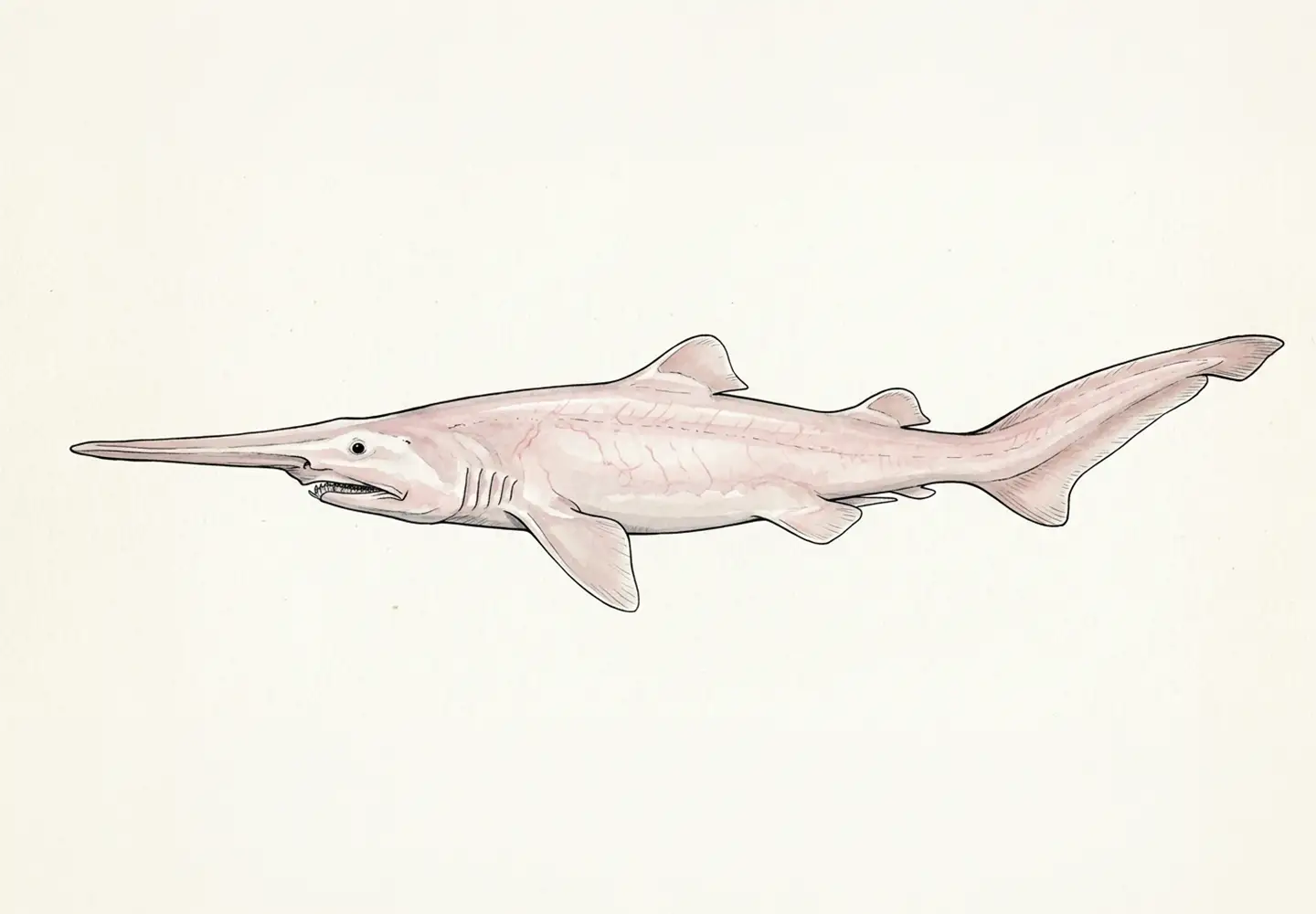
Mitsukurina owstoni is the only surviving member of a shark family roughly 125 million years old. Researchers call it a living fossil, which undersells it. It is not a leftover. It is a design that works.
It has a long protruding rostrum, essentially a nose, and jaws that slingshot forward to catch prey. It has been doing this since before the dinosaurs finished.
The paper, published in the Journal of Fish Biology on 19 May 2026, reports two sightings. A baited camera on a bottom lander filmed one in 2024 on the Tonga Trench slope, at 1,997 metres. No goblin shark had ever turned up that deep. It beat the previous record by roughly 700 metres, and it stretched the known depth range for its whole group of sharks by 108 metres.
The second is the better story. In 2019, during a livestreamed dive, a remotely operated vehicle called Hercules filmed a male goblin shark at 1,237 metres, near an unnamed seamount northwest of Jarvis Island. It ran over three metres long and was probably more than fifty years old.
Nobody noticed. And the footage was not buried. It went into a public archive, open to anyone, and other researchers had already annotated it. Then in 2025 Aaron Judah, a doctoral student at the University of Hawai’i at Mānoa, combed back through and recognised what the camera had caught.
A shark that old, on video, published, unremarked, for six years.
What lives in the ocean, counted in a single year
Here is the part that reframes it.
Between 1 April 2025 and 31 March 2026, the Nippon Foundation-Nekton Ocean Census logged 1,121 new marine species. That came from 13 expeditions and nine species discovery workshops, reaching depths of 6,575 metres. Ocean Census calls it a 54 percent jump in annual identifications.
Separately, a team aboard Schmidt Ocean Institute’s R/V Falkor (too) found over thirty new species in a fortnight off Brazil. They were working the midwater, the layer between the sunlit surface and the seafloor, the largest habitable space on the planet and among the least visited.
So we are in the fastest stretch of marine discovery on record. And the showpiece of that stretch is not a new species at all. It is a famous one we had somehow never watched.
Which is the useful way to hold it. What lives in the ocean is not a settled list picking up the odd footnote. It is an open question, and the answers are arriving faster than ever.
Why the numbers are climbing
The ocean did not change. The looking did.
Two things happened at once. Robots got better and cheaper, so cameras go deeper and stay longer. And the money got serious, including philanthropic funding, turning a slow scholarly process into a coordinated sprint. Ocean Census drew on more than 1,400 scientists across 660 institutions in 85 countries.
The bottleneck was never finding things. It was describing them. Ocean Census notes the historical gap between finding a species and formally describing it: about 13.5 years. That is the queue those nine workshops exist to clear. Get taxonomists in a room with the samples and do the naming in real time.
Three of them
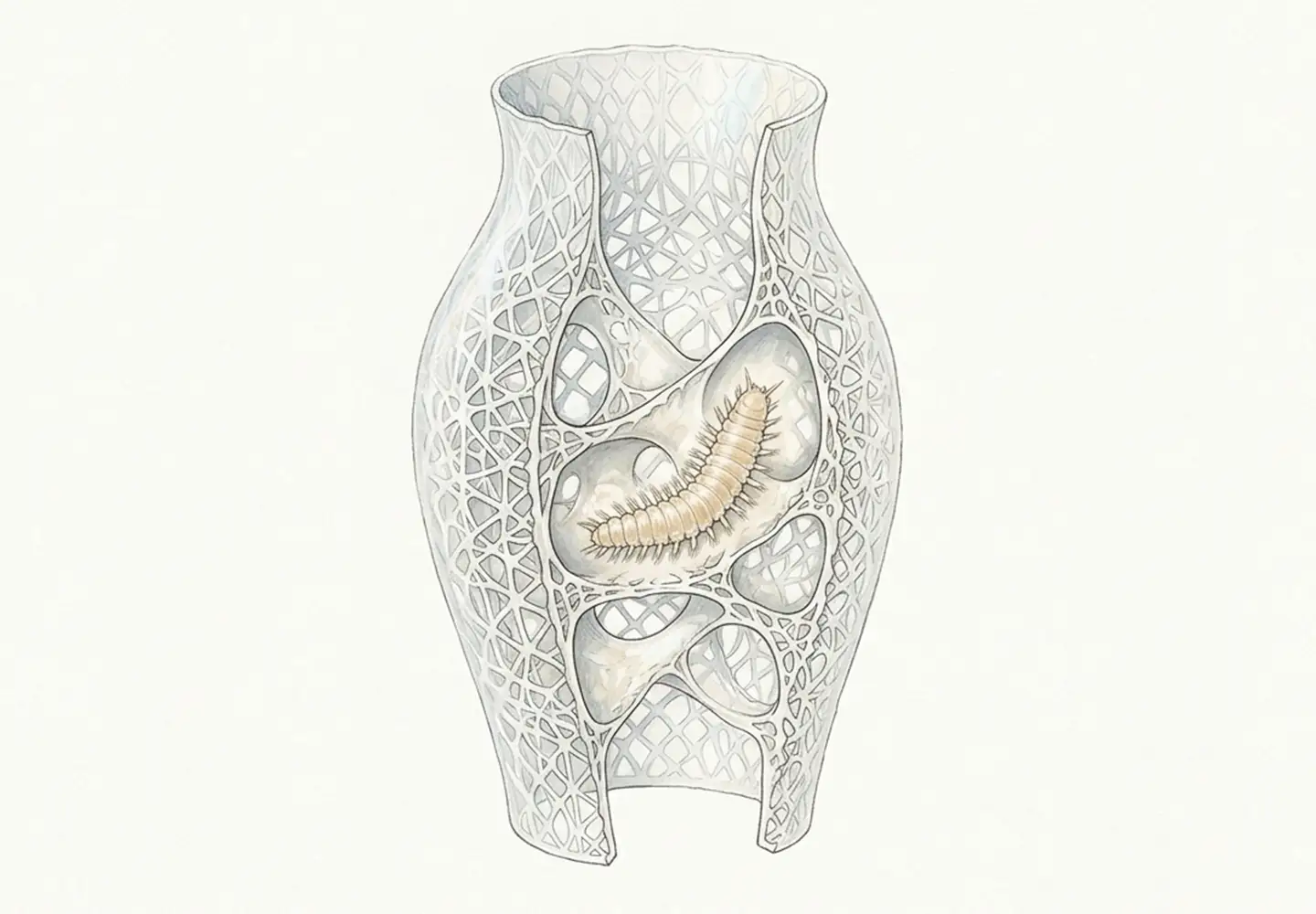
A worm that lives in a glass castle. Dalhousiella yabukii, found at 791 metres on the Shichiyo Seamount Chain in Japan. It lives inside the chambers of a glass sponge, an animal that grows its skeleton out of crystalline silica. So: a worm, on a volcanic seamount, inside a structure of actual glass. Dr Nato Jimi described it, naming it for the expedition’s principal investigator, Dr Akinori Yabuki.
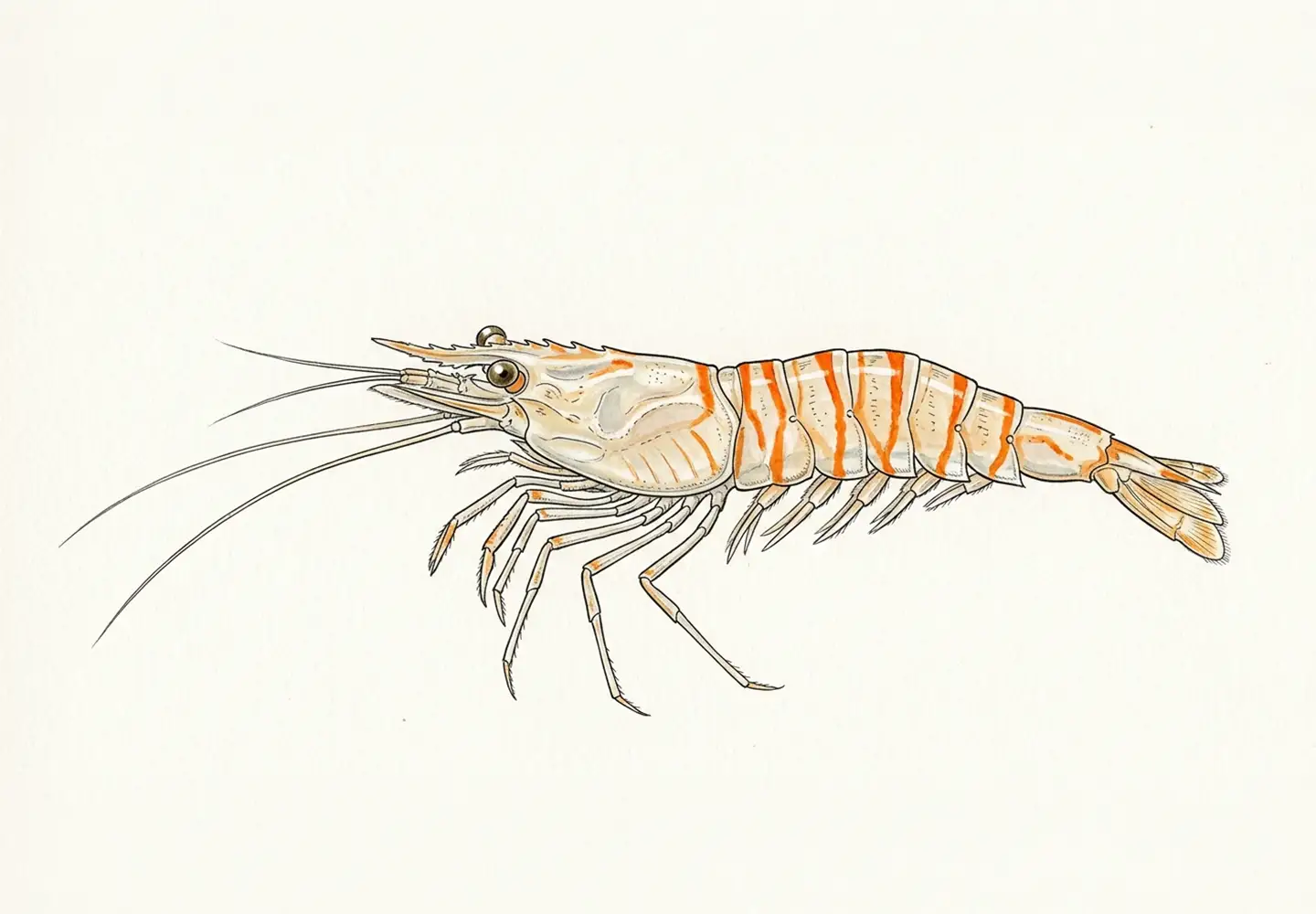
A shrimp from a sea cave off Marseille. Vividly banded in orange, identified by the taxonomist Dr Hossein Ashrafi. Not a trench, not a seamount. A cave off a beach in the Mediterranean, in water people swim in.
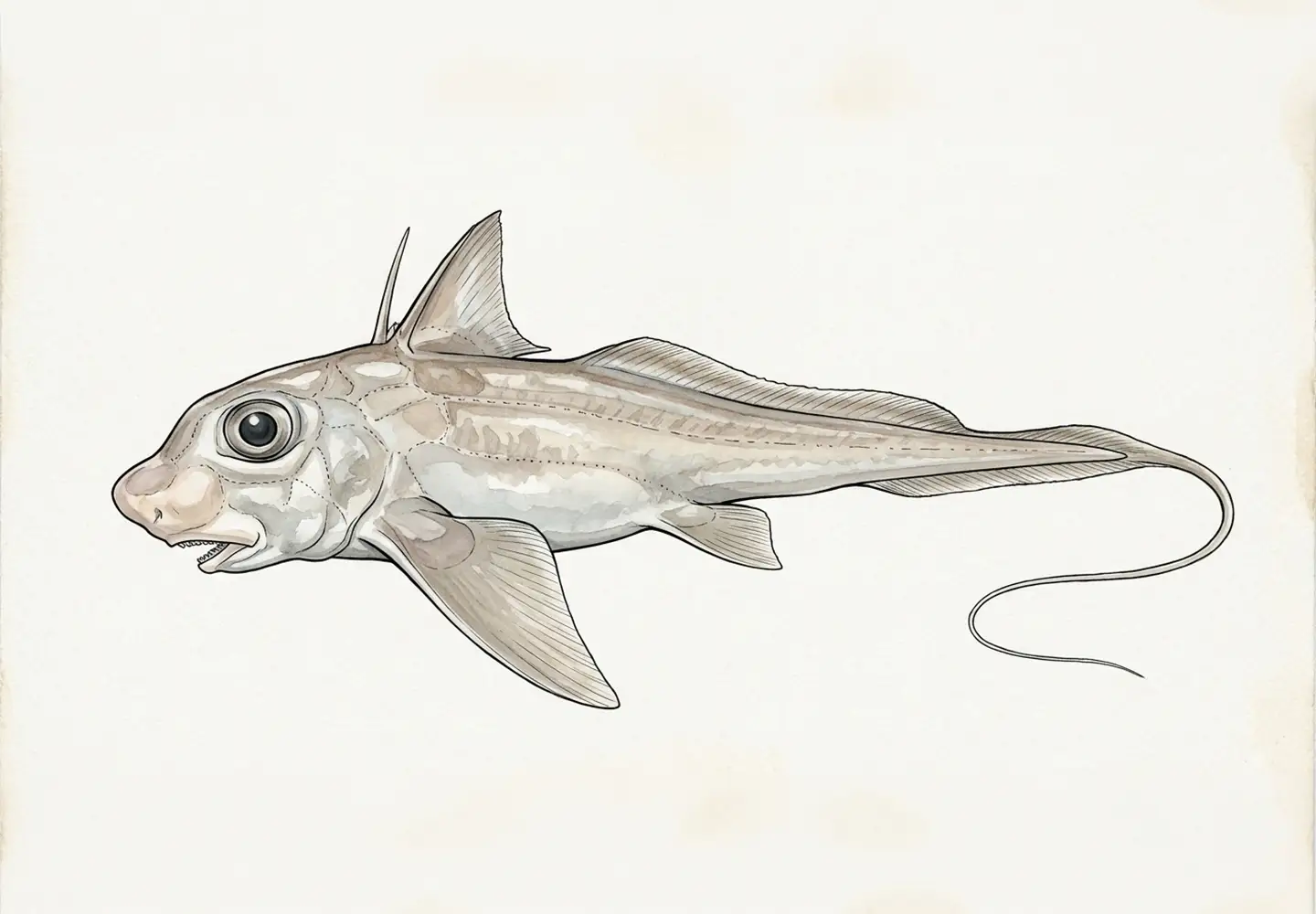
A ghost shark from the Coral Sea, found by Dr William White of CSIRO. It is a chimaera, a relative of sharks and rays rather than a shark, from a lineage that split off nearly 400 million years ago.
How little of the ocean we have actually seen
Two numbers, and they are not the same number.
The Nippon Foundation-GEBCO Seabed 2030 Project put 28.7 percent of the ocean floor as mapped to modern standards in 2026. Mapping means measuring shape, usually with sound from a ship.
But less than 0.001 percent of the seafloor has ever been directly seen, per Scientific American. Seen means a camera or an eye actually there.
Mapped is knowing the shape of a dark room. Seen is switching on a light. We have done the first for a bit over a quarter of it, and the second for essentially none of it.
Which is why a shark on a poster went 130 years without anyone watching it swim.
What this means here
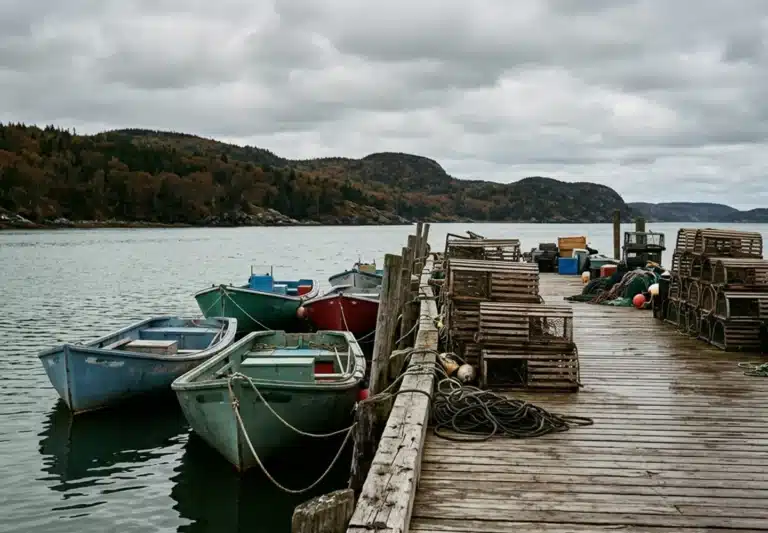
Honestly? For the wharf, the crew and the plant floor, a new worm in a Japanese sponge means nothing this week. Pretending otherwise would be a stretch.
Here is the part that is real. Every season opening and every closure on this coast comes out of a stock assessment. A stock assessment is a careful estimate about a place we have largely not looked at.
So when a harvester and a scientist disagree about what is down there, they are often both arguing from incomplete information. The goblin shark shows the mechanism. A confirmed sighting changed the species’ recorded range, and recorded range is what management plans get built from. Judah made that point himself, noting the shark can now go into regional management and national biodiversity lists.
The unknown ocean is not an abstraction here. It sits upstream of every argument about how much anyone gets to catch.
The Fishmonger’s Take
The honest answer to what lives in the ocean is that we are still finding out, and saying so is not defeatism. The wonder and the uncertainty are the same fact. Anyone who tells you the ocean is a solved system is selling something.
Somewhere in the Tonga Trench there is a shark with a slingshot jaw, getting on with it as its family has for 125 million years. It took us until 2026 to watch one for twenty seconds. A reader who finishes this slightly less certain about the sea has learned something true.