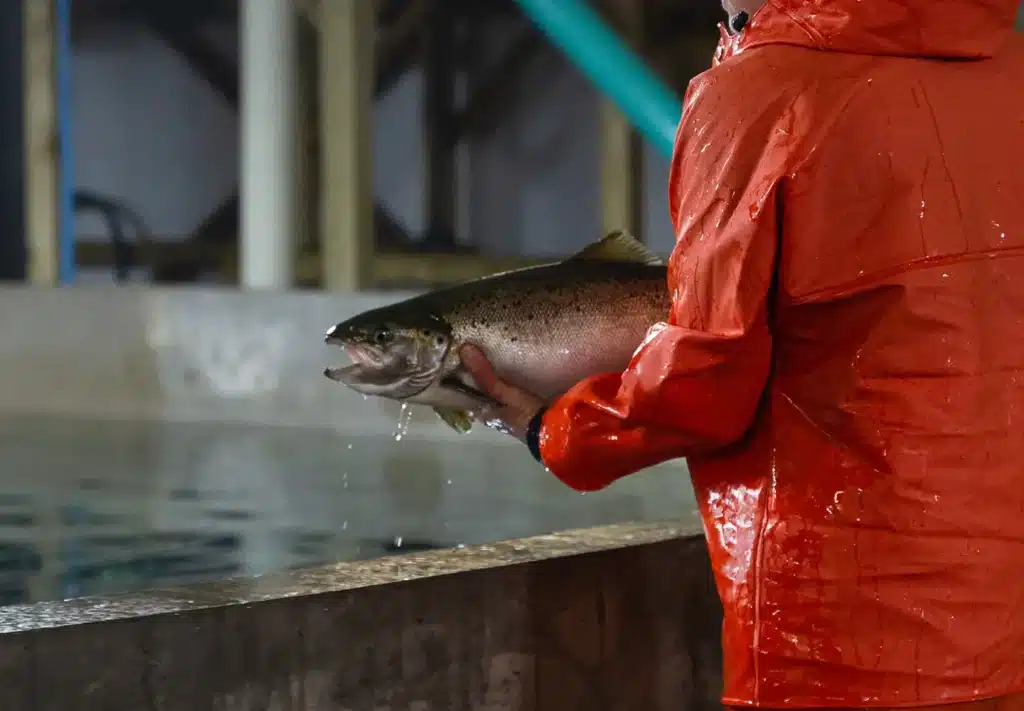
Aquaculture Canada is reshaping how the country grows, buys, and enjoys seafood. This article explains what aquaculture is, why Atlantic Canada is positioned for growth, where the environmental and ethical challenges lie, and how a values-driven partner like Afishionado sources responsibly. You will also find current data on production and jobs, see which innovations are changing the game, and get practical next steps for chefs and consumers who want traceable, sustainable seafood.
What aquaculture Canada is and why it matters
Aquaculture is simply the farming of aquatic organisms (fish, shellfish, and seaweeds) under controlled conditions. It complements capture fisheries by providing seafood without relying solely on wild stocks.
Why aquaculture matters globally
Demand for seafood continues to rise as populations grow and as more consumers seek healthy proteins. Meanwhile, many wild stocks face strict catch limits to stay within ecological boundaries. Therefore, aquaculture helps meet demand while keeping fishing pressure in check. In 2022, and for the first time in history, aquaculture supplied just over half of global aquatic animal production, about 51 percent of the total. This milestone underscores aquaculture’s central role in global seafood supply.
Wild-caught vs. farm-raised: what that means for buyers
Wild-caught seafood comes from natural ecosystems, with less control over inputs, timing, and environmental interactions. Weather, migration, and seasons can disrupt availability. Farm-raised seafood, when produced to strong standards, provides steadier supply, clearer predictability, and often more consistent quality. Consequently, chefs and retailers can plan menus, manage inventory, and meet expectations with fewer last-minute substitutions. For consumers, this can mean year-round access to fresh product with better traceability.
Aquaculture in Atlantic Canada: growth and outlook
Atlantic Canada, which includes New Brunswick, Nova Scotia, Newfoundland and Labrador, and Prince Edward Island, is a cornerstone of Canadian aquaculture.
Current scale and value
Across Canada, 2023 aquaculture production reached roughly 146,000 tonnes with a production value near 1.26 billion Canadian dollars. These figures reflect a diversified industry that includes marine finfish, freshwater finfish, and shellfish. DFO’s official briefing confirms the 2023 value at about 1.26 billion dollars, with exports near 970 million dollars.
Regional contribution and diversity
British Columbia produced 60,962 tonnes in 2023, which represented about 42 percent of national volume. The remainder, much of it in Atlantic Canada, accounted for roughly half of Canadian output. Therefore, the Atlantic contribution remains significant. Within the region, producers cultivate a wide mix of species, including Atlantic salmon, steelhead trout, Arctic char, blue mussels, eastern oysters, and several seaweeds.
Breadth of licences and room to diversify
There are more than 70 aquatic species licensed for farming in Atlantic Canada. Licensing breadth does not mean all species are produced at commercial scale today, yet it signals flexibility, space for pilot projects, and options for future diversification as markets evolve.
Why Atlantic Canada is well positioned
The region benefits from cold, clean coastal waters suitable for many cold-water species, strong supplier networks for feed, engineering, logistics, and veterinary services. These factors, combined with experienced coastal labour, create a platform for responsible expansion when paired with rigorous monitoring and transparent reporting.
The region also offers several other advantages:
- Established supplier networks for feed, engineering, logistics, and veterinary services.
- Research capacity at universities and government labs that support innovation.
- Experienced labour in coastal communities where aquaculture aligns with local marine know-how.
Local impact for communities and customers
Aquaculture supports employment in rural coastal areas where alternatives can be limited. These jobs span farms, hatcheries, processing plants, transport, and equipment manufacturing. For chefs and wholesalers, regional production can translate into shorter transport times, fresher product on arrival, and a closer connection to source. DFO’s national statistics provide detail on provincial volumes and values, which helps buyers understand supply reliability through the year.
Aquaculture Canada opportunities for sustainable seafood
Aquaculture, when done well, aligns with Afishionado’s values of sustainability and transparency.
Economic development and year-round employment
Industry estimates from the Canadian Aquaculture Industry Alliance indicate that Canadian seafood farmers support about 17,000 to 20,000 jobs and contribute around 2 billion dollars to GDP. Although these figures come from an industry association, they align directionally with DFO’s national production value and export totals.
Reducing pressure on wild stocks
Responsibly farmed seafood can reduce harvest pressure on vulnerable wild stocks, particularly when farmed fish substitute for wild-caught equivalents or provide high-quality alternatives. The FAO milestone showing farmed aquatic animal production surpassing wild catch illustrates how additional supply can help meet demand without expanding fishing effort.
Predictable supply and menu planning
Chefs and consumers value reliability. Aquaculture’s controlled growing cycles even out seasonal spikes and make it easier to secure consistent sizes and specs. As a result, purchasing teams can negotiate longer-term contracts, streamline deliveries, and keep menus and grocery supply stable.
A platform for sustainability leadership
Canada’s long coastline, cold-water sites, and established regulatory frameworks provide a platform for best-practice aquaculture, provided operations maintain robust environmental performance, transparent reporting, and third-party verification where available. DFO’s published statistics and science advisory work supply the evidence base that buyers can reference when performing due diligence.
Environmental and ethical challenges
Opportunities are real. However, effective stewardship depends on how farms are sited, managed, and monitored. The issues below often shape community conversations and purchasing policies.
Ocean nutrients and benthic impacts
In traditional open-net systems, uneaten feed and fish wastes can settle beneath pens and alter seafloor habitats. Site selection matters a great deal. High-flow, erosional sites disperse organics more effectively than depositional sites. Modern practices such as optimized feeding, appropriate stocking densities, fallowing, and regular seabed monitoring are used to keep conditions within environmental thresholds.
Escapes and genetic interactions
Escaped farmed Atlantic salmon can compete with, or interbreed with, wild salmon. Canada’s Science Advisory Secretariat concluded that direct genetic interactions pose risks to the abundance and genetic character of wild populations in Atlantic Canada. This is why containment systems, inventory controls, and rapid response plans matter. Land-based systems eliminate ocean escape pathways altogether.
Antibiotics, hormones, and fish health
In Canada, medically important antimicrobials require a veterinary prescription, and growth-promotion claims have been removed from drug and feed labels. Responsible farms focus on vaccination, biosecurity, and husbandry to prevent disease, and they use antibiotics only to treat illness under veterinary oversight. Growth-promotion hormones are not used in Canadian salmon farming. Where hormones appear in aquaculture, it is generally in tightly regulated broodstock or hatchery applications and not for growth in market fish.
Feed ingredients and resource use
Historically, fishmeal and fish oil from forage fisheries formed the backbone of many diets. Today, feed companies increasingly use trimmings from processing plants, plant and novel proteins, algal oils, and microbial oils to reduce reliance on wild fisheries. The goal is clear, maintain fish health and omega-3 levels while shrinking the footprint of each kilogram of harvest.
Community relationships and social licence
Aquaculture shares space with tourism, transportation, traditional fisheries, and recreation. Understandably, communities want a say in how farms operate. Early engagement, clear communication about impacts and benefits, and local hiring help. Peer-reviewed research in Atlantic Canada shows that perceptions of shellfish aquaculture can be mixed and context specific, which reinforces the need for open dialogue and transparent reporting.
At Afishionado, we believe that honest discussion of both promise and challenge builds trust. We source from partners who measure, report, and minimize impacts, and who engage openly with communities and the environment.
Spotlight on Sustainable Blue: innovation in land-based aquaculture
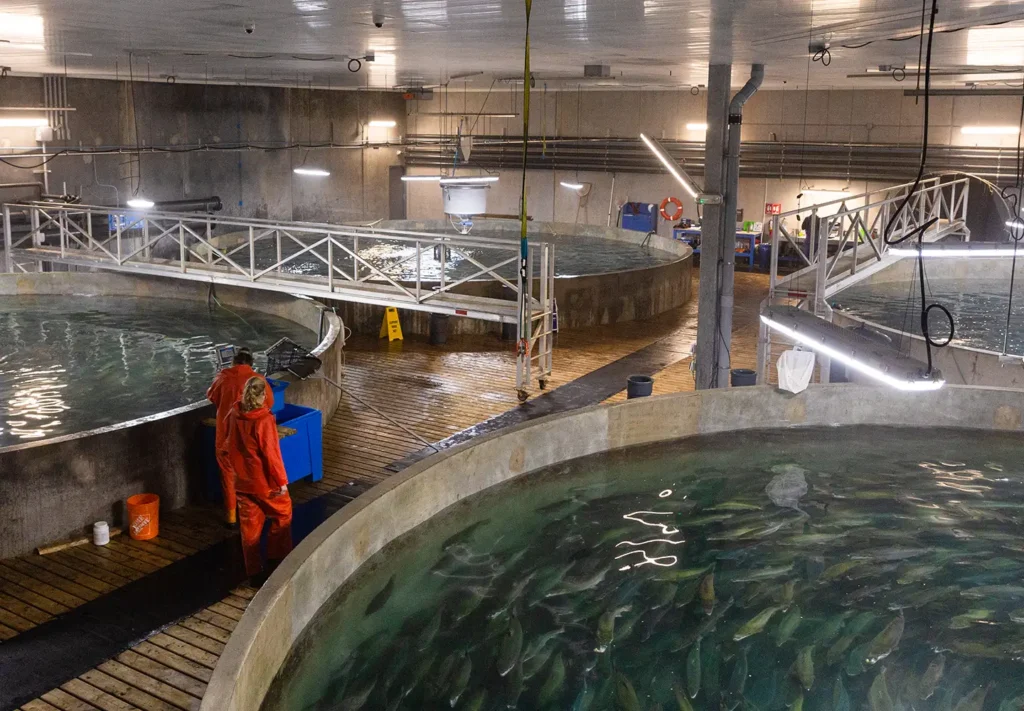
Among innovative operations in Aquaculture Canada, Sustainable Blue in Nova Scotia is a notable example of closed-loop, land-based production.
Closed-loop RAS with water re-use
The company operates a proprietary recirculating aquaculture system, often called RAS, that is designed for 100 percent water reuse and zero effluent discharge to natural waters during normal operation. Water is continuously filtered, treated, and reused on site. Salmon at Sustainable Blue are raised without antibiotics or growth hormones and with zero fish escapes. These are company-stated design goals and operating principles that appeal to buyers focused on biosecurity and traceability.
Fish health, biosecurity, and continuous improvement
Sustainable Blue positions its system to maintain high water quality, reduce interactions with external ecosystems, and enhance biosecurity. The team highlights ongoing engineering upgrades, contingency planning, and real-time monitoring. For partners and consumers, that commitment to innovation and measurable performance is what responsible aquaculture looks like. Sustainable Blue lists retail partners and points consumers to Sobeys and independent retailers, which helps buyers find local, traceable product.
Why this matters for buyers
By operating on land in a closed system, Sustainable Blue addresses concerns commonly associated with open-net pens, including escapes, effluent, and certain disease transfer pathways. The approach also supports predictable supply close to market. As with any technology, there are trade-offs, particularly around energy use. Continued efficiency gains, heat recovery, and renewable options can help reduce that footprint.
Sustainable Blue, delivered. Pick a Seafood Box that features Atlantic salmon from Sustainable Blue.
How Aquaculture Canada fits into the future of sustainable seafood
Looking ahead, Aquaculture Canada will continue to evolve along four practical lines, which are technology, species, partnerships, and transparency.
Aquaculture Canada: land-based and closed-containment systems
Investment in land-based RAS and other closed-containment designs is likely to continue. These systems reduce interactions with surrounding waters and provide precise control over water quality, stocking densities, and biosecurity. As technologies mature, costs tend to fall and reliability improves, which opens the door to wider adoption.
Emerging species and thoughtful diversification
Diversification matters. Beyond salmon, shellfish such as mussels and oysters offer low-trophic, filter-feeding options with relatively light footprints. Freshwater species like trout add flexibility for inland facilities. In Atlantic Canada, more than 70 licensed species create room for pilots in kelp, sea lettuce, and other sea-vegetables that fit integrated systems and new culinary trends.
Indigenous partnerships and community integration
More projects are building partnerships with Indigenous nations and coastal communities, aligning design with local knowledge, stewardship priorities, and shared benefits. These relationships can improve siting and strengthen long-term acceptance.
Ecosystem-based and multi-trophic approaches
Integrated multi-trophic aquaculture, in which seaweeds and shellfish are co-cultured with finfish, can capture nutrients that would otherwise become wastes. This approach improves overall efficiency and creates additional products, including edible seaweeds and high-value extracts. Feed innovation also continues, with algal oils and microbial proteins reducing pressure on forage fisheries while preserving nutrition.
Traceability, transparency, and consumer-facing sourcing
For buyers, chefs, and consumers, knowing who raised it, how it was raised, and where it was raised is fast becoming standard. That demand aligns directly with Afishionado’s approach. We curate seafood boxes and individual products, share sourcing stories and certifications where applicable, and connect customers with production practices they can verify.
Practical sourcing guidance for chefs and buyers
To translate these trends into purchasing decisions, use the checklist below. It improves outcomes and supports your transparency goals.
Review environmental management. Request summaries of benthic monitoring, escape-prevention systems, wildlife-interaction protocols, and any corrective actions. DFO’s science pages can help you interpret these reports.
- Confirm production method and location. Ask whether fish come from open-net pens, land-based RAS, or shellfish farms. Request farm names and, when appropriate, coordinates.
- Review environmental management. Request summaries of benthic monitoring, escape-prevention systems, wildlife-interaction protocols, and any corrective actions. DFO’s science pages can help you interpret these reports.
- Check fish-health stewardship. In Canada, antibiotics require veterinary prescriptions. Ask for high-level treatment records, vaccination strategies, and biosecurity measures.
- Assess feed sourcing. Look for feeds that incorporate trimmings, algal oils, and novel proteins to reduce reliance on forage fisheries while maintaining omega-3 profiles.
- Leverage predictable supply. Use farm production plans to stabilize menus, secure preferred sizes, and manage pricing.
- Prioritize proximity. When possible, choose regional suppliers for fresher product and a smaller transport footprint.
- Communicate the story. Name the farm on menus and product pages. Share how the fish was raised and why you chose that supplier. Sustainable Blue, for example, publishes consumer information that you can reference.
Language notes: what we mean by key terms
Clear definitions support better decisions and avoid confusion.
- Aquaculture versus seafood. FAO global statistics separate aquatic animals from algae. The 51 percent figure refers to aquatic animal production, not total aquatic biomass that includes seaweeds.
- Zero discharge. When a company describes a zero discharge RAS, it usually means treated water is reused on site with no routine effluent to natural waters. Treat this as a design and operating claim unless an independent audit is provided.
- Licensed versus produced species. A jurisdiction may license many species. Only a subset are produced commercially at scale in a given year. Atlantic Canada’s more than 70 licensed species illustrate breadth, not guaranteed volume.
Frequently raised concerns & brief answers
Are farmed salmon in Canada given growth hormones?
No. Growth-promotion hormones are not used in Canadian salmon farming. Where hormones appear in aquaculture, the use is generally in regulated broodstock or hatchery applications, not for market fish growth.
Do farms routinely use antibiotics?
Antibiotics can be used to treat disease under veterinary prescription. Since December 2018, medically important antimicrobials require a prescription and are not permitted for growth promotion. Responsible farms rely on vaccination, biosecurity, and husbandry to minimize use.
Will farmed fish escape and harm wild stocks?
Risk in open-net systems is managed through improved gear and procedures, although it is not zero. Land-based systems remove the ocean escape pathway. Science indicates that genetic introgression from escapees can pose risks to wild Atlantic salmon, which is why prevention and rapid response matter.
Do farms pollute the ocean?
Impacts depend on siting and management. Poorly sited or poorly managed farms can cause benthic effects, while well-sited farms, rotational fallowing, and strict monitoring reduce risks. Land-based RAS avoids routine coastal discharges during normal operation.
Final thoughts
Aquaculture Canada represents a vital piece of the country’s seafood future. As consumers, chefs, and industry stakeholders, you can steer it toward sustainability by choosing responsibly farmed seafood and asking suppliers for transparency. At Afishionado, we are committed to ethical sourcing and partnerships that match our values, from innovative land-based systems like Sustainable Blue to well-managed shellfish and finfish farms. Explore our sustainable seafood boxes, learn more about our sourcing stories, and choose responsibly farmed seafood whenever possible. Together, we can ensure that Aquaculture Canada delivers great seafood today and for generations to come.