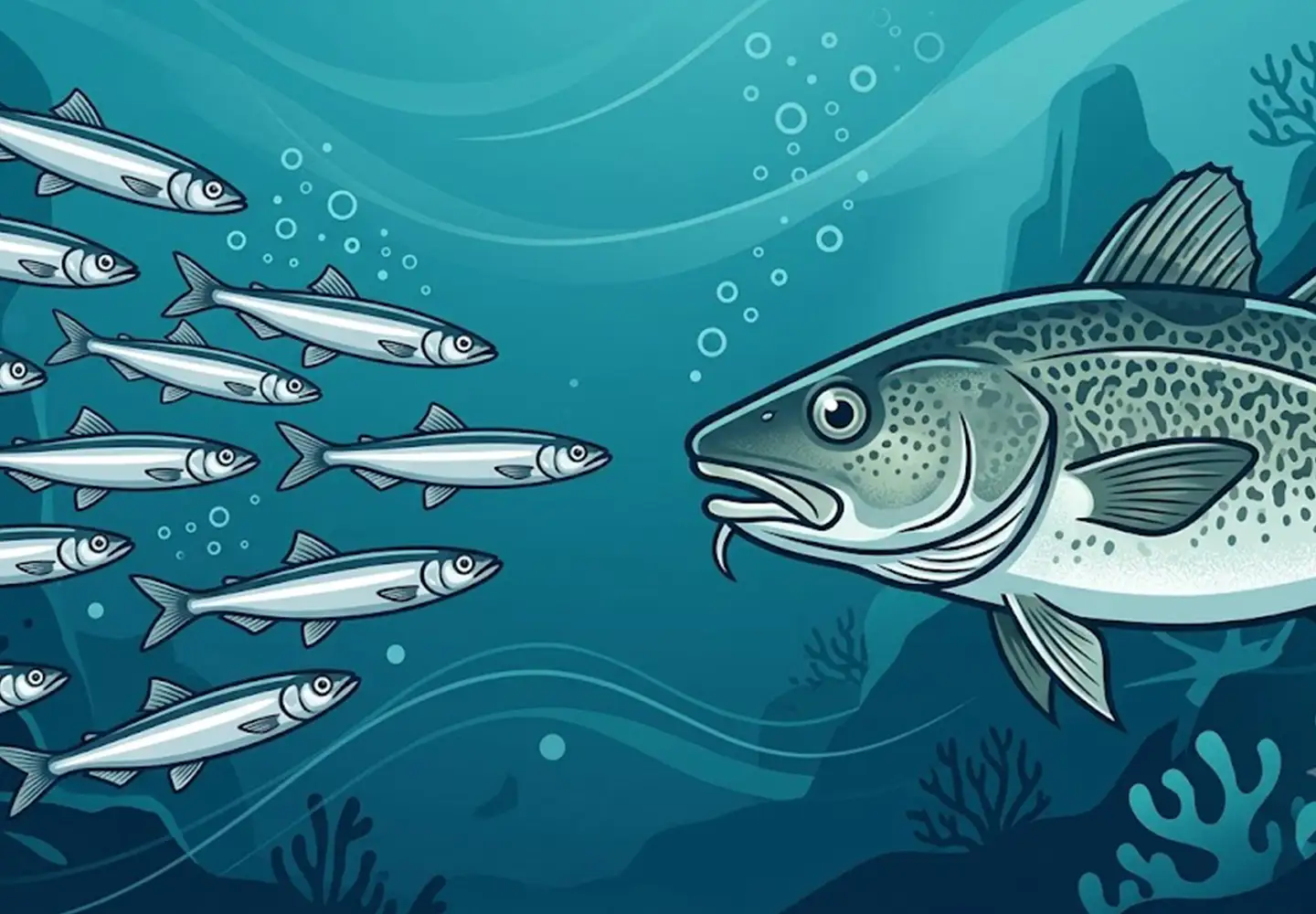
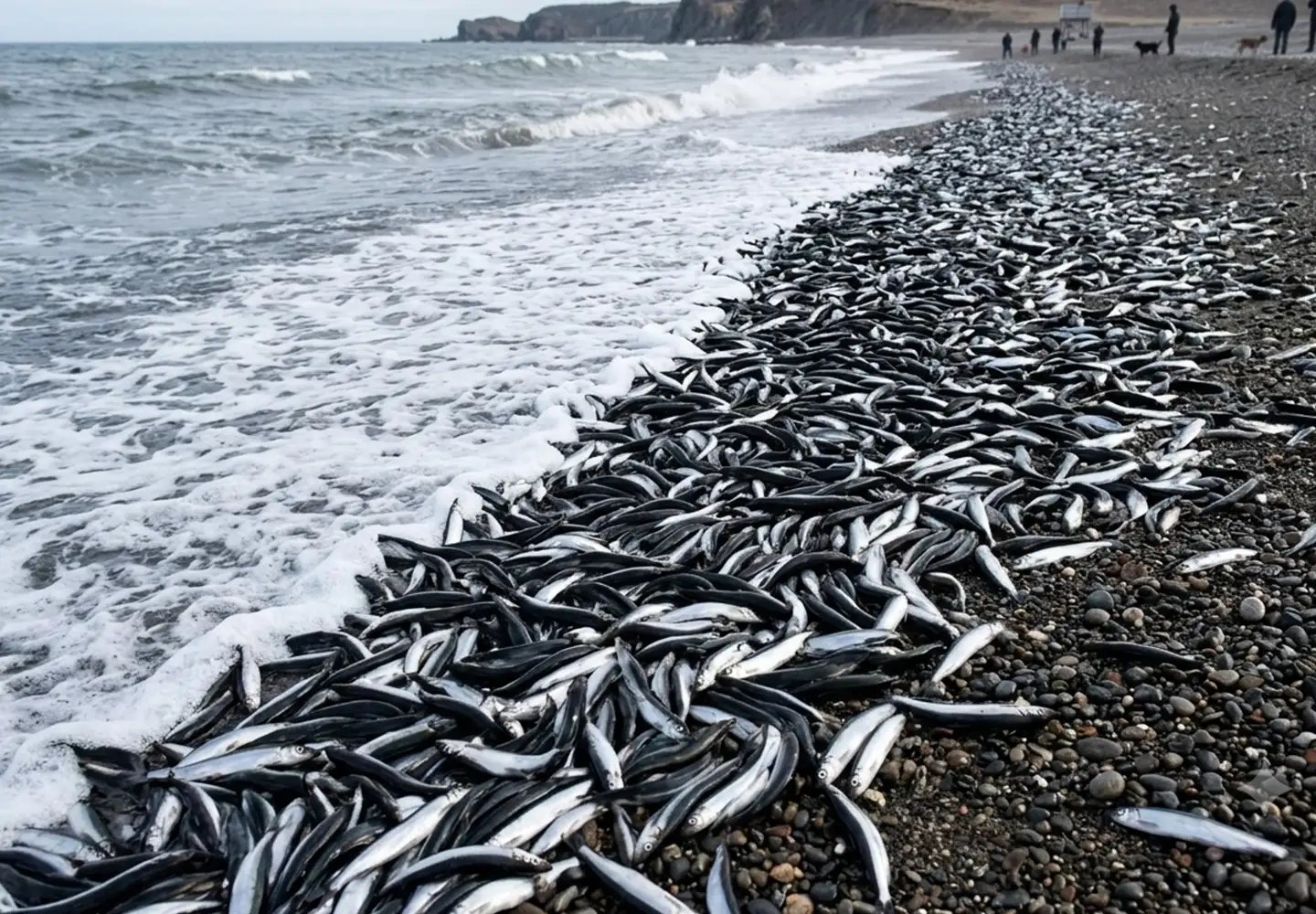
Every summer, the same strange thing happens along the beaches of Newfoundland. The water close to shore turns dark and starts to churn, and then it arrives: millions of small silver fish throwing themselves onto the sand to spawn, thick enough in places to scoop up by the bucket. Locals call it the capelin roll, and they have watched it for generations. What fewer people stop to consider is that this small fish is the reason the cod can come back at all. Capelin and cod are not two separate stories. They are the same one.
No capelin, no cod
Capelin is a forage fish, one of the small species that sit near the base of the ocean’s feeding order. It eats plankton and gets eaten by almost everything larger: whales, seals, seabirds, and, most relevant here, cod. According to Fisheries and Oceans Canada, capelin is the main prey for Northern cod and one of the most important factors in that stock’s health.
Take the capelin away and the cod has little to eat. The relationship runs the other direction too: a strong capelin population is one of the conditions a cod recovery depends on. This is why you cannot manage cod by thinking about cod alone.
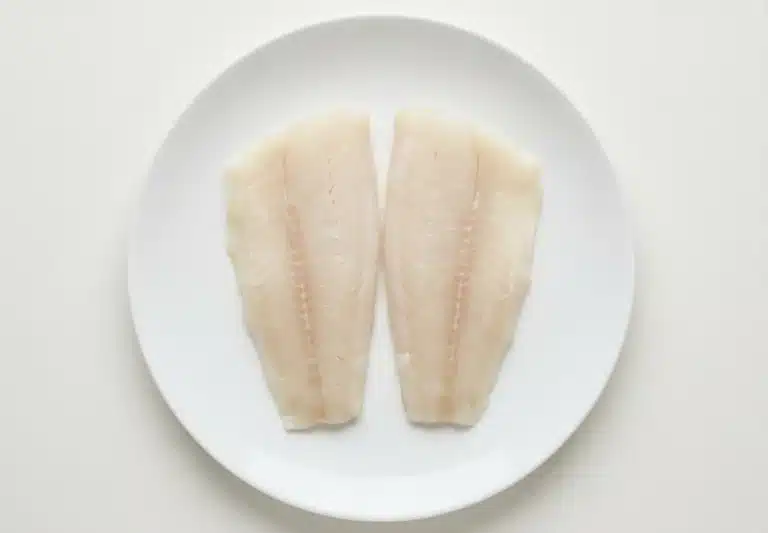
And the cod is recovering. The department reported this year that Northern cod had climbed back into the healthy zone for the first time since the 1992 moratorium that shut the fishery down. The scale is worth holding in your head. The catch limit for 2026 was set at 59,000 tonnes. In the late 1980s, before the collapse, it ran closer to 250,000 tonnes, CBC News reported. The stock is rising, but it is rising back toward a number that was once ordinary.
Why Canada holds the capelin line
This is where the food web turns into a decision you can actually see. For 2026, the department raised the Northern cod quota by 55 per cent. In the same announcement, it kept the capelin quota flat at 14,533 tonnes, unchanged from the year before.
The reasoning was stated plainly. Holding the capelin catch steady was described as a precautionary move, meant to keep the capelin population strong enough to support a stronger cod population. In other words, Canada is choosing to leave more of the small fish in the water so the bigger fish has something to eat. Protect the prey to rebuild the predator.
That is worth noticing, because it cuts against the instinct that fishing one stock has nothing to do with another. In a connected system, it always does.
What capelin and cod tell us about sourcing
Here is the part worth carrying out of this article. The ocean is a system, not a shelf of products. We are used to seeing seafood as a row of separate items: a cod fillet here, a bag of capelin there, each with its own price and label. The water does not work that way. It works as a web of relationships, where the health of the thing you eat depends on the health of the thing it eats, and so on down the line.
A couple of things follow once you see it. “Sustainable” is not a trait that belongs to a single fish. It belongs to a whole system: the fish, its food, its water, and the rules that decide how much of any of it gets taken. And where your seafood comes from is not a small detail. It is most of the story. A fish from a well-managed ecosystem and a fish from a failing one can look identical on the plate and mean very different things in the water they came from.
That is the reason we pay attention to where Atlantic Canada’s seafood comes from and to traceability. It is not paperwork for its own sake. It is the only honest way to know whether the fish in front of you came from a system that can keep producing it, which is the same standard behind the suppliers and species we choose to carry.
The capelin rolling onto the beach this summer will be gone within a week or two, back to deep water or left behind as eggs in the sand. Most people watching will see a summer spectacle. You can now see the other thing it is: the wide base of a food web holding up one of the most closely watched recoveries in the North Atlantic. No capelin, no cod. It really is that direct.
To follow each half of this story up close, read our look at the 2026 cod quota decision and at the capelin roll itself.