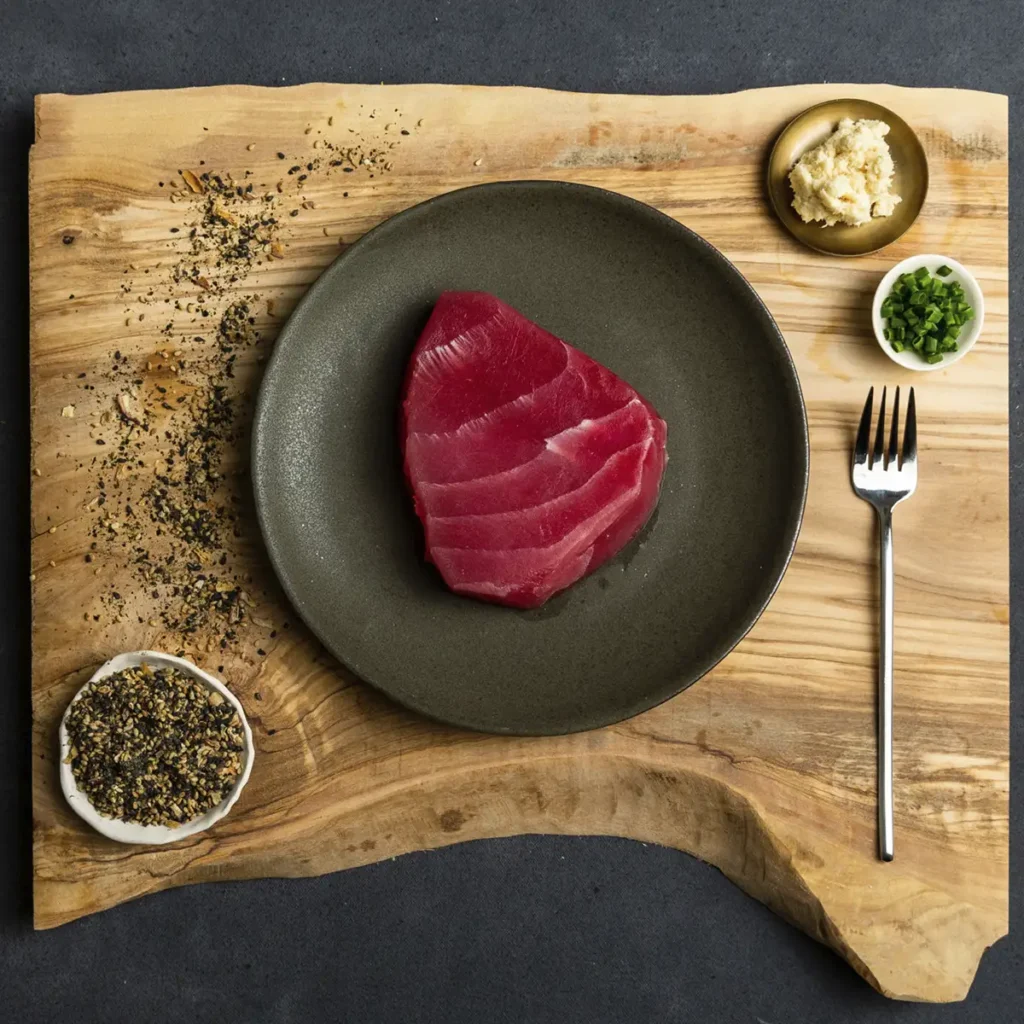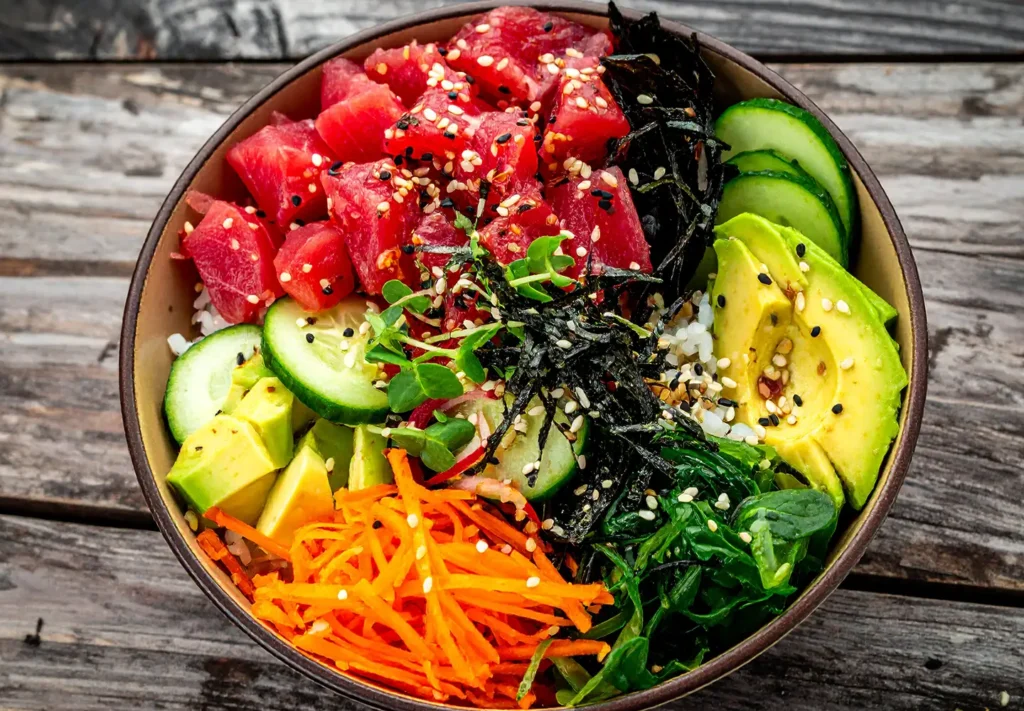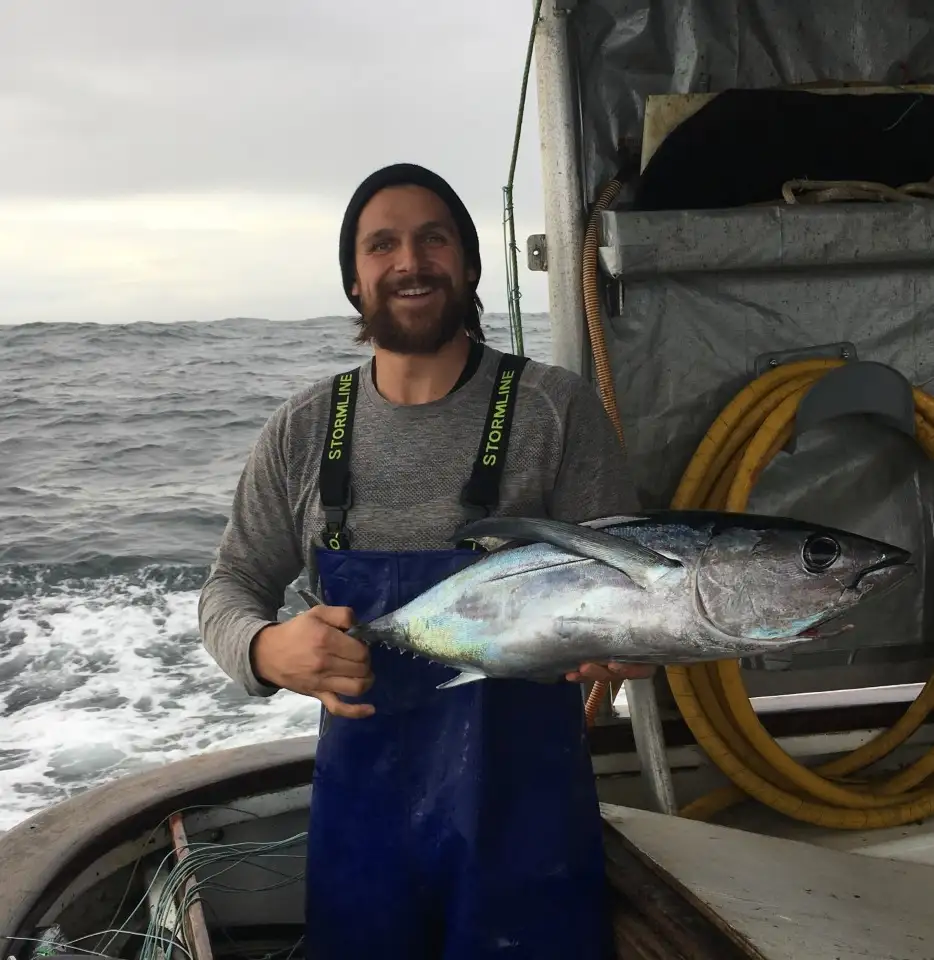
There is no such thing as sushi grade fish, and if you are thinking about eating raw fish at home, that is the first thing worth knowing. We have written about it before. It is a marketing term with no certifying body behind it, invented to sell raw fish to a North American market that was nervous about it.
Which leaves the more useful question. If the label means nothing, what does make fish safe to eat raw?
The answer is freezing. Not a grade, not a counter, not how fresh it looks. A specific freezing process, at temperatures most kitchens cannot reach.
The risk is parasites, and mainly one of them
Raw and lightly cured fish can carry parasitic worms. The one that matters most is Anisakis, a nematode found in the flesh of many wild marine species, and eaten alive it can cause acute abdominal illness.
Cooking kills it. So does freezing, at the right temperature for the right length of time.
One scoping note before the numbers. Everything below is about finfish. Bivalves such as scallops sit outside these rules and are governed separately, so nothing here should be read as advice about them.
Freshness has nothing to do with it. A fish landed this morning is as likely to carry parasites as one landed yesterday, because they were there before it was caught. This is the part that trips people up. The instinct that fresher means safer is correct for bacteria and irrelevant for worms.
The three accepted methods, and they are alternatives
This is where a great deal of writing on the subject goes wrong, and we have not always got it right ourselves.
There are three recognized freezing treatments for parasite destruction. They are set out in the FDA Food Code and its Fish and Fisheries Products Hazards and Controls Guidance, and Canadian public health authorities work from the same parameters. They are alternatives. You do one of them, not all three.
- Minus 20 degrees Celsius or below, for seven continuous days.
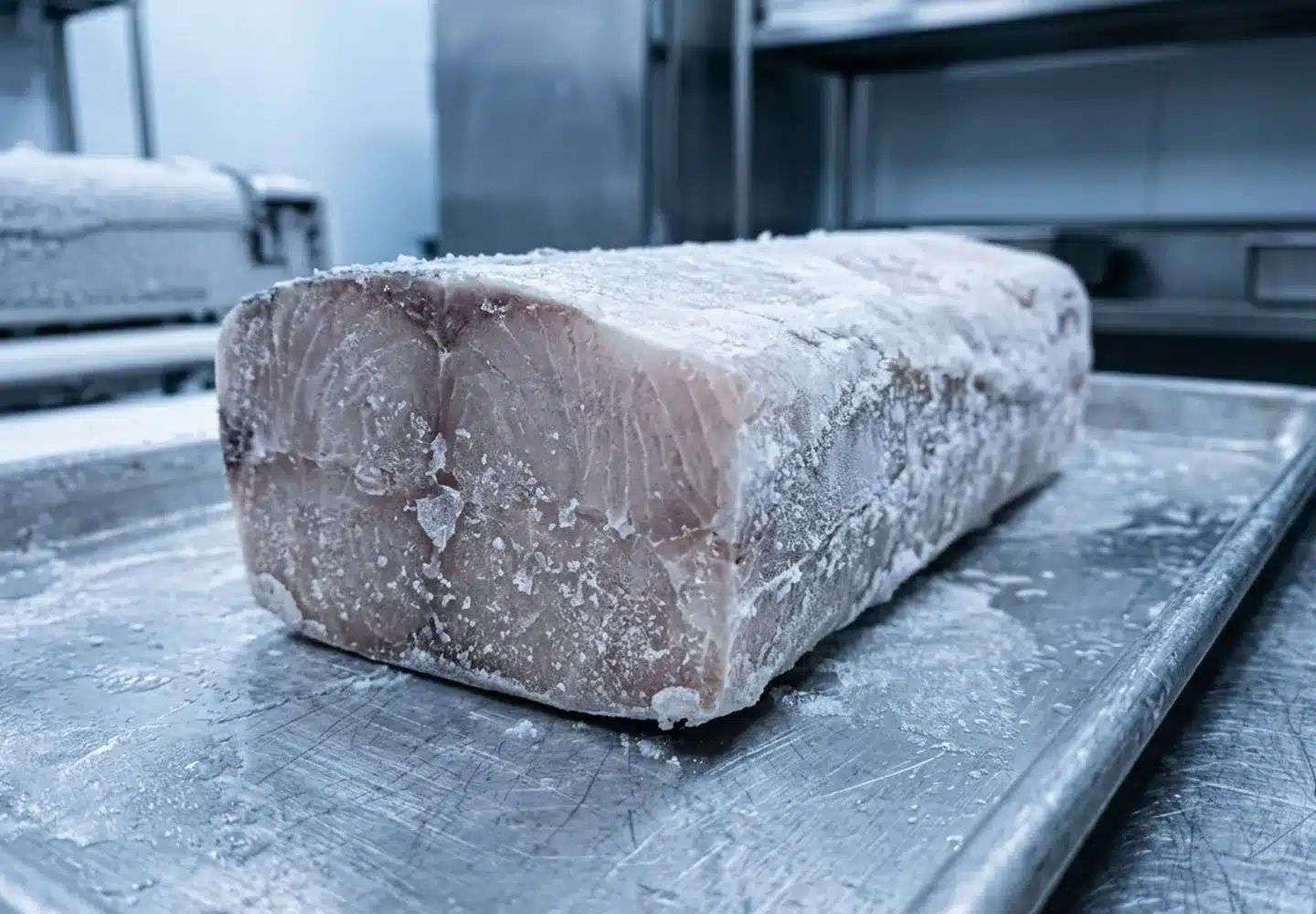
- Minus 35 degrees or below until frozen solid, then held at minus 35 or below for 15 hours.
- Minus 35 degrees or below until frozen solid, then held at minus 20 or below for 24 hours.
Public Health Ontario has published an evidence brief on exactly this. It is the clearest Canadian summary available.
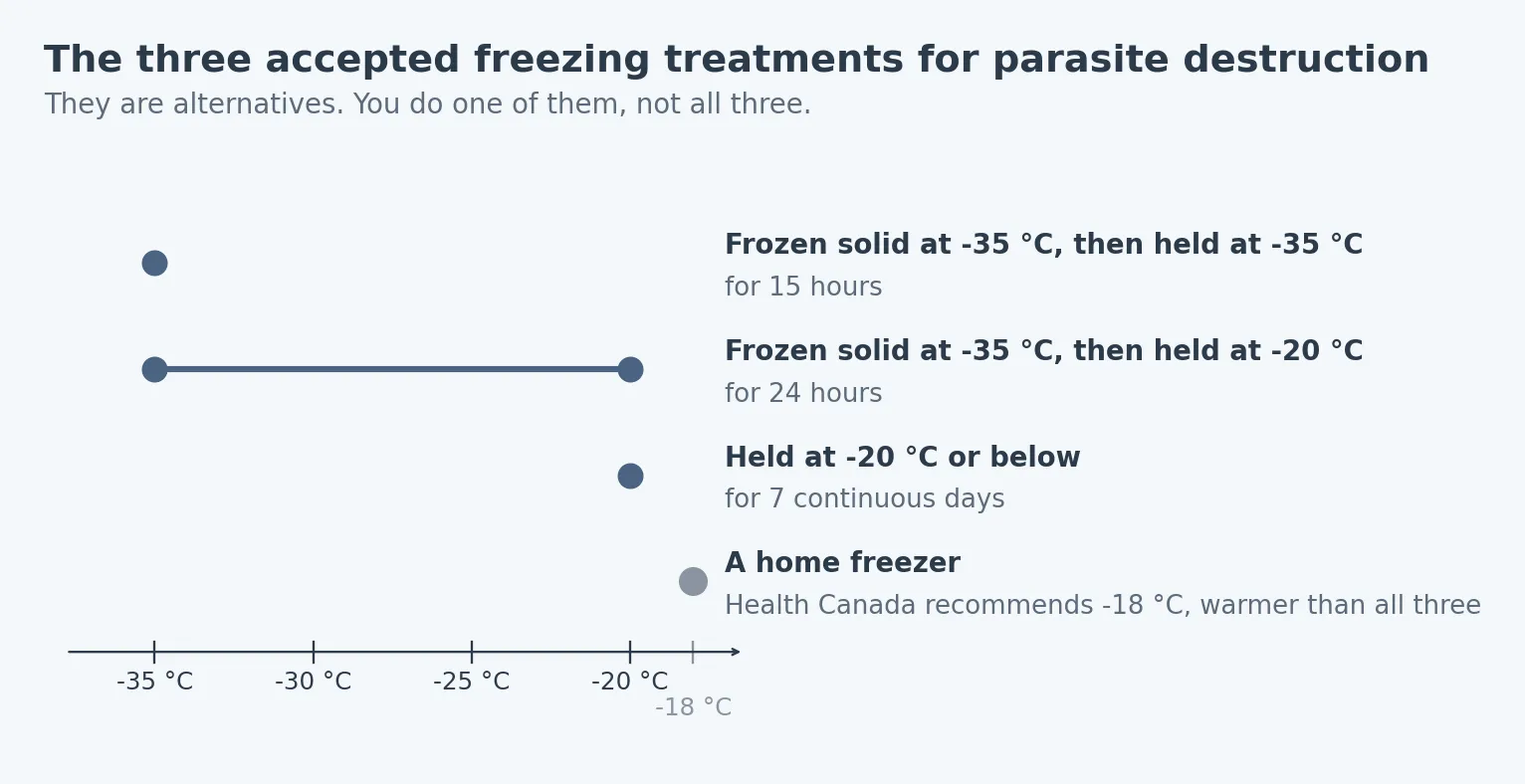
Now look at those numbers against your kitchen. Health Canada recommends a home freezer at minus 18 degrees or lower, and that is what domestic appliances are built to hold. Minus 18 is warmer than every one of the three. Most home freezers cannot reach minus 20 at all, and none of them will touch minus 35.
So the honest answer to “can I freeze it myself and eat it raw” is no, unless you happen to own a blast freezer.
What this means at the counter
It reframes the whole question. You are not looking for a grade or a guarantee of freshness. You are looking for fish that has already been through one of those treatments, and for someone who can tell you so.
That is a question about records, not about appearance. A seller who freezes to those parameters, or buys from a processor that does, can name the method. One who answers by pointing at how good it looks has told you they do not know.
There is a useful corollary here for anyone still uneasy about frozen fish. The freezing that makes raw fish safe is the same process people think of as a compromise. For raw preparations it is not the lesser option, it is the requirement, which is a point we make from the other direction in why buy frozen fish.
The exception, and why our salmon is one
Not all fish needs it, and the exemption is a real regulatory category rather than a marketing claim.
Farmed fish raised in a controlled system, fed formulated feed containing no live parasites, is never exposed to the parasite cycle. There is nothing to destroy. The Canadian Food Inspection Agency’s position on exempting fish species from parasite destruction, published through the BC Centre for Disease Control, sets out that category alongside the species-specific exemptions.
Our Sustainable Blue salmon sits in it. It is raised on land in a closed system with no ocean contact and no exposure to wild fish. That is the whole point of the model, and it is covered in land-based salmon farming. The absence of parasite exposure is a consequence of the engineering rather than a claim about handling.
That is the strongest thing we can say about any fish we sell, and it applies to that one alone. Every other finfish should be treated as needing the freezing treatment.
What to actually do
Buy from someone who can tell you the fish was frozen for parasite destruction, and which method. If they cannot, cook it.
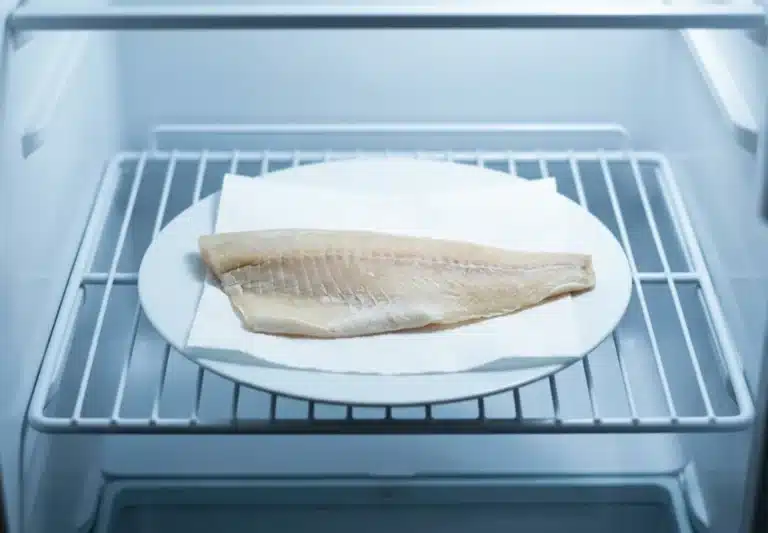
Keep it cold and keep it short. Once thawed, raw fish is a bacteria question rather than a parasite one. Fridge, covered, eaten the same day. How to thaw frozen fish covers doing that without wrecking the texture.
Use a clean board and a sharp knife, and do not let raw fish share a surface with anything else you are serving.
Cut it cold. Fish slices cleanly just short of frozen and tears when it has warmed up. Take it out, give it fifteen minutes, slice, and get it back in the fridge.
And skip the citrus theory. Ceviche is a lightly cured preparation, not a cooked one. Acid changes the texture and the colour. It does not deal with parasites, so ceviche made from unfrozen fish carries the same risk as sashimi made from it.
Eating raw fish at home, in short
Eating raw fish at home is a freezing question. Three accepted methods, all colder than a domestic freezer, none of which you can perform in your kitchen. So the thing to buy is not a grade, it is a supplier who can tell you what was done and when.
The exception is farmed fish raised away from the parasite cycle. That is why our Sustainable Blue salmon is the one finfish we would put in front of you raw without qualification. For the rest of the market, cook it, and enjoy it more for knowing why.