Shrimp is the best thing you can throw on a summer grill, and the easiest to wreck. It cooks in the time it takes to grab a drink, which is exactly the problem. Turn your back for a minute and juicy, tender shrimp turns into rubbery little erasers. Grilled shrimp lives or dies in about a ninety-second window, and most people miss it.
The good news is that getting grilled shrimp right is less about skill than about setup. Pick the right size, skewer them so they behave, and learn the one visual cue that tells you to pull them. Do that and you get charred, sweet, juicy shrimp every time. Here is the whole thing.
Start with shrimp big enough to grill
Size is the first decision, and it matters more than anything else. Small shrimp overcook before they even colour, so by the time they look grilled they are already tough. Big shrimp give you a margin. Reach for jumbo or extra-large, somewhere around 16 to 20 or 21 to 25 per pound, so there is enough shrimp between the heat and the centre to build a char without drying out.
Pat them dry before they go anywhere near the fire. Surface water steams instead of sears and stops the char from forming, the same reason a wet scallop refuses to brown. Leave the shells on if you want extra insurance, since the shell shields the meat and adds flavour, or peel and devein for easier eating. Either works. Our Pacific White Shrimp run a good grilling size, and the ultimate guide to shrimp goes deeper on sizing and sourcing.
Skewer grilled shrimp so they don’t spin
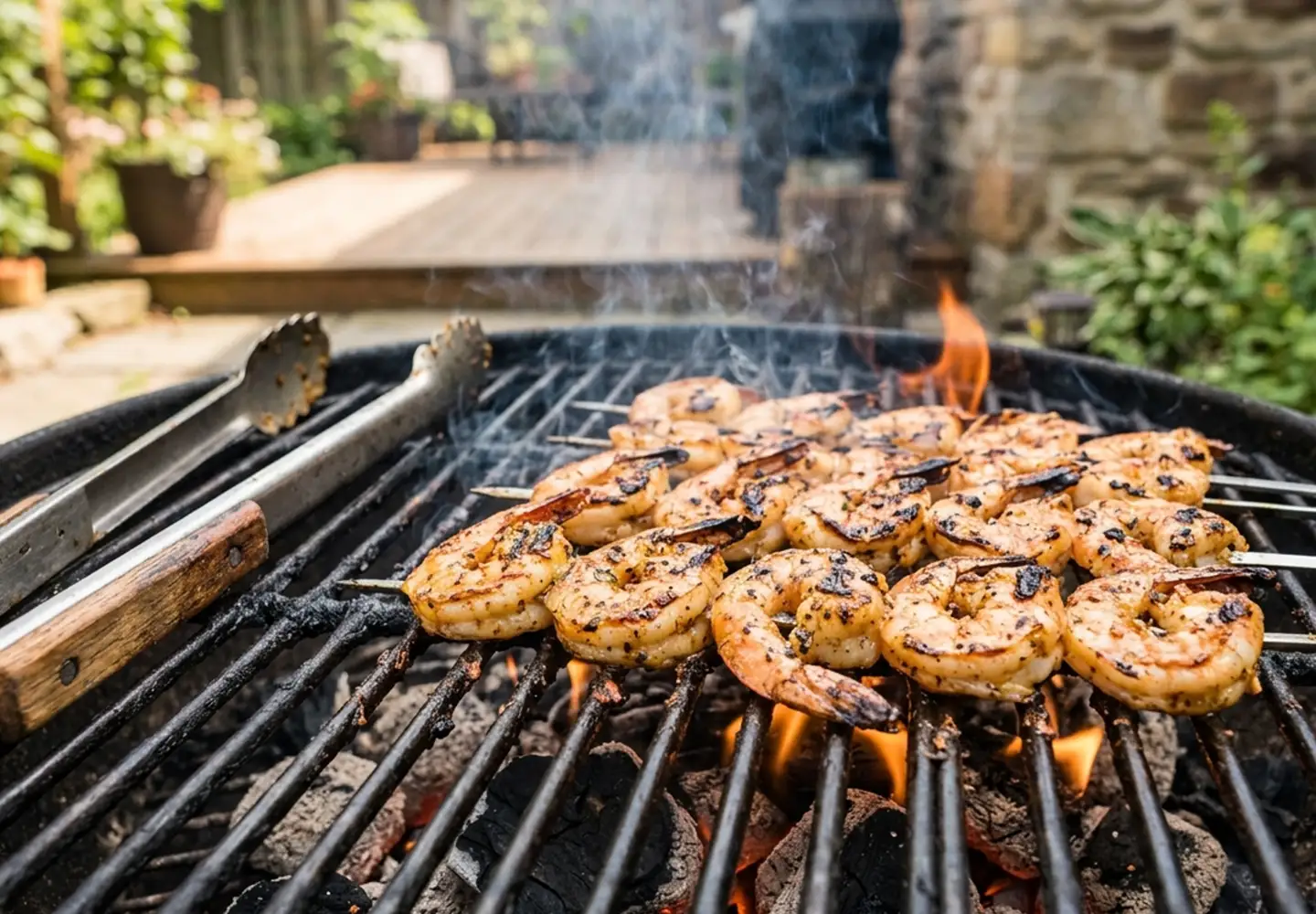
Here is the trick that separates good grilled shrimp from a frustrating dinner. A shrimp on a single skewer spins when you try to flip it, so half of them end up raw on one side and scorched on the other. The fix is to use two skewers. Run a pair of parallel skewers through each shrimp, one catching it near the head and one near the tail, so the whole row is pinned flat. Now it flips as a single piece and every shrimp faces the heat the same way.
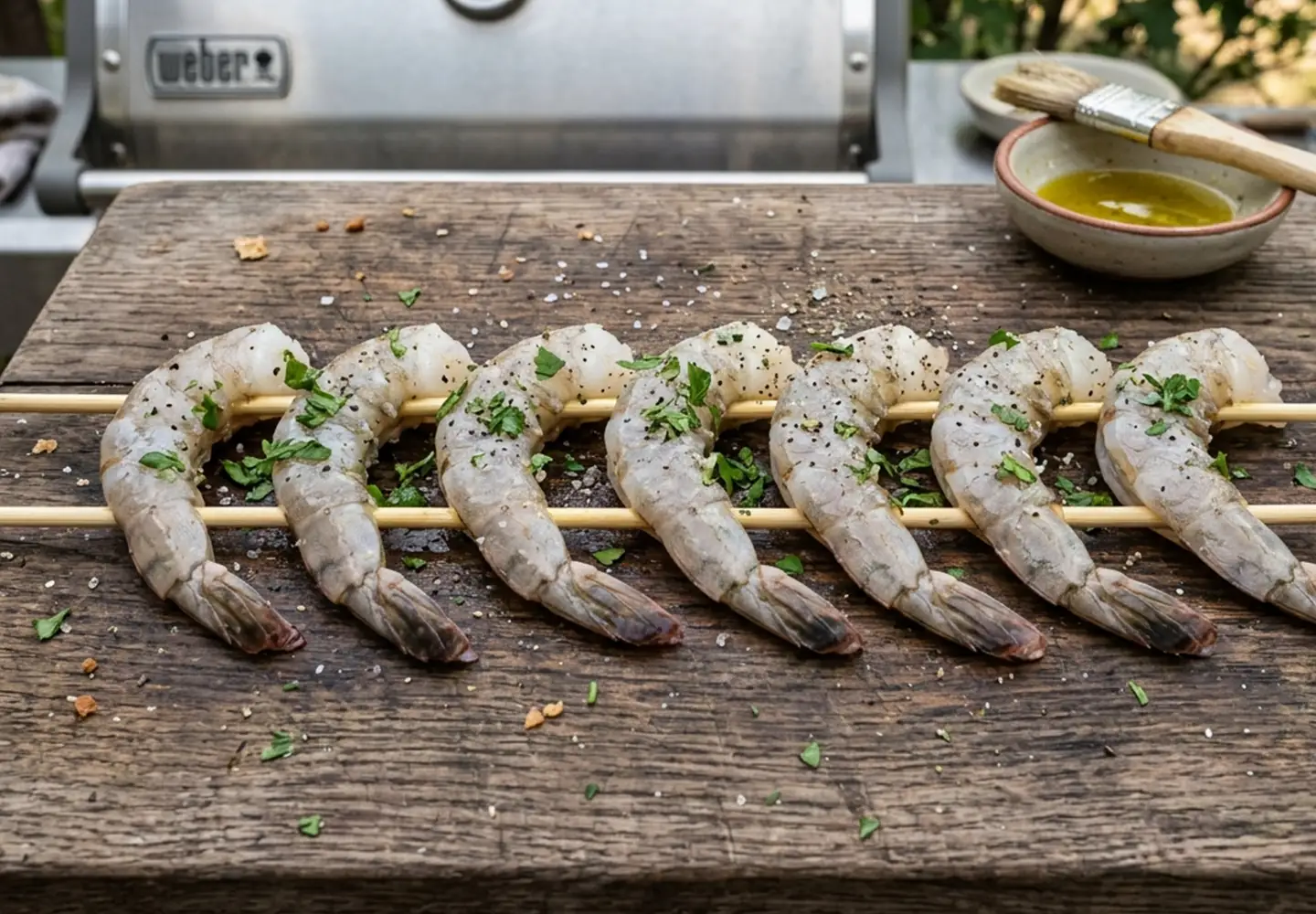
Metal skewers are worth it, because they heat from the inside and cook the shrimp faster and more evenly. If you are using wooden skewers instead, soak them in water for about thirty minutes first so they are less likely to burn on the grill. Leave a little space between shrimp so the heat reaches all sides. Crowd them and they steam instead of char.
The two-minute rule
Grilled shrimp is fast, and it wants real heat. Set the grill up for direct cooking and get it into the medium-high to high range, roughly 375 to 450°F (190 to 230°C) at the grate. Most barbecues have a built-in lid thermometer, and it is worth using to get yourself into the zone. Just know what it is telling you: that dial sits up in the dome and reads the air a few inches above the food, not the surface where the shrimp actually cook. Tests put the gap between the two as high as 50 to 100°F, so treat the number as a ballpark to aim for, then trust the shrimp themselves for the finish.
Once you are there, they need roughly two minutes a side, sometimes less. The whole cook is often under five minutes, so stay at the grill and do not wander off to refill anything.
Watch the shrimp, not the clock. Raw shrimp is grey and translucent. As it cooks it turns pink and opaque and starts to curl. The moment it forms a loose C, it is done, so pull it. If it tightens into a closed O, you have gone too far and it will be rubbery. That single cue, C good, O overdone, is the whole game. When in doubt, pull them a touch early, because carryover heat finishes the job on the plate.
Flavour without turning it to mush
Shrimp takes on flavour fast, which is both a gift and a trap. A simple mix of oil, salt, garlic, and something bright like lemon or smoked paprika is all it needs, and fifteen to thirty minutes of marinating is plenty. Go much longer with an acidic marinade and the acid starts to break down the shrimp before it ever hits the grill, leaving it soft and mealy.
For ideas that translate straight to the grate, a honey garlic shrimp glaze caramelizes beautifully over fire, smoky paprika shrimp was practically made for it, and the bright, herby Greek lemon herb shrimp is summer on a stick.
What to do with a skewer of grilled shrimp
Off the skewer, grilled shrimp goes anywhere. Pile it into smoky shrimp tacos with lime yogurt slaw, fold it through a grain bowl or a salad, or grill a double batch and put it to work through the week, since it holds up well as one of the high-protein seafood meals worth prepping ahead.
Start with better shrimp
Grilling punishes weak shrimp. Anything mushy, pumped with additives, or thawed and refrozen falls apart on the grates and weeps water that kills your char. Firm, well-handled shrimp holds its shape, takes a mark, and stays sweet. That is what we stock. Grab a bag of Pacific White Shrimp or browse the shop, and you are most of the way to a good skewer before you even light the grill.
Grilled shrimp: The bottom line
Grilled shrimp is not hard, it is just fast, and fast is unforgiving if you are not ready for it. Buy big, skewer smart, and pull them the second they curl into a C. Get those three right and you will turn out sweet, charred, juicy grilled shrimp all summer, in the time it takes everyone else to find the tongs.