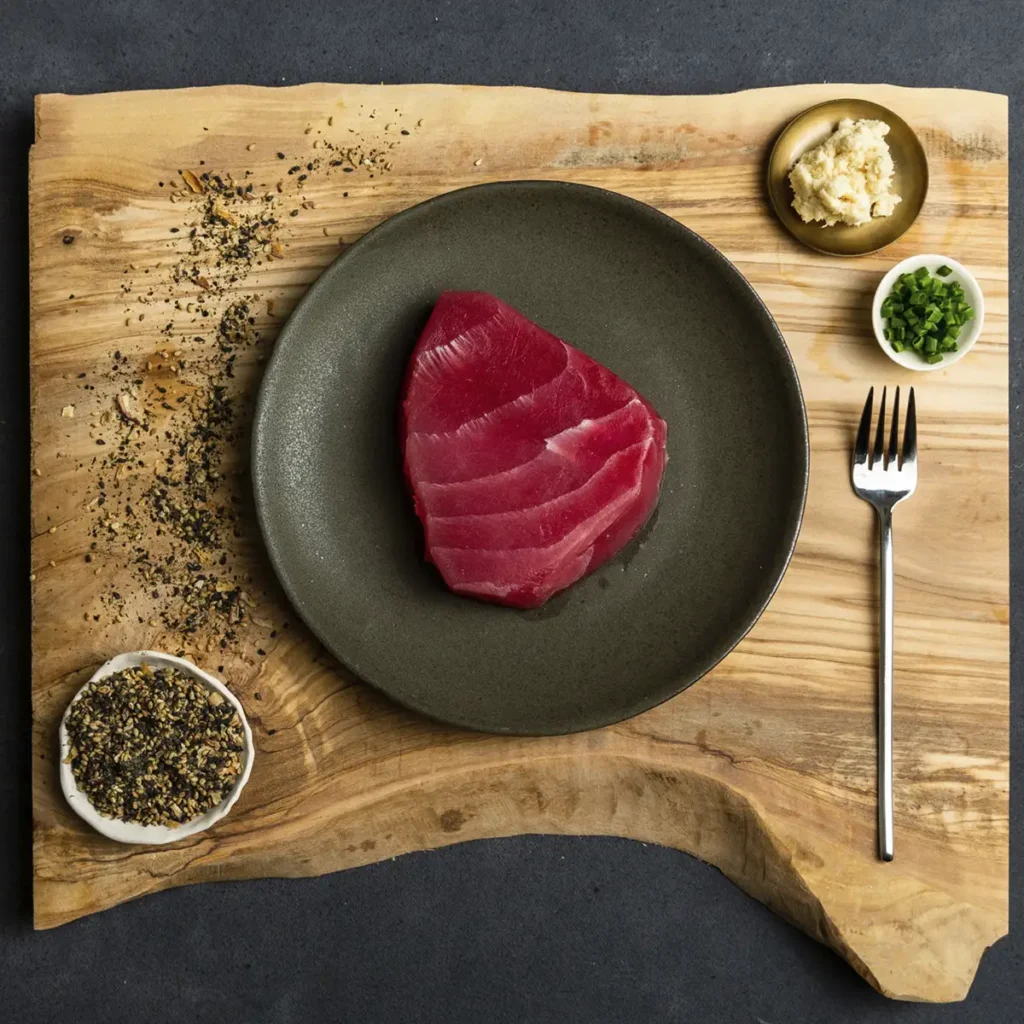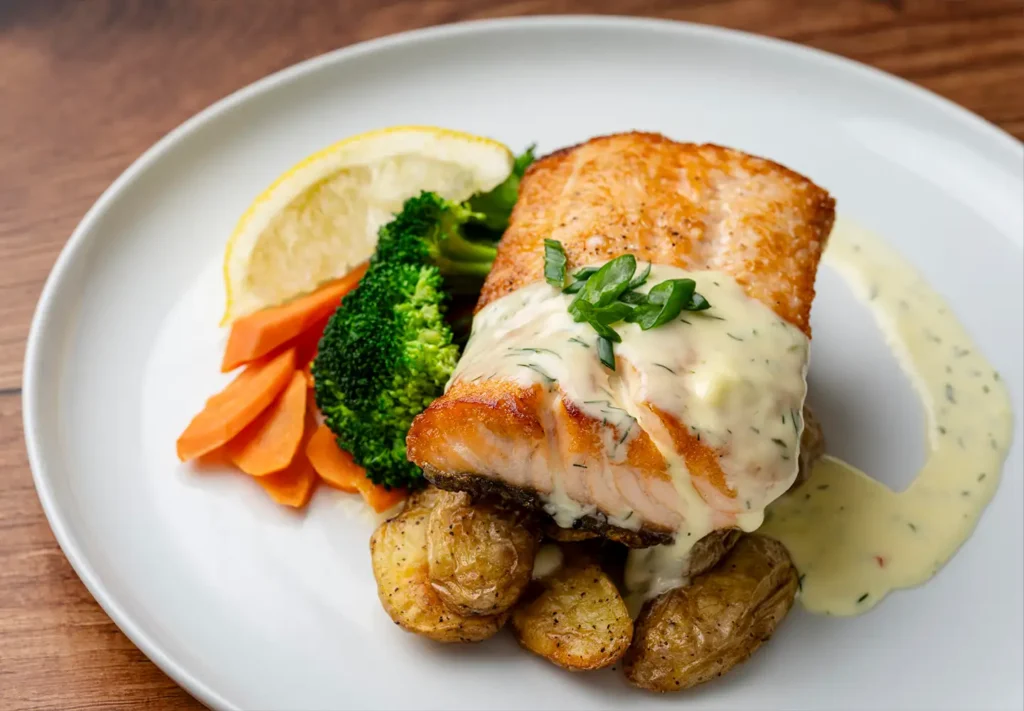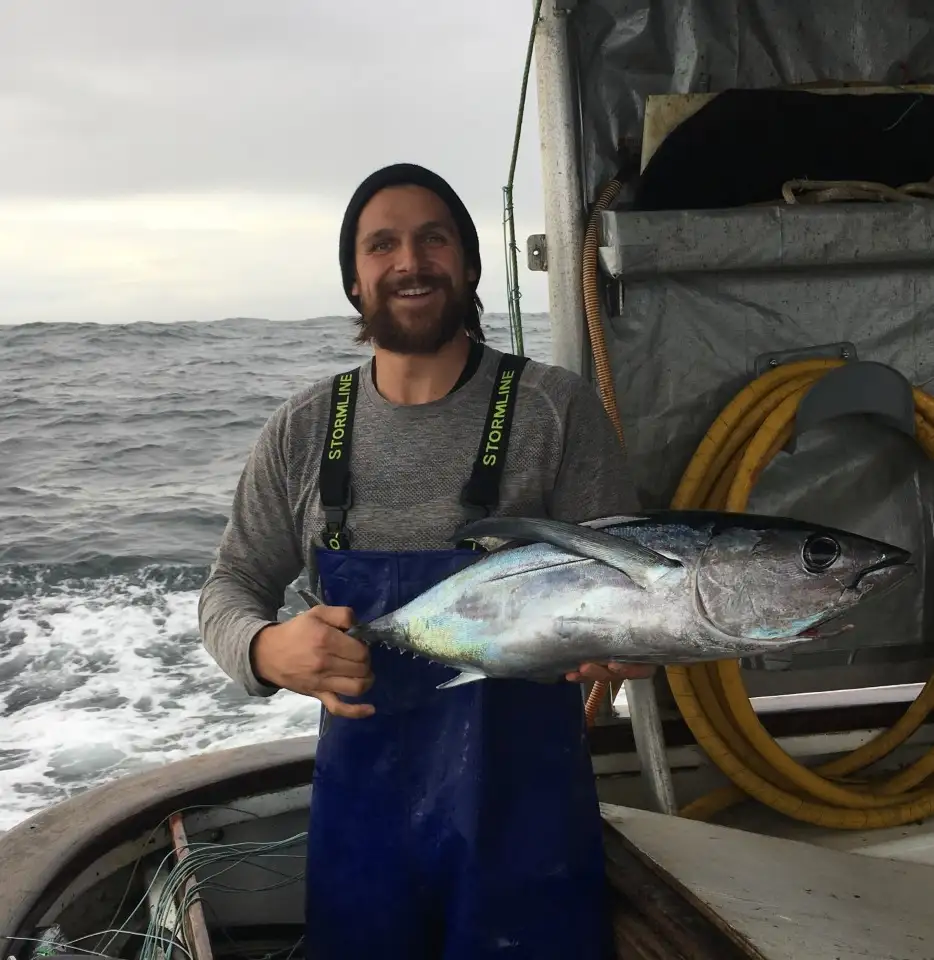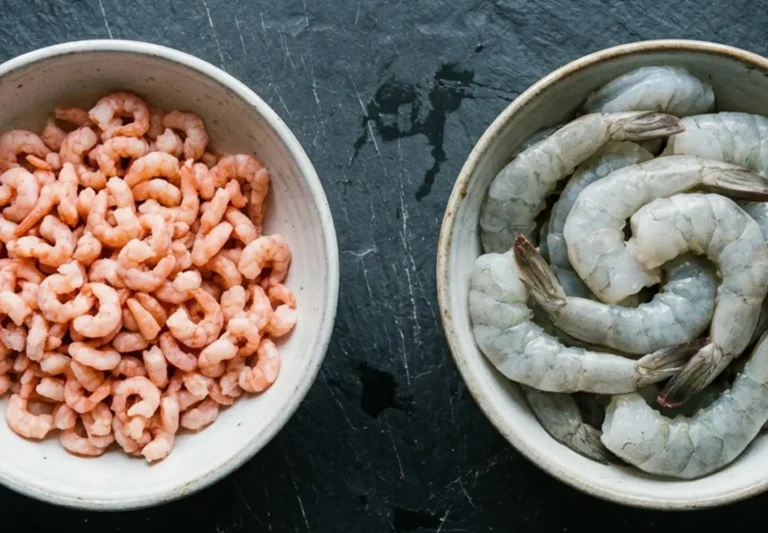
How long does fish last in the fridge is one of those questions with a short answer and a long one. The short answer: one to two days for raw fish, three to four days for cooked. That is the number every food safety agency lands on, and it is the number you should plan around.
The long answer is more useful, because it explains why your salmon was perfect on Tuesday and grey and weeping by Thursday when the label said you had until Friday. A fish does not come with a fixed shelf life that starts when you put it in your fridge. It comes with a freshness budget that started being spent the moment it left the water, and by the time you carry it through your door, somebody else has already spent most of it.
Understanding where the budget goes is what turns two days into two good days.
How long does fish last in the fridge? The numbers
Here is the whole picture in one place. Refrigerator times assume a fridge holding at 4°C (40°F) or colder.
| What you have | Fridge | Freezer, for quality |
|---|---|---|
| Raw lean fish (cod, haddock, halibut, sole) | 1 to 2 days | 6 to 8 months |
| Raw fatty fish (salmon, tuna, mackerel, trout) | 1 to 2 days | 2 to 3 months |
| Raw shrimp, scallops, squid | 1 to 2 days | 3 to 6 months |
| Shellfish meat (crab, picked meat) | 2 to 4 days | 2 to 4 months |
| Cooked fish and seafood | 3 to 4 days | 4 to 6 months |
| Smoked fish, sealed | up to 14 days | about 2 months |
The refrigerator figures come from the USDA Food Safety and Inspection Service and the FoodSafety.gov cold food storage chart, which agree with each other and with Canadian guidance. Note what the freezer column is and is not. Frozen fish held continuously at -18°C stays safe indefinitely. Those months are quality windows, not safety deadlines.
Two things about this table are worth saying plainly. First, lean and fatty fish get the same refrigerator window even though their freezer windows differ by months. Fat oxidizes, which is a freezer problem, not a fridge problem. In the fridge, bacteria set the pace and they do not much care how oily your salmon is.
Second, one to two days is a ceiling, not a target. It assumes the fish was in good condition when you bought it, that your fridge is actually cold, and that you got it home quickly. Break any of those and the ceiling drops.
The clock started before you bought it
This is the part most storage advice skips, and it is the whole reason two identical fillets can behave completely differently.
Think of freshness as a budget of about fourteen to sixteen days from the moment a fish is landed, under genuinely good cold-chain handling. Every stage spends some of it. Time on the boat before icing. The run to port. The processor. The truck. The distributor. Days in a retail display case. Your drive home. Whatever is left when the fish reaches your fridge is your window, and it is the only part of the budget you control.
For seafood sold as fresh, most of that budget is already gone. A fillet in a grocery display case is commonly three to six days past harvest before anyone buys it. That is not a scandal, it is arithmetic. It also explains the two-day rule. Regulators are not saying fish lasts two days. They are saying that once fish has travelled through a normal supply chain, roughly two days is what a reasonable person can count on.
Frozen seafood works differently, and this is where the budget metaphor earns its keep. Freezing does not spend the budget slowly. It stops the spending. A fillet frozen at sea within hours of harvest arrives in your kitchen with almost its entire budget intact, and the clock only restarts when you thaw it. Our fresh versus frozen fish guide works through the full comparison, and what IQF actually means covers the freezing method that makes it possible.
That is also why we sell what we sell. Nearly everything in our market is frozen at or near source, which is the only honest way to get seafood in good condition to a kitchen in the middle of Halifax, let alone the middle of Ontario.
Why fish spoils faster than chicken
Fish spoils about twice as fast as poultry in the same fridge, and there are three reasons, all of them structural.
The bacteria on a fish came from cold water. Ocean bacteria evolved at temperatures near freezing, so a 4°C fridge that genuinely slows down the bacteria on a chicken is merely mildly inconvenient to the bacteria on a cod. They keep working, just slightly slower.
Fish muscle is built differently. Shorter muscle fibres, far less connective tissue, and more water held inside the protein structure. That is exactly what makes a good fillet flake instead of shred, and it also means there is less structure holding things together once breakdown starts.
Fish enzymes do not switch off. The digestive and tissue enzymes in a fish stay active at refrigerator temperatures and keep breaking down protein after death. That process produces trimethylamine, the compound behind the specific smell people call fishy. Fresh fish does not smell fishy. Fishy is the smell of the budget running out.
Temperature does more work than packaging
Every extra degree costs you hours. A fridge at 6°C instead of 4°C can roughly halve the useful life of a fillet, which is why Health Canada’s food safety guidance puts 4°C to 60°C in the danger zone and tells you to get perishables into the fridge or freezer within two hours of buying them. Make it one hour on a hot day, because a car in July is an incubator.
Most home fridges are set to 4°C. Fish would rather be at 0°C to 2°C, just above freezing. You cannot safely run your whole fridge that cold without freezing the milk, so the practical answer is to make one small part of it colder. That is what ice is for, and it is why every fish counter you have ever seen is buried in it.
Where in the fridge matters
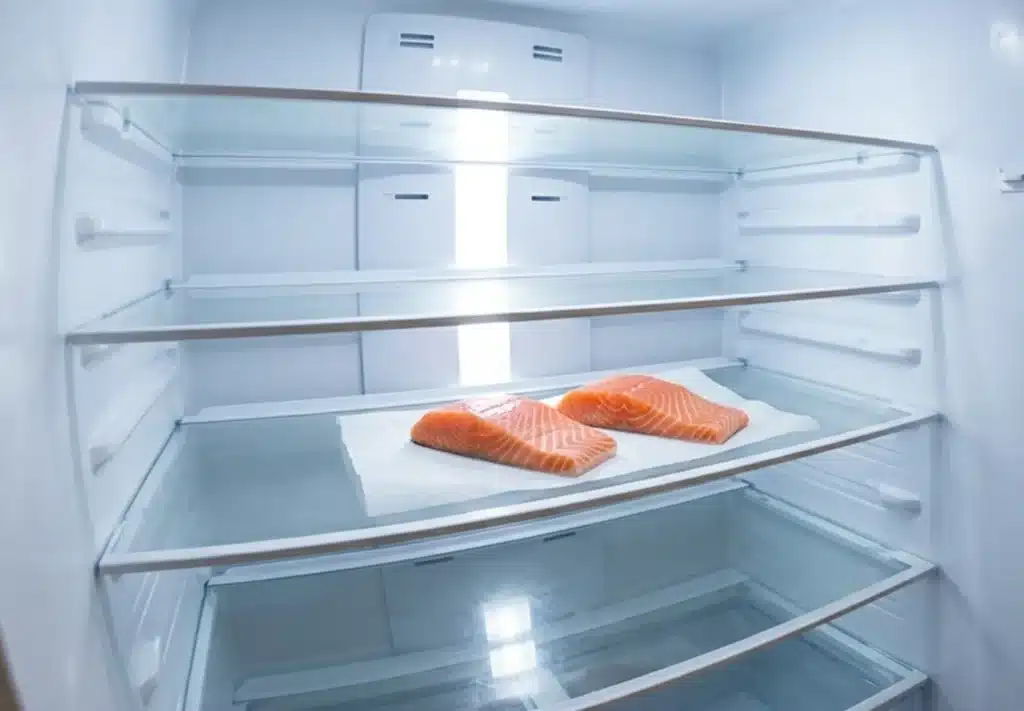
The door is the warmest part of a fridge and swings several degrees every time someone opens it. The back of the bottom shelf is the coldest and steadiest. That is where fish goes, and it is where raw fish belongs anyway, below and away from anything ready to eat, since Health Canada is clear that raw seafood should be kept separate from other food to avoid cross-contamination.
How to store fish in the fridge so it lasts the full two days
The goal is cold, dry, and covered. In that order.
- Get it home cold. An insulated bag and a cold pack are not fussy, they are the cheapest quality upgrade available. The two-hour clock is not a suggestion.
- Unwrap and pat it dry. Deli paper and butcher paper hold meltwater against the flesh, and bacteria multiply fastest in standing liquid. Pat the fillet dry with paper towel. The same habit that protects storage also protects your sear later, which is the whole argument in why you pat fish dry before cooking.
- Wrap it snugly. Plastic wrap pressed to the surface, or a sealed bag with the air pushed out. Air dries the surface and speeds oxidation. Trapped moisture is worse.
- Set it on ice, not in it. Put the wrapped fish on a rimmed plate or in a shallow container, then lay ice or a cold pack on top. Direct contact with melting ice waterlogs the flesh and washes out flavour.
- Drain the meltwater. Every day, without exception. A fillet sitting in a puddle is being spoiled by the thing meant to preserve it.
- Put it at the back of the bottom shelf. Coldest, steadiest, and safely below your ready-to-eat food.
Done properly, this buys you the full two days in good condition rather than two days on paper. It will not buy you a third. If you are not going to cook the fish within two days, the freezer is the right call, and freezing it on day one preserves far more than freezing it on day two.
Thawed fish and cooked fish follow different rules
The two-day rule covers raw fish you bought refrigerated. Two common situations sit outside it.
Fish you thawed from frozen
Thawing restarts the clock, and it restarts it at whatever point the freezing paused it. Fish thawed slowly in the fridge, still cold to the touch and never above 4°C, gets treated as fresh fish from that moment: cook it within one to two days. Fish thawed on the counter or in warm water does not get a window at all, because parts of it spent real time in the danger zone. Cook it now.
How to thaw frozen fish covers the methods that protect texture, and whether you can refreeze fish answers the follow-up question, which is a genuine yes-but rather than a flat no. The short version: refreezing is often safe, and it always costs you moisture and texture. Every freeze and thaw spends more of the budget.
Cooked fish and leftovers
Cooking buys you time by killing most of the bacteria present, which is why cooked fish keeps three to four days against the raw fish’s one to two. Health Canada’s leftover guidance puts cooked fish at three to four days refrigerated and four to six months frozen, and asks you to get leftovers into the fridge within two hours and reheat them to 74°C (165°F).
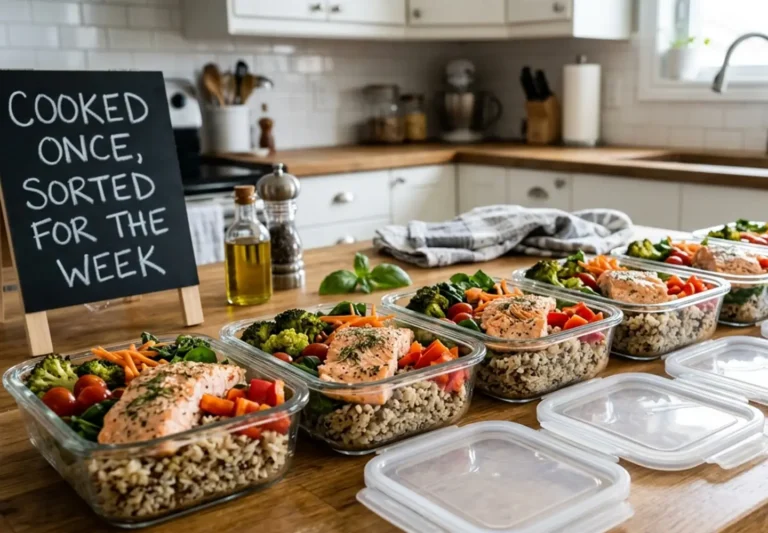
Quality and safety part ways here. Cooked fish is safe for four days and pleasant for about two, because reheating dries out what cooking already firmed up. Fatty fish and shrimp handle it best. Lean white fish suffers most. If you cook fish specifically to eat later, cook it for that, which is the entire premise of our seafood meal prep guide.
How to tell when fish has gone past it
Dates tell you what somebody predicted. Your senses tell you what happened.
- Smell. Clean and faintly of the sea is fine. Sharp, sour, or anything like ammonia means it is done. Ammonia is not a warning, it is a verdict.
- Texture. Press it. Fresh fish springs back. If your fingerprint stays, the protein structure has broken down.
- Liquid. A little clear moisture is normal. A milky or cloudy pool is protein leaking out.
- Surface. Dulling, browning at the edges, greying, or a sticky film rather than a natural sheen.
Our guide on how to tell if fish is fresh goes deeper on reading a fillet at the counter, which is the version of this skill that saves you money before you spend it.
When in doubt, throw it out. A fillet is worth less than an evening of food poisoning, and unlike a steak, fish does not give you much of a warning window between fine and not fine.
When the freezer is the better answer
Most fridge storage problems are really planning problems. You bought fish on Saturday for a Wednesday dinner, and no storage technique closes a four-day gap.
A well-stocked freezer does. It means the fish you cook on Wednesday is fish that was frozen at peak condition, not fish that spent four days slowly declining in your crisper drawer. How to store frozen fish properly covers doing it well, and the frozen seafood worth keeping on hand covers what actually earns its freezer space.
If you want to see how we handle it on our end, everything in the market is frozen with that logic in mind, and the recipe collection is built around cooking it on a weeknight rather than a Sunday.
How long does fish last in the fridge? The short version
One to two days raw. Three to four days cooked. Two days at most for fish you thawed in the fridge, and no window at all for fish thawed on the counter.
Those numbers hold up only if the rest of it holds up. Cold, dry, covered, on ice, at the back of the bottom shelf, with the meltwater poured off. Fish arrives with a freshness budget, most of it already spent by the time you own it, and good storage is not about extending the budget. It is about not wasting the part you were given.
Buy closer to when you cook, keep it properly cold, and when the timing does not work, use the freezer without apology. That is the entire skill.