How to thaw frozen fish is one of those things most people get wrong, and not because they’re careless. It’s because the conventional wisdom (defrost on the counter, or worse, under hot water) makes intuitive sense but destroys texture.
The truth is simple: how to thaw frozen fish determines whether you keep the quality locked in by proper freezing or lose it in the final step. Thawing is not passive. It’s the last chance to protect what’s already in the package.
Why thawing method matters more than most people think
Freezing and thawing are not separate processes. They’re part of the same system. The quality of your fish is largely set during freezing and storage, but thawing determines how much of that quality you keep.
This is the crucial point: thawing does not usually create quality problems. It either preserves what’s there or exposes damage that already exists.
Think of the fish muscle as a sponge full of water. When the sponge is intact, it holds moisture. When it’s damaged by poor freezing, temperature swings, or repeated freeze-thaw cycles, it leaks. Thawing doesn’t break the sponge. It just reveals whether the sponge was already broken.
Thawing method determines how much additional stress you place on that structure:
Good thawing = stable temperature, gradual reabsorption of moisture, minimal additional damage Poor thawing = temperature shock, uneven thawing, accelerated moisture loss
Research on freeze-thaw cycles shows that protein structure and water-holding capacity directly affect texture and moisture retention in fish. This is why the method matters.
For context on what sets up the fish in the first place, read our article on frozen fish quality: what freezing really does to seafood.
The two methods that work
There are two reliable ways to thaw frozen fish. Both prioritize stable, controlled temperature over speed.
Refrigerator thawing (the most reliable method)
This is the gold standard. It’s slow, it’s safe, and it gives the fish the best chance to reabsorb moisture evenly.
How to do it:
- Leave the fish in its original packaging or place it in a sealed container on a tray to catch any liquid drip
- Put it on the bottom shelf of the refrigerator (prevents drips from contaminating other food)
- Let it thaw overnight or for several hours, depending on thickness
A typical frozen fish fillet (1/2 to 3/4 inch thick) thaws in 6-8 hours. A thicker portion or whole fish takes 12-24 hours.
This slower process gives the muscle time to reabsorb water as it melts, which supports texture and moisture retention when you cook it. The stable temperature of around 4°C minimizes additional stress on already-damaged protein structures.
Cold water thawing (when you need speed)
If you’re cooking same-day and need thawing to happen faster, cold water works well. The key word is cold.
How to do it:
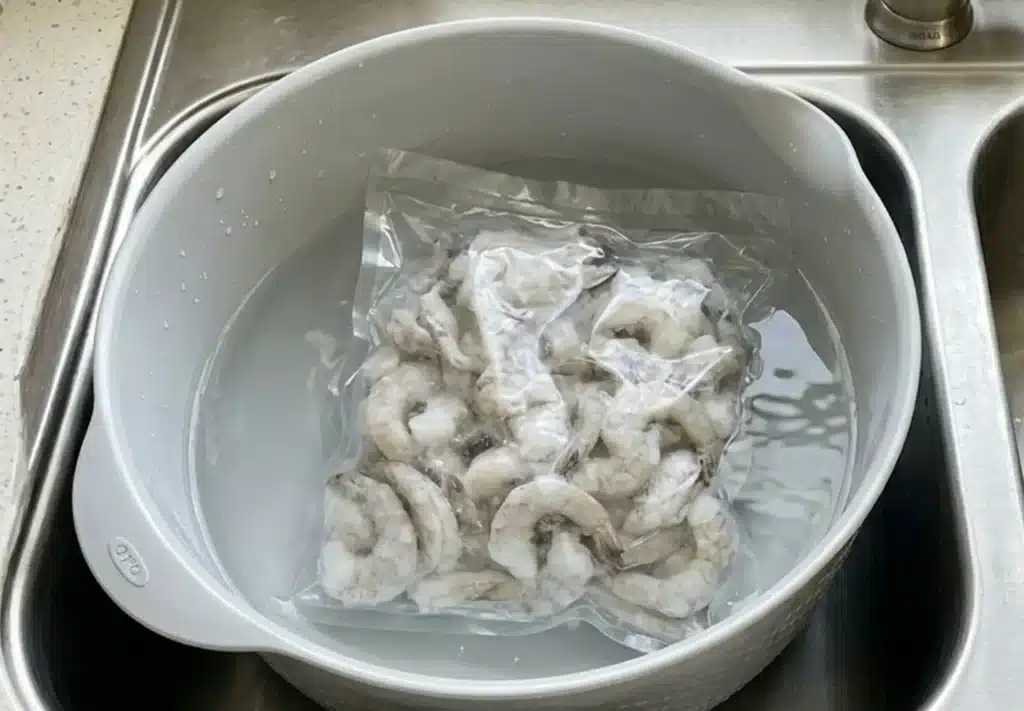
- Keep the fish in its original packaging (sealed, leak-proof)
- Submerge it in a bowl or sink filled with cold water
- Change the water every 20-30 minutes to maintain consistent temperature
A thin fillet thaws in 30 minutes to 1 hour this way. A thicker fillet takes 1-2 hours. This is much faster than the refrigerator method without the temperature extremes that damage texture.
Cold water works because it conducts heat more efficiently than air (which is why the refrigerator method is slower) while staying at a stable, cool temperature that doesn’t shock the protein structure.
Methods that damage texture (what to avoid)
Some thawing approaches introduce temperature extremes or uneven thawing that put unnecessary stress on protein structure.
Room temperature thawing
Leaving fish on the counter is the most common mistake. The outer layer warms quickly while the inside stays frozen. This creates uneven texture and accelerates moisture loss. It also allows bacteria to multiply on the surface.
Hot water thawing
Hot water thaws too fast. It can denature proteins in the outer layer before the inside has fully thawed, tightening the muscle and reducing water-holding capacity. It’s a guaranteed way to end up with dry, tough texture.
Microwave thawing
Microwaves heat unevenly. Some parts of the fish begin to cook while others remain frozen. This inconsistent heating damages texture and weakens structure. Health Canada allows microwave thawing only if the fish is cooked immediately afterward, and even then, results are less predictable.
The bottom line: these three methods create texture problems that no amount of skillful cooking can fix.
What happens during thawing (the science)
When frozen fish begins to thaw, ice melts back into water. That water needs to be reabsorbed by the muscle structure. If proteins are intact and undamaged, much of the moisture stays within the fish. If proteins have been damaged during freezing or storage, they cannot hold water effectively.
This is where the sponge analogy matters. A fresh sponge reabsorbs water as ice melts. A sponge with holes in it lets water leak out. The damage is already done. Thawing just determines whether you make the problem worse.
Slow, stable thawing gives the protein structure time to reabsorb moisture before you even apply heat. Fast, uneven thawing forces water out before it can be reabsorbed.
Preparing fish after thawing for best results
Thawing doesn’t end when the fish is no longer frozen. What you do in the few minutes after thawing determines how well it will perform in the pan.
Once thawed:
- Remove the fish from packaging
- Gently pat it dry with a paper towel (removes excess surface moisture)
- Let it rest briefly in the refrigerator if you’re not cooking immediately
This matters because excess surface moisture prevents browning during searing. Drying the surface helps you get a golden crust. Resting allows internal moisture redistribution to settle, creating more even texture during cooking. The cold helps the protein structure stay firm while waiting to cook.
Once your fish is properly prepped, explore our recipe collection for cooking techniques that work best with thawed seafood.
Can you cook fish straight from frozen
In some cases, yes. Thinner fillets or individually portioned pieces cook well from frozen using gentle methods.
Methods that work:
- Steaming: Fish thaws gently while cooking, structure stays intact
- Poaching: Gentle heat, even cooking, minimal damage
- Baking: Low-to-moderate temperature allows even thawing during cooking
Methods that struggle:
- Searing: Excess ice on the surface prevents browning and creates steam instead of crust
- High-heat pan cooking: Uneven thawing leads to uneven cooking
Cooking from frozen adds time and reduces control, but it can work if you choose the right method. However, thawing first almost always produces better results.
Handling previously frozen fish from the store
In Canada, seafood labelled “previously frozen” has been frozen and thawed before sale. This is not lower quality — it’s often done to preserve quality during transport.
But it requires careful handling:
Do:
- Keep it refrigerated
- Cook it within 1-2 days of purchase
- Handle it gently during prep
Don’t:
- Refreeze it (once thawed, refreezing causes additional damage)
- Leave it at room temperature
- Store it longer than fresh fish
Once thawed, the muscle structure is more sensitive to temperature changes and time. Use it sooner rather than later.
Common thawing mistakes
These are easy to fix once you know what’s happening:
- Thawing on the counter (uneven temperature, bacterial growth)
- Using warm or hot water (protein damage, texture loss)
- Leaving fish uncovered in the fridge (dehydration)
- Refreezing after thawing (cumulative damage)
- Rushing with any uneven heat source (texture breakdown)
Avoiding these protects both moisture and structure.
The complete picture: How to thaw frozen fish from freezing to pan
Freezing determines the starting point. Thawing determines how much of that quality you keep. Cooking is what you do with it.
If you started with properly handled frozen seafood and thawed it correctly, cooking becomes predictable. The fish holds together. It stays moist. Browning works. Texture is consistent.
If you start with low-quality frozen fish or thaw it poorly, no cooking technique will fix it.
Ready to work with quality seafood? Browse our shop or explore our collection of the best frozen seafood to keep in your freezer. For deeper understanding of how freezing sets the stage for thawing, read our guide on frozen fish quality.