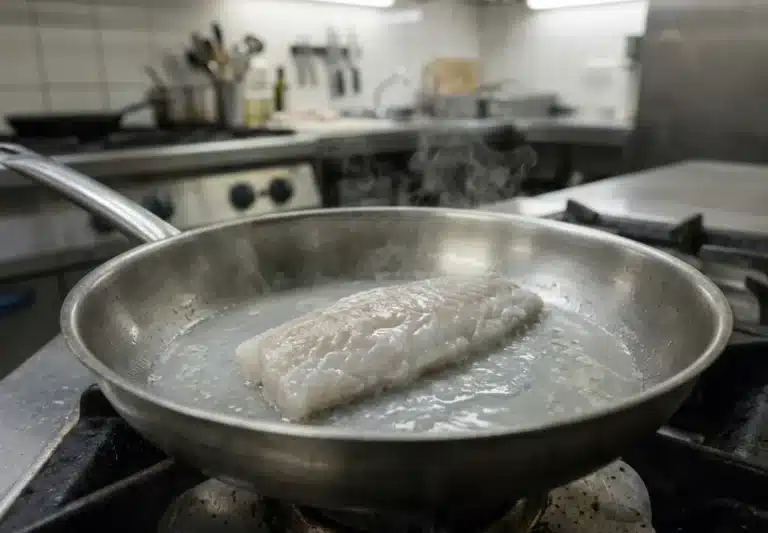
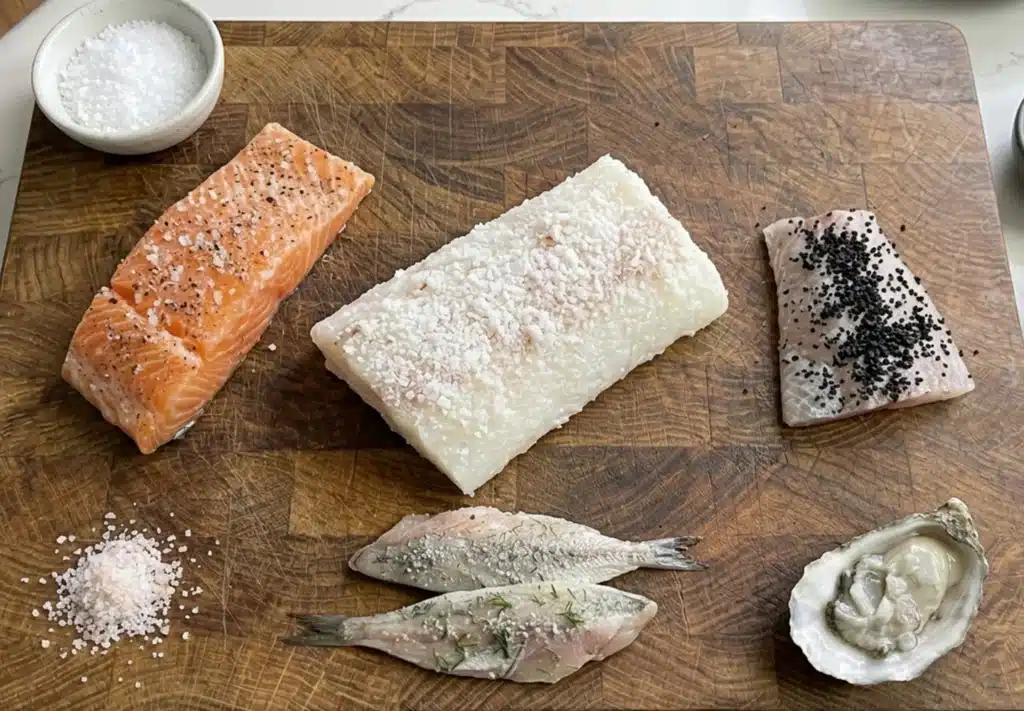
Fish is one of the easiest proteins to cook well, but it is also one of the easiest to season poorly. Most mistakes are not about overcooking. They come down to when you use salt and how you use it. This ultimate guide to seasoning fish explains how to season fish properly so you get consistent, flavourful results every time.
Think of seasoning like making soup. If you only salt at the very end, the broth might taste salty, but the ingredients inside are still bland. The flavour never made it all the way through.
Fish works the same way. Timing determines whether the salt actually improves the fish or just sits on the surface.
Of course, seasoning can only do so much. Starting with high-quality, properly handled fish makes all the difference in how these techniques perform.
Ultimate guide to seasoning fish: why timing matters most
Salt does not just sit on fish. It moves in and out of it, carrying moisture with it.
When you salt fish, it immediately starts pulling moisture out, like wringing out a sponge. If you give it enough time, that moisture mixes with the salt and gets pulled back into the fish. That is how seasoning spreads.
If you do not wait long enough, the fish loses moisture without getting that flavour back. You end up with a wet surface and drier fish.
This process is well explained in how salt affects protein and moisture.
- Salt pulls moisture out first
This happens immediately after seasoning. - Time allows reabsorption
After about 20 to 30 minutes, the fish pulls that salty moisture back in. - The middle timing is the problem
The fish is losing juices but has not reabsorbed them yet. - Follow this rule
- Thin fish: season right before cooking
- Regular fillets: season 20 to 30 minutes ahead
- Thick cuts: give it more time
What is happening to the protein when you season fish
To really understand seasoning, it helps to understand what is happening at the protein level.
Fish, chicken, and beef are all made of proteins, but they are built differently. Fish has shorter muscle fibres and less connective tissue, which is why it cooks faster and breaks apart more easily.
When you add salt, it starts to loosen the structure of those proteins. This helps the fish hold onto moisture when it cooks instead of squeezing it out.
Think of protein like a tightly wound sponge. Salt relaxes it just enough so it can hold water instead of pushing it out when heat is applied. If you want a step-by-step breakdown, follow a simple dry brining method like this to get the timing and salt levels right.
- Fish reacts quickly
Its delicate structure means salt works fast and timing matters more. - Chicken is more forgiving
It has more structure, so timing is less sensitive. - Beef is the most forgiving
It can sit with salt longer without major texture changes. - Salt helps retain moisture
Proper seasoning reduces dryness during cooking.
Salt 101 in this ultimate guide to seasoning fish
Salt is the most important seasoning you will use. Everything else is secondary.
Think of salt like turning up the brightness on a screen. The image does not change, but everything becomes clearer.
Not all salts behave the same way, and this can lead to big differences in results.
This is clearly shown in salt conversion differences.
- Kosher salt is the best choice
Larger grains make it easier to control. - Sea salt is a good alternative
Slightly finer, but still effective. - Table salt is easy to overuse
It is dense and fine, so small amounts go further. - Different salts are not interchangeable
The same spoonful can have very different strength. - Finishing salt is for after cooking
Use it to add texture at the end.
How much salt to use when seasoning fish
Most people under-season fish because they are trying to be careful. The result is fish that tastes flat.
Instead of thinking about “a lot” or “a little,” think about even coverage.
- You should see a light layer of salt
Not invisible, not heavy. - Season both sides
Like spreading butter evenly. - Avoid clumps
Salt should never pile up. - Use a guideline if needed
Around 0.75 to 1 percent of the fish’s weight.
When to season fish: right before or 20 to 30 minutes ahead
This is the most important idea in this ultimate guide to seasoning fish.
Think of salt like sending a message into the fish. It needs time to travel.
If you cook immediately, the message stays on the surface. If you wait long enough, it spreads inside. If you stop halfway, it never gets there.
- Season right before cooking for thin fish
No wait time needed. - Season 20 to 30 minutes ahead for most fish
This gives the best balance of flavour and moisture. - Give thicker fish more time
It needs longer for the same effect. - Avoid the middle timing window
This is where fish loses moisture and gains little flavour.
Quick reference table: seasoning timing and results
| Timing | What happens | Result |
|---|---|---|
| Right before cooking | Salt stays on surface | Good for thin fish |
| 20 to 30 minutes ahead | Salt dissolves and reabsorbs | Best overall result |
| 5 to 10 minutes | Moisture pulled out, not reabsorbed | Wet surface, drier fish |
| 1 hour or more | Protein changes more deeply | Slightly firmer texture |
Building flavour without overpowering fish
Once salt is handled properly, everything else should support the fish, not compete with it.
Think of fish as the main voice. Seasoning should act like background music.
- Fat carries flavour
Butter is rich, olive oil is lighter. - Acid brightens at the end
Lemon is like turning on a light. - Do not rely on marinades
They mostly affect the surface. - Use aromatics sparingly
Garlic or shallots, not everything at once. - Keep herbs simple
One or two is enough.
Common mistakes to avoid when seasoning fish
Most mistakes are simple once you understand what is happening.
- Seasoning too late
Like salting soup at the end. The outside tastes salty, the inside is bland. - Seasoning too early without a plan
You start curing instead of seasoning. - Getting stuck in the middle timing zone
The fish loses moisture and does not gain flavour. - Using too many ingredients
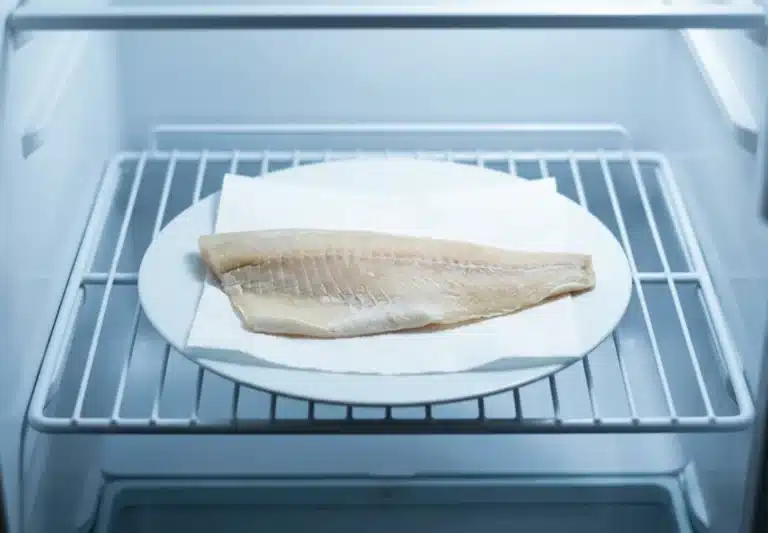
You lose the taste of the fish. - Not drying fish first
Nothing sticks and nothing browns.
Final thoughts: keep it simple and get the timing right
If you remember one thing from this ultimate guide to seasoning fish, remember this:
Salt needs time or heat. Nothing in between works well.
Season right before cooking or give it 20 to 30 minutes to do its job. Keep everything else simple. When you follow this, fish becomes easy, consistent, and far more enjoyable to cook.