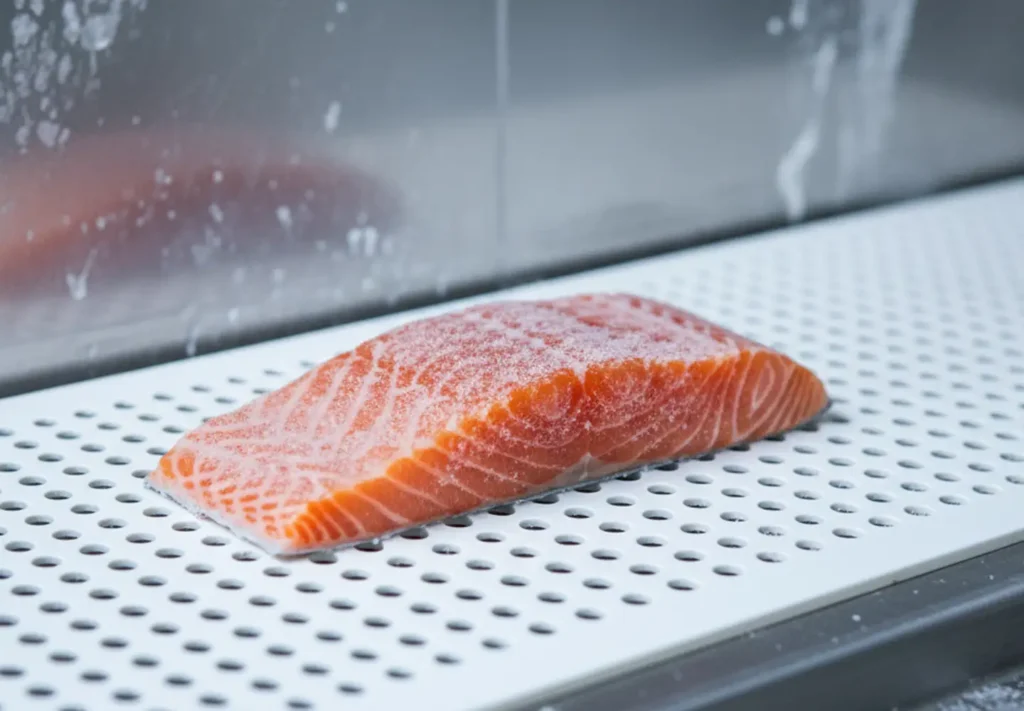
What is IQF, and why does it matter? IQF stands for Individually Quick Frozen, a freezing technology that has quietly transformed how the world’s best seafood reaches your kitchen. Each piece of fish or shellfish is frozen separately at extremely low temperatures, usually around -40°C, within hours of harvest. The result is seafood preserved at peak quality, with texture, flavour, and nutrients locked in before they have a chance to degrade.
The conventional thinking is that “fresh” always beats “frozen.” That’s a holdover from a time when frozen seafood meant slow-frozen, block-frozen, watery, and tough. With IQF, the math changes completely. Properly handled IQF seafood often outperforms what’s sold as “fresh” at your grocery store, especially if you don’t live within a few hours of a working harbour.
What is IQF: The basic concept
IQF stands for Individually Quick Frozen. Three words that describe a complete philosophy of seafood preservation.
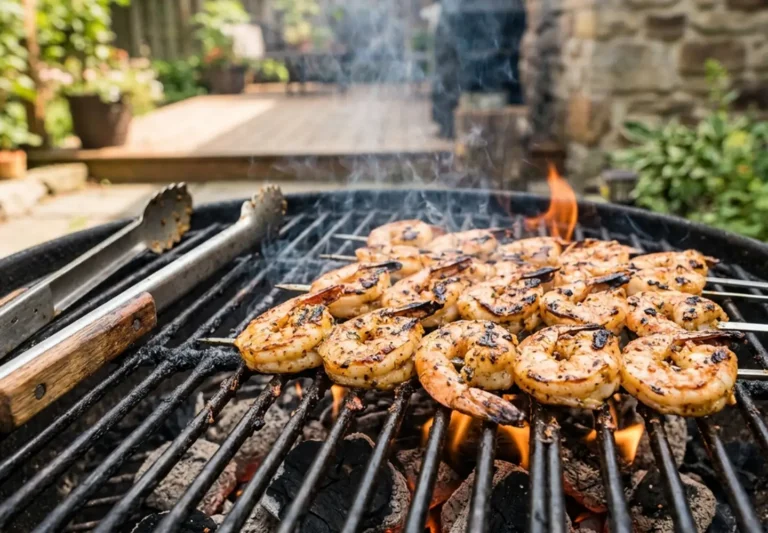
Individually: Each piece is frozen separately. Fillets don’t stick together. Shrimp don’t clump. You pull out exactly what you need without thawing the whole bag. That convenience alone is significant, but it’s not the main reason IQF matters.
Quick: Speed is everything. The fish moves through the critical freezing zone (the temperature range where ice crystals form and damage muscle structure) in minutes instead of hours. This is the technical foundation of why IQF preserves quality.
Frozen: Once through the critical zone, the seafood holds at -18°C or colder, where chemical and biological changes slow to nearly zero.
This is fundamentally different from traditional block freezing, where seafood is frozen together in large units. The slow freezing time and large mass mean fish sits in the danger zone longer, ice crystals grow larger, and protein structure suffers.
The science of why IQF works
Here’s what actually happens when fish freezes.
Fish muscle is roughly 75-80 percent water. When water freezes, it forms ice crystals. The size of those crystals is determined by how fast the freezing happens. Fast freezing creates many tiny ice crystals. Slow freezing creates fewer but much larger ones.
Large ice crystals are the problem. They pierce muscle fibres, damage cell walls, and create gaps in the protein structure. When the fish thaws, water leaks out of these damaged structures as drip loss. The texture turns mushy. Flavour fades. Moisture disappears in the pan.
Think of it like freezing berries. If you freeze a pint of strawberries in one solid block, you get a clump of frozen berries that emerge mushy and weeping juice. If you freeze each berry separately on a tray first, you get firm, individual berries that hold their shape and flavour. IQF seafood works the same way.
According to the Food and Agriculture Organization, the critical zone where most damage occurs is between -1°C and -2°C. The longer fish stays in that zone, the more damage happens. IQF technology forces fish through this zone in minutes. Traditional freezing takes hours.
For a deeper look at how freezing affects fish at the molecular level, our guide on frozen fish quality breaks down protein denaturation and why proper handling matters.
IQF vs traditional freezing: The real difference
The comparison most people miss is not IQF vs fresh. It’s IQF vs slow-frozen.
A traditional block-frozen fish might take 12 to 24 hours to freeze completely. During that time, the protein structure is exposed to the conditions that cause maximum denaturation. Large ice crystals form. Cells rupture. By the time it’s fully frozen, damage is already done.
IQF fish freezes in 5 to 15 minutes. Minimal time in the danger zone. Tiny ice crystals. Protein structure stays intact. The result is fish that thaws and cooks like it just came off the boat.
The real-world impact:
Slow-frozen seafood: high drip loss when thawed, soft texture, muted flavour, shorter usable shelf life.
IQF seafood: minimal drip loss, firm texture, full flavour, stable quality for months.
For someone shopping for frozen fish, this distinction is everything. The label “frozen” tells you nothing. The label “IQF” or “individually quick frozen” tells you the seafood was preserved correctly.
What about “fresh” seafood at the grocery store
Here’s where the assumption breaks down.
“Fresh” fish at most Canadian grocery stores has typically spent several days in transit, refrigeration, and display before you see it. During that time, enzymes slowly break down protein. Bacteria multiply, even at proper refrigeration temperatures. Oxidation changes colour and flavour. The fish is still safe, but its quality is declining every hour.
IQF seafood, frozen within hours of harvest, captures the fish at its peak and pauses all of that degradation. When you thaw it weeks or months later, you’re working with fish that’s closer to its just-caught state than the “fresh” fillet at the grocery store.
This isn’t theoretical. It’s the basic math of cold-chain logistics. For inland Canadians (most of us), IQF is the practical path to genuinely high-quality seafood.
Our pillar guide on fresh vs frozen fish covers the full comparison if you want to understand why the conventional wisdom doesn’t hold up.
The benefits of IQF seafood
Texture stays intact because protein structure is preserved by tiny ice crystals instead of damaged by large ones.
Flavour holds because volatile compounds don’t have time to dissipate during slow freezing or extended refrigeration.
Nutrients are preserved at the moment of freezing. Omega-3 fatty acids, vitamins, and minerals stay sealed in until you thaw and cook.
Bacterial growth stops cold. Freezing doesn’t kill all bacteria, but it halts their growth completely. That extends safe storage from days to months.
Portion control is built in. Pull out one fillet or six shrimp without affecting the rest of the bag. Less waste, more flexibility.
Shelf life extends dramatically. Properly stored IQF seafood holds quality for 2 to 6 months depending on the type. Fresh fish holds for 1 to 3 days.
If you want a curated list of what’s worth keeping on hand, our guide to the best frozen seafood to always keep in your freezer covers the products that perform best at home.
How to handle IQF seafood at home
Buying IQF seafood is only half the equation. Storing and thawing properly matters just as much.
Storage: Keep your freezer at -18°C or colder. Health Canada recommends this baseline for all frozen food. IQF seafood will hold quality for months at this temperature.
Thawing: Slow, cold thawing is best. Overnight in the refrigerator preserves texture and minimizes drip loss. Cold water thawing works when you need speed. Avoid room-temperature thawing, hot water, and microwave defrosting.
For full thawing guidance, see our article on how to thaw frozen fish without ruining it.
Cooking from frozen: One of the great advantages of IQF is the option to cook directly from frozen. Steaming, poaching, baking, and braising all work well with frozen fillets and shellfish. Searing requires thawing first because surface ice prevents browning.
Storage organization: Label everything with the type of seafood and the freeze date. Use older stock first. Our guide on how to store frozen fish covers freezer organization in detail.
Why Afishionado uses IQF seafood
At Afishionado, we work with Atlantic Canadian and Icelandic producers who use IQF technology to capture seafood at its peak. Salmon from Sustainable Blue’s land-based facility in Nova Scotia is frozen within hours of harvest. Haddock from Iceland is processed and IQF-frozen in the cold, clean North Atlantic. Scallops, shrimp, and other products follow the same standard.
When you thaw and cook IQF seafood from our shop, you’re not eating compromised frozen fish. You’re eating seafood preserved at the moment it was at its best.
For recipes that showcase IQF seafood at its best, browse our recipe collection for tested techniques on everything from simple pan-seared salmon to seafood chowders that highlight the texture IQF protects.
Final thoughts
Now you know what is IQF, and why it matters for seafood quality. The technology is straightforward: freeze fast, freeze individually, lock in the peak. The result is seafood that performs the way good seafood should, every time you cook it.
The next time someone tells you fresh is always better than frozen, you can explain the difference. Fresh fish from a Halifax wharf at 8 AM beats anything frozen. Fresh fish from a grocery store after four days in transit does not. IQF seafood, frozen properly at source, often wins that comparison.