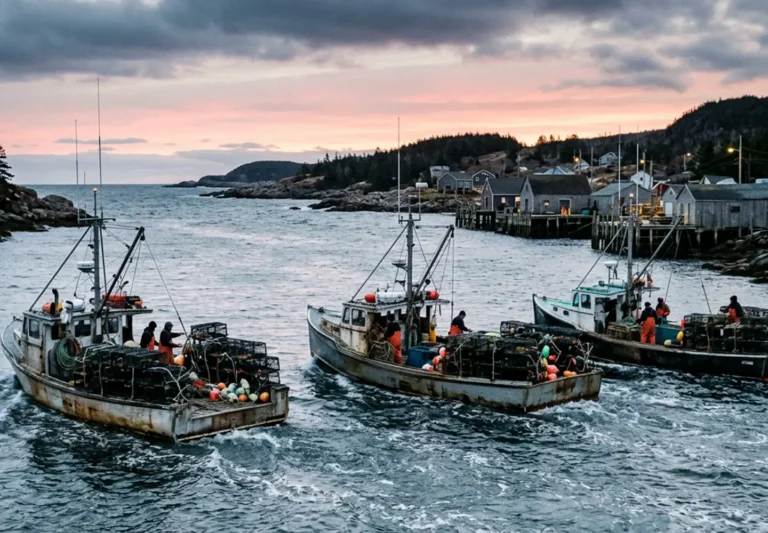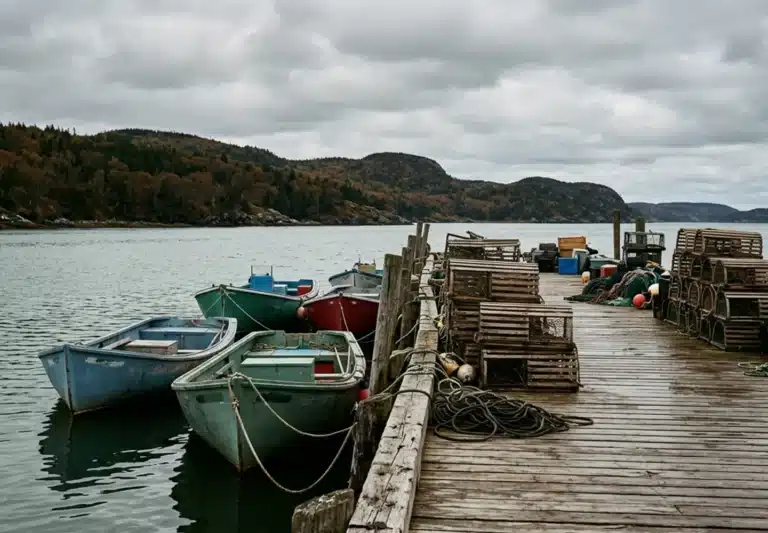
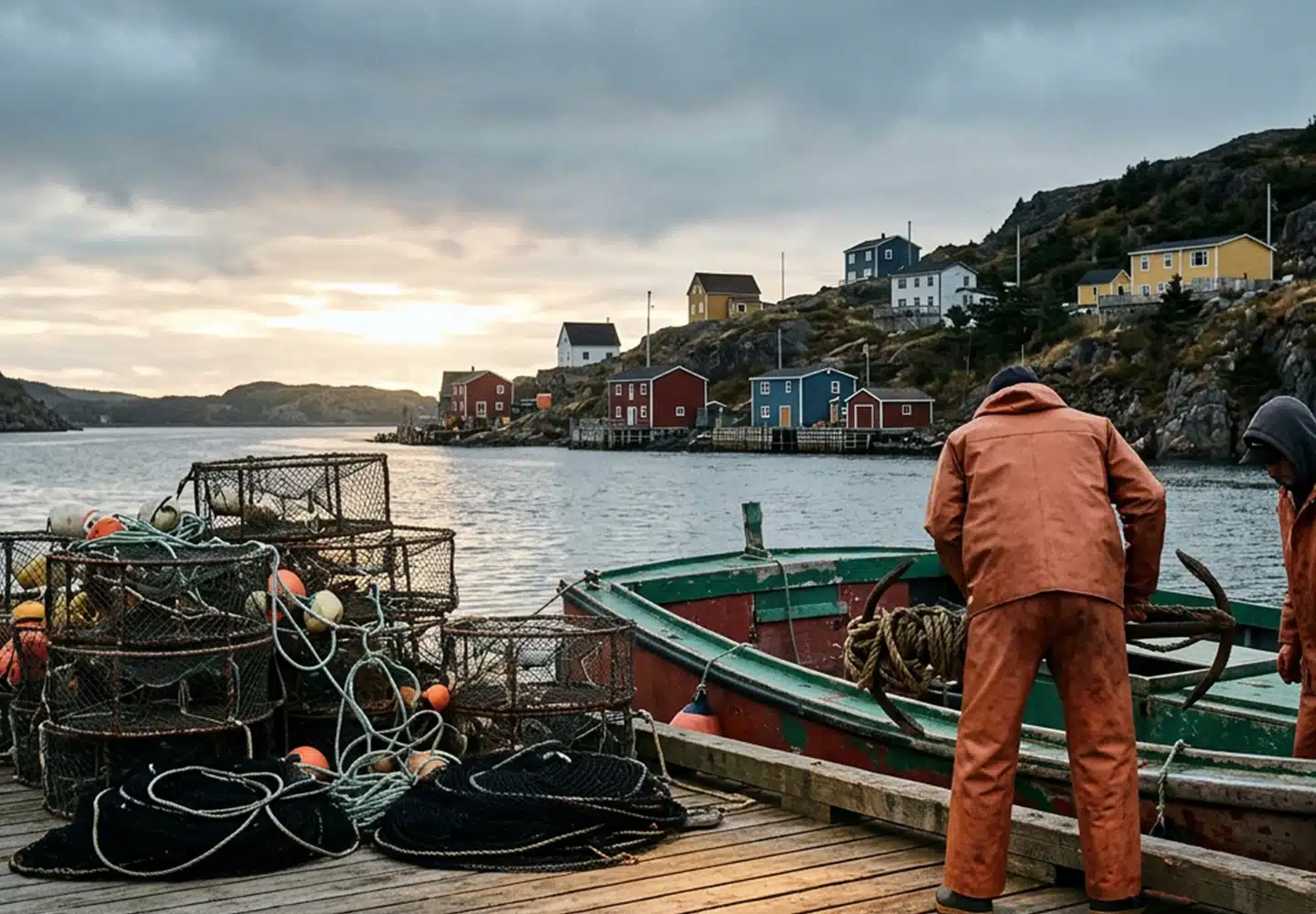
In 2011, Newfoundland and Labrador’s fisheries department put one sentence in its annual seafood report that reads differently now. Employment growth, it said, was being held back by competing jobs, people moving away and an aging workforce. Fifteen years later, that last part is the story.
Harvester is the industry’s word for a commercial fisher, captain or crew. About a third of the province’s certified harvesters are over 54, according to the Fish, Food and Allied Workers Union (FFAW-Unifor). The union expects many of them to retire within the decade. The province’s own occupation projections, updated in August, put the figure at about 2,200 fishing captains and fishers retiring or otherwise leaving the workforce between 2026 and 2035.
A fishery worth more, worked by fewer
The catch is worth more, not less. What was landed in 2011 was worth $568 million. In 2025 it was worth more than $1.2 billion, according to the province’s 2025 seafood review, with snow crab alone bringing in $708 million. Meanwhile, the number of registered harvesters fell from 10,882 to 9,710. About one in nine is gone, while the value of what they land more than doubled.
If you were 25 and weighing up the work, you’d want to know what it pays. That’s harder to answer than it sounds. Snow crab averaged $3.53 a pound landed in 2024 and $5.25 in 2025, a jump of nearly 50 per cent in a single year. This spring’s deal between the union and processors, which the union described as uneasy, has no floor price. What a crab harvester earns per pound now moves with the market, week to week.
One captain’s bet
Lillian Saul is betting on it anyway. At 30, she is one of the province’s younger fishing captains, based in Twillingate on Newfoundland’s northeast coast. She has spent 11 years building toward an operation of her own. “I’ve invested everything into this,” she told CTV News.
Saul is American and came to the province for a graduate degree at Memorial University, planning to study fisheries regulation. While she pursued permanent residency, she says, she couldn’t leave Canada, and fishery work set her on her current path. Now she sees regulation from the other side. She would like the burden eased: every attempt to move forward, she says, brings another barrier and another pile of paperwork on the computer.
What the industry is doing
In June, the FFAW launched the Fishing Industry New Entrants Initiative. Its partners are the Professional Fish Harvesters Certification Board, which certifies the province’s harvesters, and the Newfoundland and Labrador Fish Harvester Safety Association. Backed by $1.2 million from the province over three years, it targets secondary school students, newcomers and tradespeople. In October, the union started a network for new harvesters at its first New Harvesters Summit, held at The Rooms in St. John’s.
A working boat keeps a crew employed, a plant supplied and a wharf busy. When a captain retires with no one ready to take over, all three feel it, and so does the town around them.
The Fishmonger’s Take
Traceability starts with someone on a boat, and you can’t trace a fish back to a harvester who isn’t there. A fishery that more than doubled in value while losing one in nine of its harvesters deserves more attention than it gets. Recruitment helps people see the work. Steadier prices and less red tape would do more to make it a career someone like Saul can plan around.