
Most people enjoy seafood for its clean flavour and nutrition. Yet many still wonder how fish is processed from the moment it is caught to the moment it lands on your plate. This guide explains each step clearly so you can see how careful handling, quick freezing, vacuum packaging, and a monitored cold chain work together to protect quality and safety. You will also learn how Afishionado applies sustainable practices and maintains traceability in Canada.
At Afishionado, we believe transparency builds trust. We work with responsible harvesters and licensed facilities, and we package with care, label clearly, and maintain temperature control from dock to delivery. As a result, you receive seafood that is safe, delicious, and aligned with healthy oceans.
What happens after fish are caught?
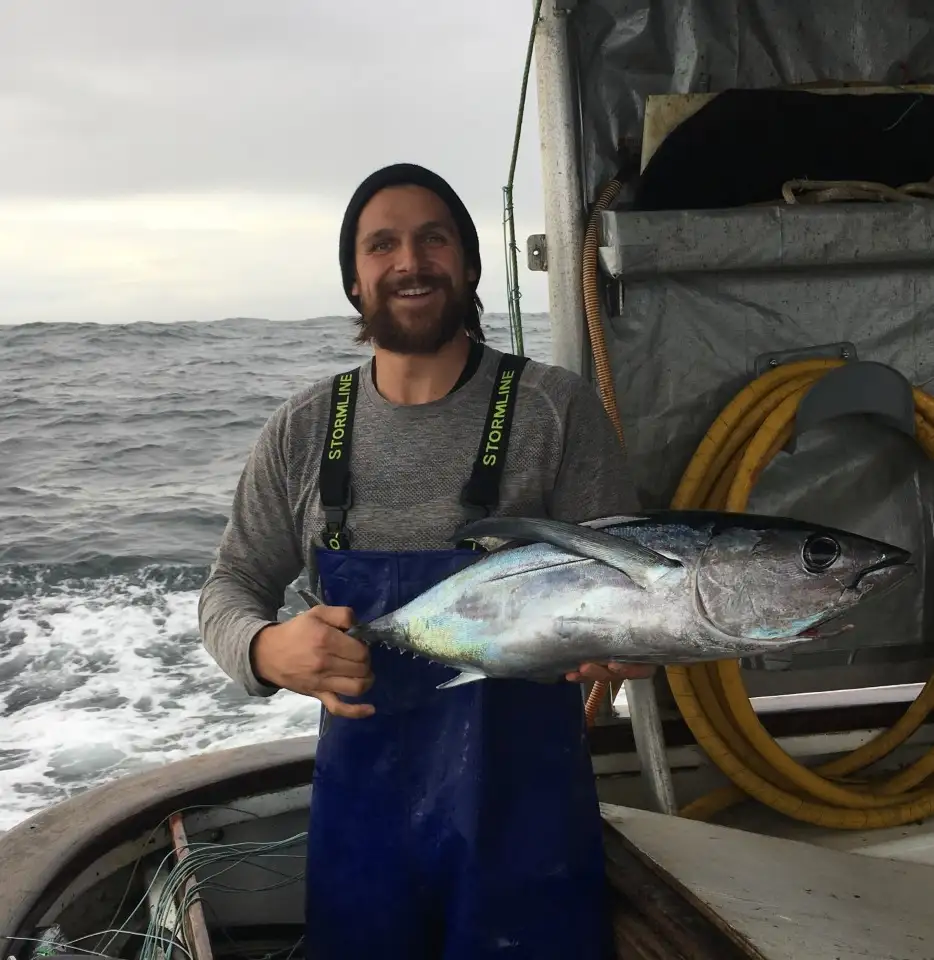
Quality begins on the water, and responsible crews start preservation immediately.
Humane killing and bleeding. Crews dispatch fish quickly, then bleed them to protect colour, texture, and flavour. They handle each fish gently to avoid bruising. Furthermore, Fisheries and Oceans Canada stresses care, cooling, and cleanliness from the first moment.
Rinsing and cleaning. Next, crews rinse fish to remove blood and slime. Consequently, clean surfaces reduce off odours and the risk of spoilage.
Icing and rapid chilling. Crews then layer the catch with ice or place it in refrigerated seawater. In turn, thin, even layers chill faster and help maintain quality.
Sorting and logging. Teams sort fish by species and size, and they record catch data for traceability and regulatory reporting.
Together, these first steps set the ceiling for freshness. Fast chilling slows bacterial growth, gentle handling protects texture, and accurate records support traceability later in the chain.
How fish is processed in Canada?
Understanding how fish is processed in Canada helps you see where sustainability meets safety.
H3: Receiving and temperature checks
When fish arrive at a licensed facility, staff verify time and temperature. They accept batches only if they remain cold. For perspective, consumer guidance recommends a refrigerator at 4 °C or lower and a freezer at −18 °C or lower. Moreover, processors often use colder set points than home freezers to protect quality during receiving and storage. Codex sets a minimum of −18 °C or colder for frozen storage.
Cleaning, filleting, and species specific handling
Filleting and trimming. Skilled cutters fillet, skin, pin bone, and portion fish. For example, they portion flatfish such as halibut differently from round fish such as cod. Meanwhile, live bivalves follow their own steps, including depuration and grading within the Canadian Shellfish Sanitation Program.
Water quality and sanitation. Processors use clean, cold water for rinsing. They also clean and sanitize tools and surfaces to prevent cross contamination.
Quality checks. Teams evaluate odour, firmness, and appearance. If a lot shows off odours or soft flesh, they remove it from production and investigate. FAO quality assessment.
Canadian standards and oversight
Canada regulates seafood through multiple federal bodies:
- Fisheries and Oceans Canada (DFO). DFO manages fisheries sustainably and provides handling guidance at sea.
- Canadian Food Inspection Agency (CFIA). CFIA enforces the Safe Food for Canadians Regulations and offers fish commodity guidance.
- Health Canada. Health Canada sets food safety standards and publishes consumer advice.
Collectively, these agencies protect public health and support consumer confidence. Their rules also underpin labelling and traceability from boat to box.
How seafood is packaged: vacuum sealing and quick freezing
Two methods stand out for peak quality in modern sustainable seafood: vacuum sealing and rapid freezing.
Vacuum packed seafood freshness: how fish is processed for peak quality
Vacuum packaging removes most air, then seals each portion in a durable pouch. Consequently, this approach protects against oxidation, creates a barrier to contamination, reduces freezer burn, and supports convenient portion control. Labels for consumer prepackaged seafood that is not packaged at retail include the common name, principal place of business, and a lot code or other unique identifier. In addition, raw single ingredient fish may be exempt from a Nutrition Facts table.
Quick frozen fish benefits
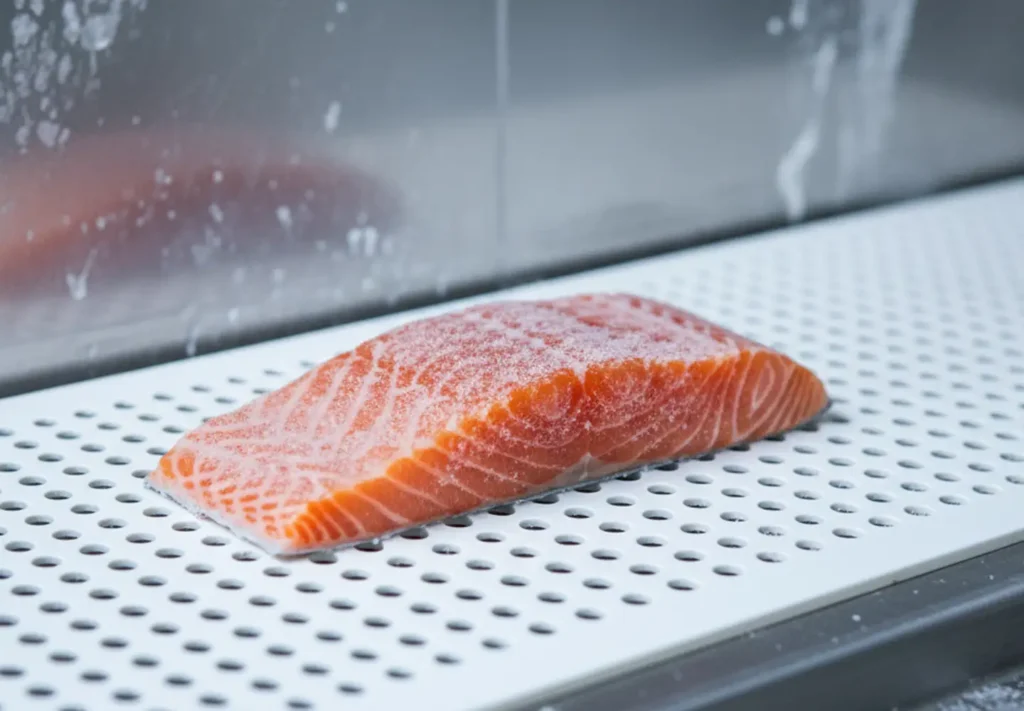
One common flash freezing method is IQF (Individually Quick Frozen). This method freezes each portion very fast at very cold temperatures. As a result, quick freezing forms smaller ice crystals that help protect muscle structure and keep texture firm after thawing.
For home cooks, the advantages add up. Product locks in quality soon after harvest, fillets retain flaky texture, and separate portions reduce waste because you use only what you need.
Cold chain and distribution: how fish is processed to keep seafood safe to your door
The cold chain is the temperature controlled path from processor to you. It protects safety, flavour, and texture, and it also supports traceability at each handoff.
Storage and transport temperatures
At home, keep freezers at −18 °C or lower. For long term storage of fatty fish, many processors target about −30 °C to −35 °C to protect quality. Nevertheless, Codex requires at least −18 °C or colder for frozen fish.
Temperature monitoring. Facilities and trucks use calibrated thermometers and maintain temperature records as part of preventive control plans. Many also use continuous data loggers.
First in, first out. Teams rotate inventory to control time in storage and preserve quality.
Traceability and records
Under the SFCR, businesses must track one step back and one step forward. Labels for consumer prepackaged seafood that is not packaged at retail include a lot code or unique identifier. Moreover, live or raw bivalve molluscs also carry tags with harvest location and date.
Local delivery in Atlantic Canada
Afishionado maintains the cold chain through careful packing, courier transport, and home delivery. Check out our curated seafood boxes to taste the difference quality seafood makes.
Why sustainable processing matters
Sustainable processing links responsible harvest to responsible handling. It reduces waste, supports communities, and protects marine ecosystems.
Less waste and better yield
Fast bleeding, careful filleting, and IQF portions reduce trim losses and freezer burn. You thaw only what you need, so you waste less and gain more value from each fish.
Support for sustainable seafood in Canada
DFO manages fisheries using tools such as Integrated Fisheries Management Plans within the Sustainable Fisheries Framework. Meanwhile, programs such as Ocean Wise guide buyers and consumers toward better options.
Safety and health protection
Health Canada sets maximum mercury levels at 0.5 ppm for most retail fish, with six exceptions at 1.0 ppm. Therefore, these limits help consumers choose seafood with confidence.
Clear labelling and consumer rights
Key labelling and traceability elements include the common name, net quantity, principal place of business, and a lot code or other unique identifier for consumer prepackaged seafood not packaged at retail. Additionally, raw single ingredient fish may be exempt from a Nutrition Facts table.
Step by step recap: how fish is processed
- Catch and care on deck. Crews humanely kill and bleed fish, rinse them, chill them fast, and begin record keeping.
- Transport to plant. Teams keep temperatures cold during the trip to a licensed processor.
- Receiving checks. Staff verify time and temperature. For reference, fridges should be 4 °C or lower and freezers −18 °C or lower.
- Filleting and portions. Processors apply species specific handling and strong sanitation controls.
- Quality inspection. Teams check texture, odour, and appearance. If something seems off, they reject it.
- Packaging. Vacuum sealing protects quality, while labels support traceability.
- Quick freezing. IQF helps lock in quality with small ice crystals.
- Cold storage. Processors set appropriate temperatures by species. Fatty fish benefit from extra cold long term storage near −30 °C to −35 °C.
- Distribution and delivery. Teams monitor temperature, apply lot codes, and keep records that connect product back to harvest.
- Your kitchen. Keep your freezer at −18 °C or lower, thaw in the fridge, and enjoy.
Final thoughts
Now you know how fish is processed in a Canadian context. Care on deck, clean filleting, strong oversight, vacuum packs and IQF, and cold storage with traceability under the SFCR all work together. Consequently, these steps keep seafood safe and make frozen and packaged options a smart and sustainable choice for home cooks who want to understand how fish is processed from ocean to plate.
If you value sustainability and transparent sourcing, explore Afishionado’s selection of seafood boxes available for home delivery. Choose vacuum packed, quick frozen fillets or select a sustainable seafood box with traceable species.