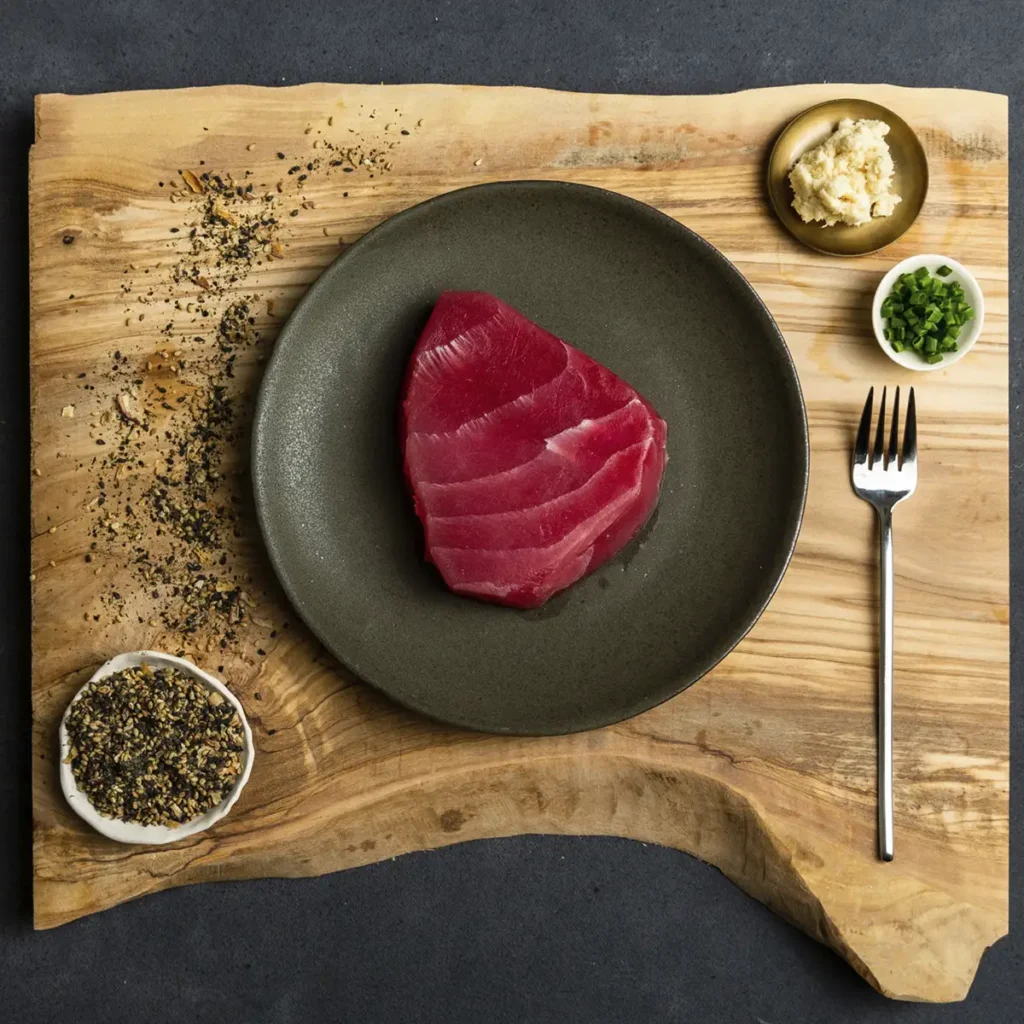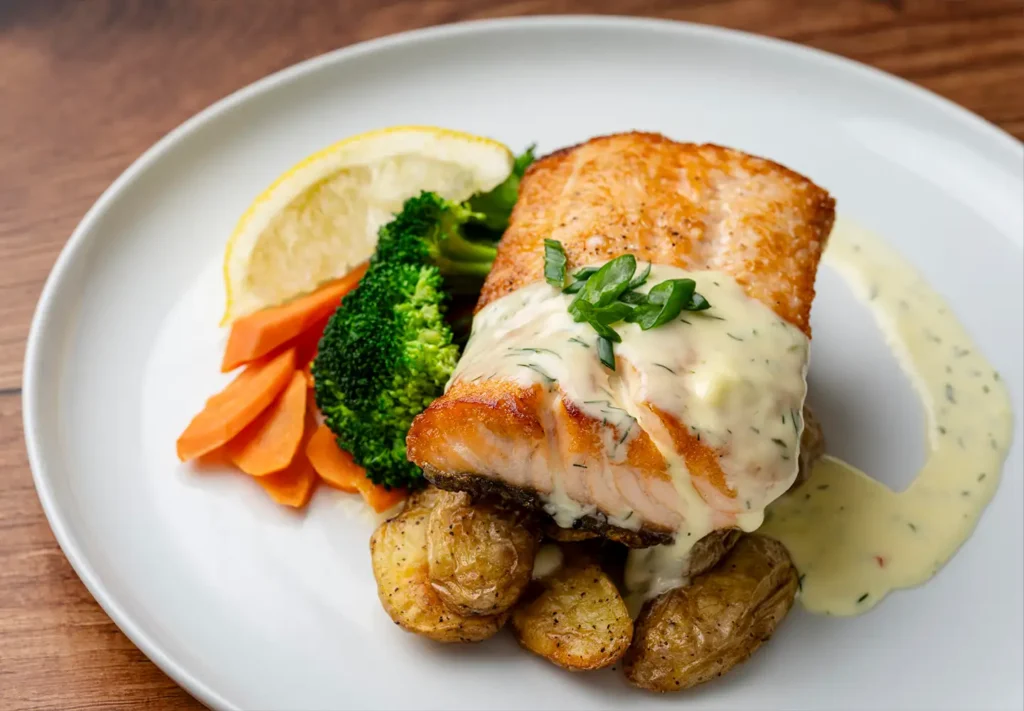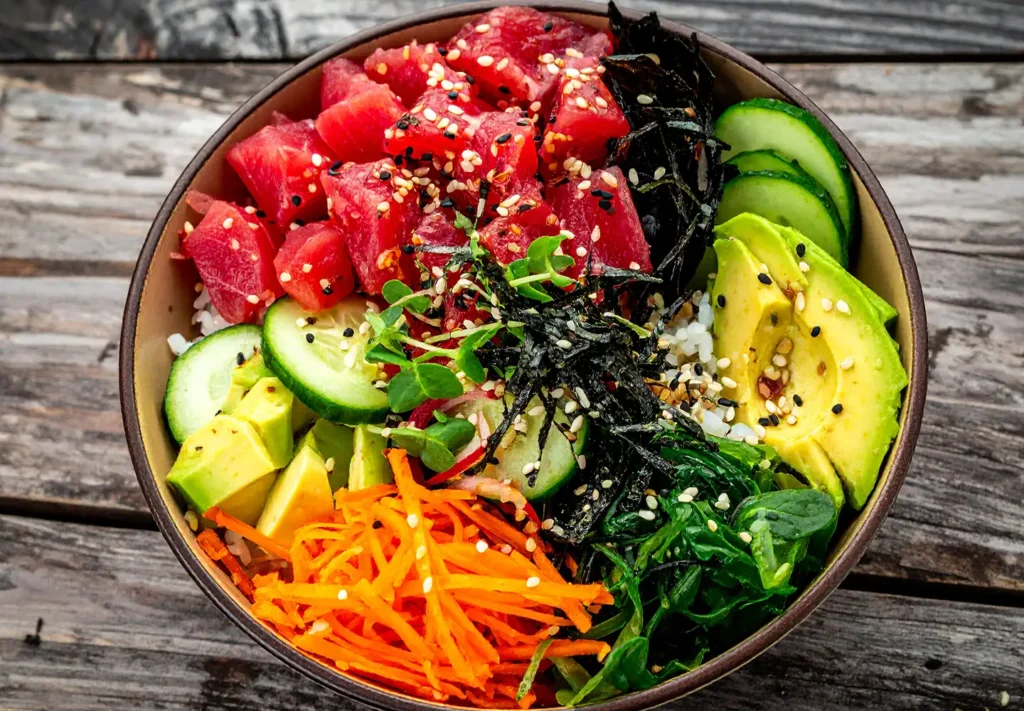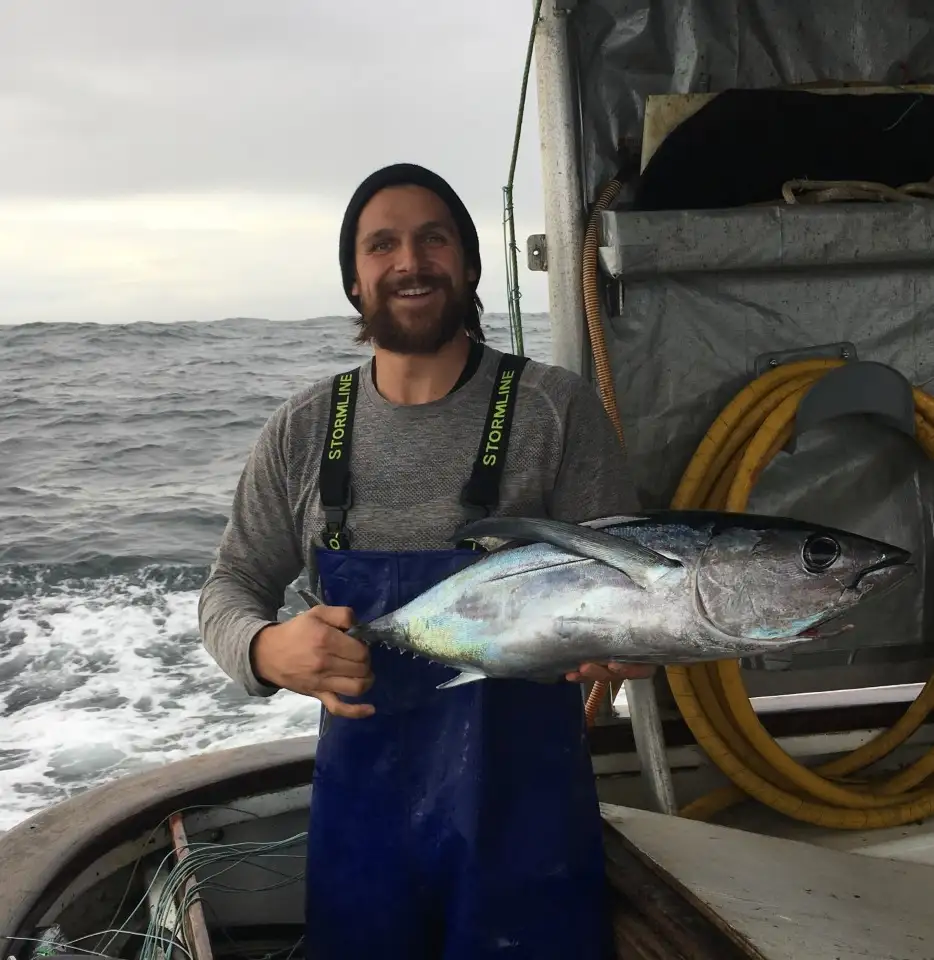
It is the question we get more than any other. Why buy frozen fish when the counter down the road has fresh?
The honest answer comes in two halves, and most sellers only give you the first one. The first half is that “fresh” at a Canadian fish counter usually does not mean what you think. The second half is that frozen is also easier for us to sell, and you should know that before you weigh the first half.
“Fresh” describes logistics, not quality
The word tells you one thing: this fish has not been frozen. That is the whole claim.
It tells you nothing about when the fish was landed, how it was handled on the boat, how far it travelled, or how long it sat in a display case. A fish can be entirely fresh by that definition and four days from the water.
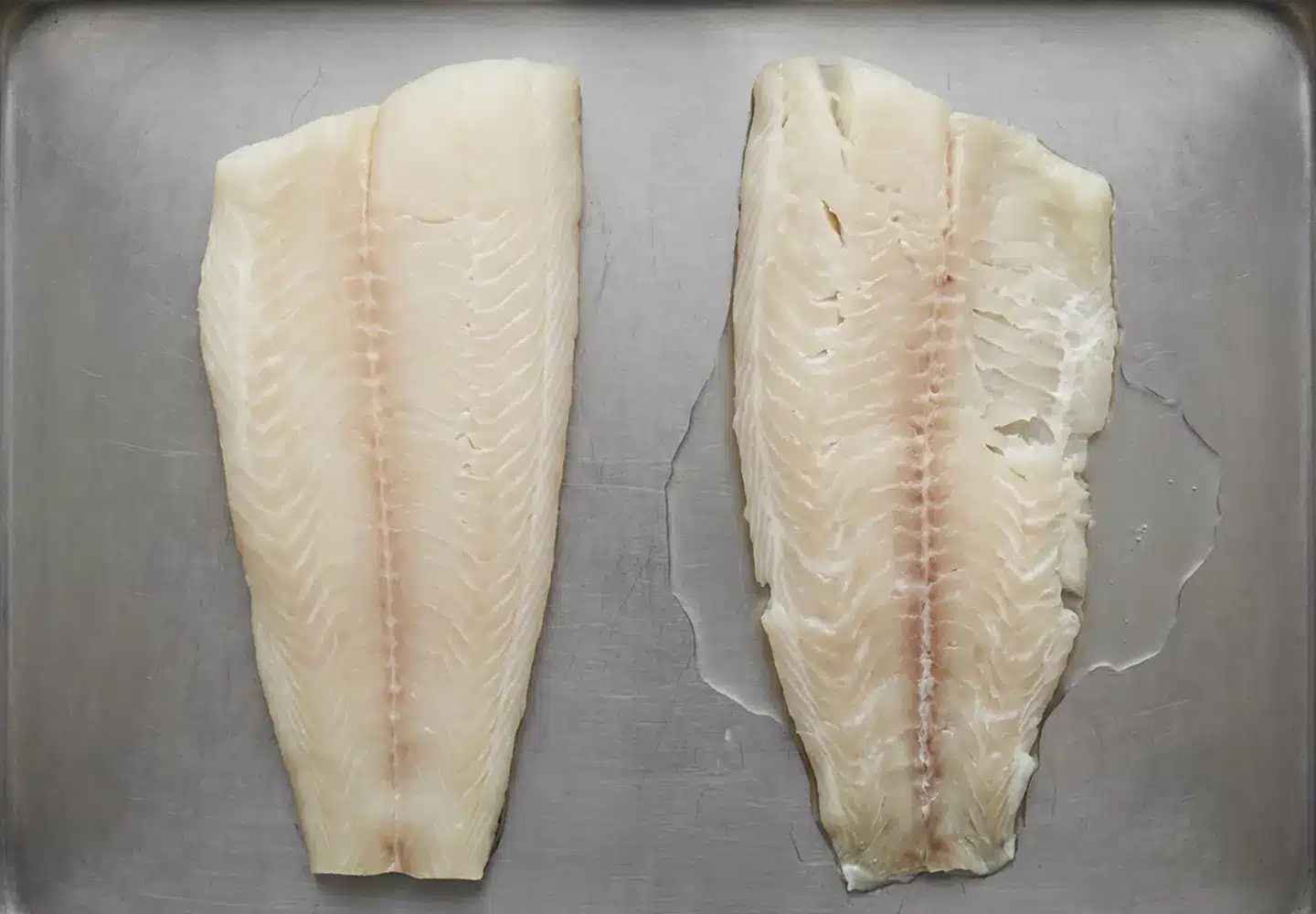
Meanwhile a frozen fillet has a timestamp. Fish frozen at peak, within hours of landing, stops where it stopped. Whatever condition it was in at that moment is the condition it arrives in. The clock is not running.
So the real comparison is not fresh against frozen. It is a fish whose age you cannot determine, against one whose age stopped mattering on day one. That is the argument fresh vs frozen fish lays out in full, and it is worth reading if you want the science rather than the position.
Canadian law already half admits this
Here is the part that surprises people, and it is the strongest thing in this article.
A great deal of the fish sold as fresh in Canada was frozen, and the law requires the seller to tell you. Under section B.01.080 of the Food and Drug Regulations, summarised by the Canadian Food Inspection Agency, fish frozen and thawed before sale must be declared “previously frozen”.
What the rule actually covers
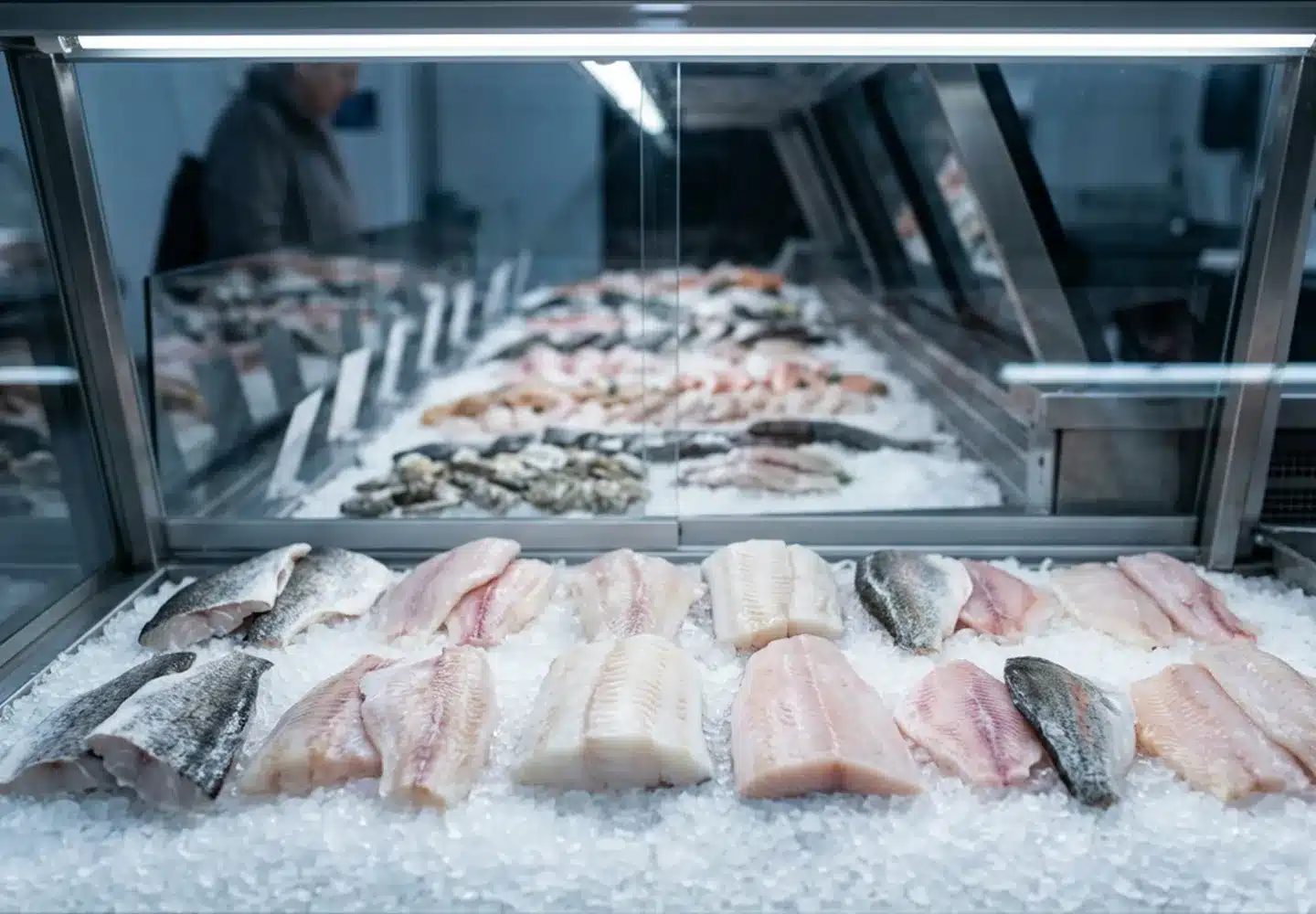
The detail is what makes it useful. That declaration applies to both prepackaged and unpackaged fish, so it covers the open counter as well as the tray. It has to appear either on the package or on a sign next to the food. Where it goes on the principal display panel, the letters must be at least 6.4 millimetres tall, a quarter of an inch.
The rule even reaches fish that was frozen at sea and thawed before filleting.
Two things follow. If a counter is not showing that declaration, the fish was genuinely never frozen, and it is as old as however long it took to get there. If it is showing it, the fish was frozen, then thawed by someone else on a schedule you did not choose, and is now ageing on ice.
And the other word is not regulated at all
And “fresh” itself is not a defined standard. The CFIA’s own guidance for shoppers lists what a retailer must show on fresh fish: the species, the quantity and a date. Claims like “fresh” are listed separately, as optional. The requirement that applies is the general one: labels must be truthful and not misleading. There is no threshold a fish has to clear to be called fresh, because the word only means unfrozen.
One word is regulated and the other is not, and it is not the one people trust.
The variable that actually matters is time, not temperature
Strip both words away and what you are choosing between is elapsed time and handling.
A fillet frozen quickly and individually at a very low temperature forms small ice crystals, which leave the cell structure largely intact. That is the subject of what is IQF. A fillet frozen slowly in a block forms large crystals that tear the flesh, and no careful thawing gets that back. Both are legally “frozen”. They are not the same product, and the science of what actually happens in there is in frozen fish quality.
The same spread exists on the fresh side. A fish bled and iced properly on deck, sold next morning at a working wharf, is superb. One trucked inland for three days is a different object wearing the same word.
So the question is never fresh or frozen. It is how fast, how cold, and how long ago, and only one of those two words gives you any of that information.
What we give up, and we are not going to pretend otherwise
Selling only frozen costs us three things, and a piece that skipped them would not be worth reading.
Raw preparations. Crudo, sashimi and ceviche reward genuinely fresh fish in a way that is hard to replicate. Properly handled frozen product is a credible route, and we are not going to claim it is identical. What is sushi grade fish covers that distinction honestly.
Buying one fillet on the way home. A counter lets you buy dinner on impulse. We cannot do that, and no amount of arguing about ice crystals changes it.
The counter itself. Looking at what came in, asking what is good today, being talked into something you had not considered. That is a real pleasure and we do not replace it.
If you live somewhere with a working fish counter supplied by boats you could walk to, use it. We would.
And the part that is about us
This is the half most sellers leave out.
Frozen is easier for us. It has a longer shelf life, so we waste less. It ships without a race against a clock. It lets a small operation carry a range that would be impossible to hold fresh. And it means what you order is what arrives, rather than what happened to come in.
Those are business reasons. They are good ones, and they are not the same as quality reasons.
The quality argument stands on its own, which is why it is set out above with a regulation attached rather than an adjective. But we would rather tell you the model also suits us than have you work it out later and wonder what else went unsaid.
Why buy frozen fish, in short
So, why buy frozen fish? Because “fresh” is a claim about whether something was frozen, not about how good it is or how old it is. Because the law already requires sellers to disclose the thing the word is doing the work of hiding. And because a fillet frozen at peak has a known history, while one sold fresh has a history you take on trust.
After that, thaw it properly and it behaves like the fish it was, which is covered in how to thaw frozen fish. If you are stocking a freezer from scratch, the best frozen seafood to keep in it is where to start.
Everything in the market is frozen at peak, and now you know both reasons why.