Search for a salmon recipe and you will get more results than you could read in a lifetime. Almost all of them compete on the same axis, which is what to put on it. Miso and maple. Harissa and yoghurt. Brown butter and capers. Every one of them assumes the difficult part of cooking fish at home is choosing a flavour.
It is not, and everybody who has ruined a fillet knows it is not.
Cooking fish at home goes wrong in a handful of specific ways, and not one of them is an ingredient problem. The fish stuck and tore. The skin went soft. The middle was dry by the time the outside coloured. It steamed instead of browning. It fell apart when you moved it.
A recipe cannot fix any of those, and the reason is structural rather than a failure of effort.
What a recipe does not know
A recipe is a list of ingredients and a sequence. To be useful it has to assume things about your kitchen, and the assumptions are where it breaks.
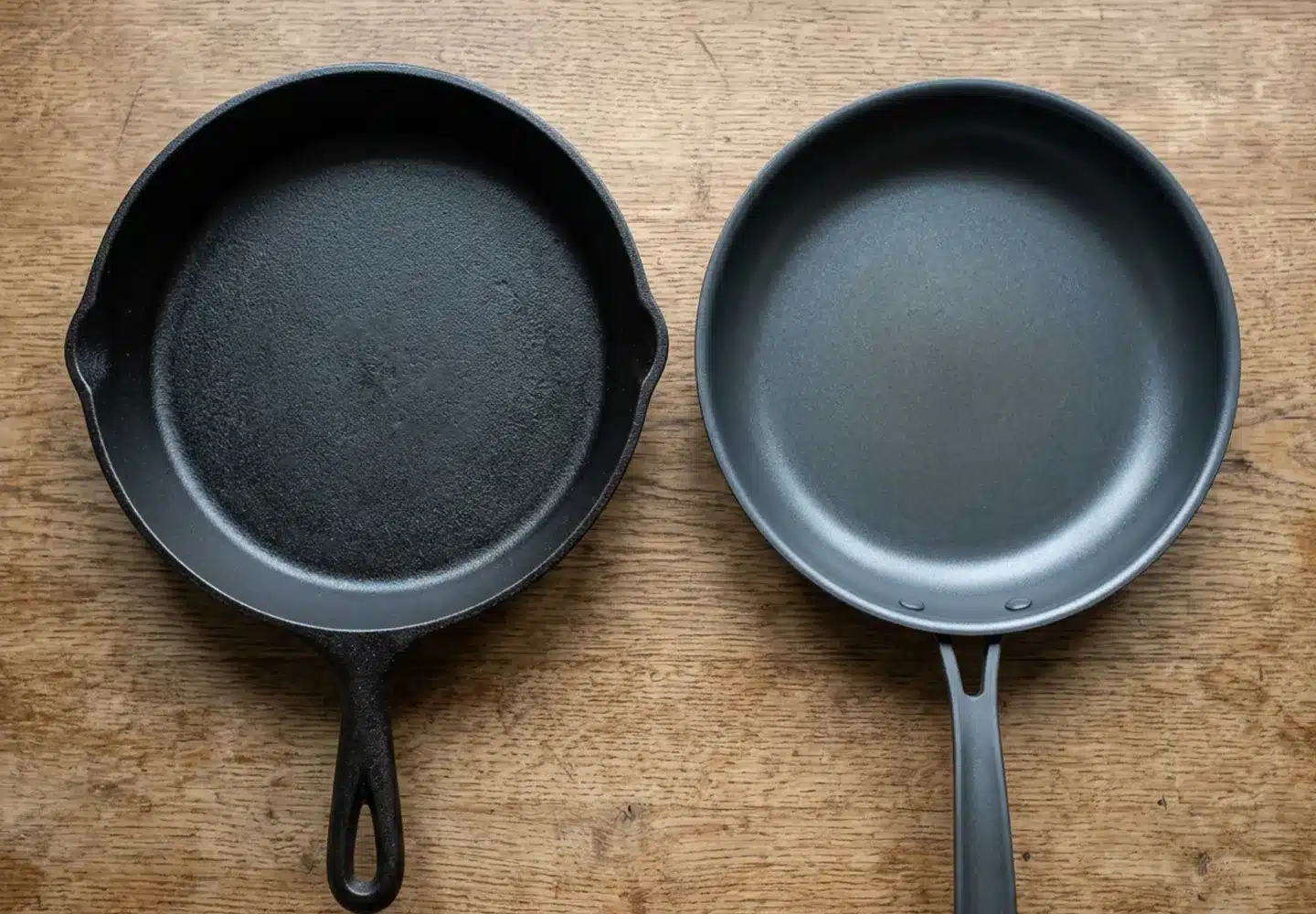
It does not know your pan. A thick cast iron skillet and a thin non-stick pan behave so differently at the same dial setting that the same instruction produces two different dishes. Heavier pans hold their temperature when cold fish hits them. Lighter pans crash, and a pan that has crashed is steaming your dinner.
It does not know your fillet. “Four minutes per side” assumes a thickness the recipe never states. A two-centimetre piece of haddock and a four-centimetre piece of salmon are not the same instruction, and neither is the same fillet frozen badly rather than well.
It does not know how wet the surface is, which is the single most common reason fish does not brown.
And it does not know your stove. Medium-high on one range is medium on another.
So the recipe gives you precision where it cannot deliver any, and silence exactly where you needed it.
The barrier is skill, and the research says so
A systematic review of seafood consumption studies across Europe, North America and Australasia, by Govzman and colleagues, found the most commonly reported barriers to eating seafood were cost, then sensory and physical barriers, then health and nutritional beliefs, habits, availability, and cooking skills.
Cooking skills. Not a shortage of ideas.
And people are cooking at home more than the industry assumes. The prevailing belief in the trade is that most seafood is eaten in restaurants, but an analysis of a decade of American national nutrition survey data, summarised by the University of Washington’s Sustainable Fisheries unit, found that 63 per cent of seafood is eaten at home by weight.
So the picture is a lot of people cooking fish in their own kitchens, held back by technique, being served an endless supply of flavour combinations.
The things that actually decide it
There are not many, which is the good news.
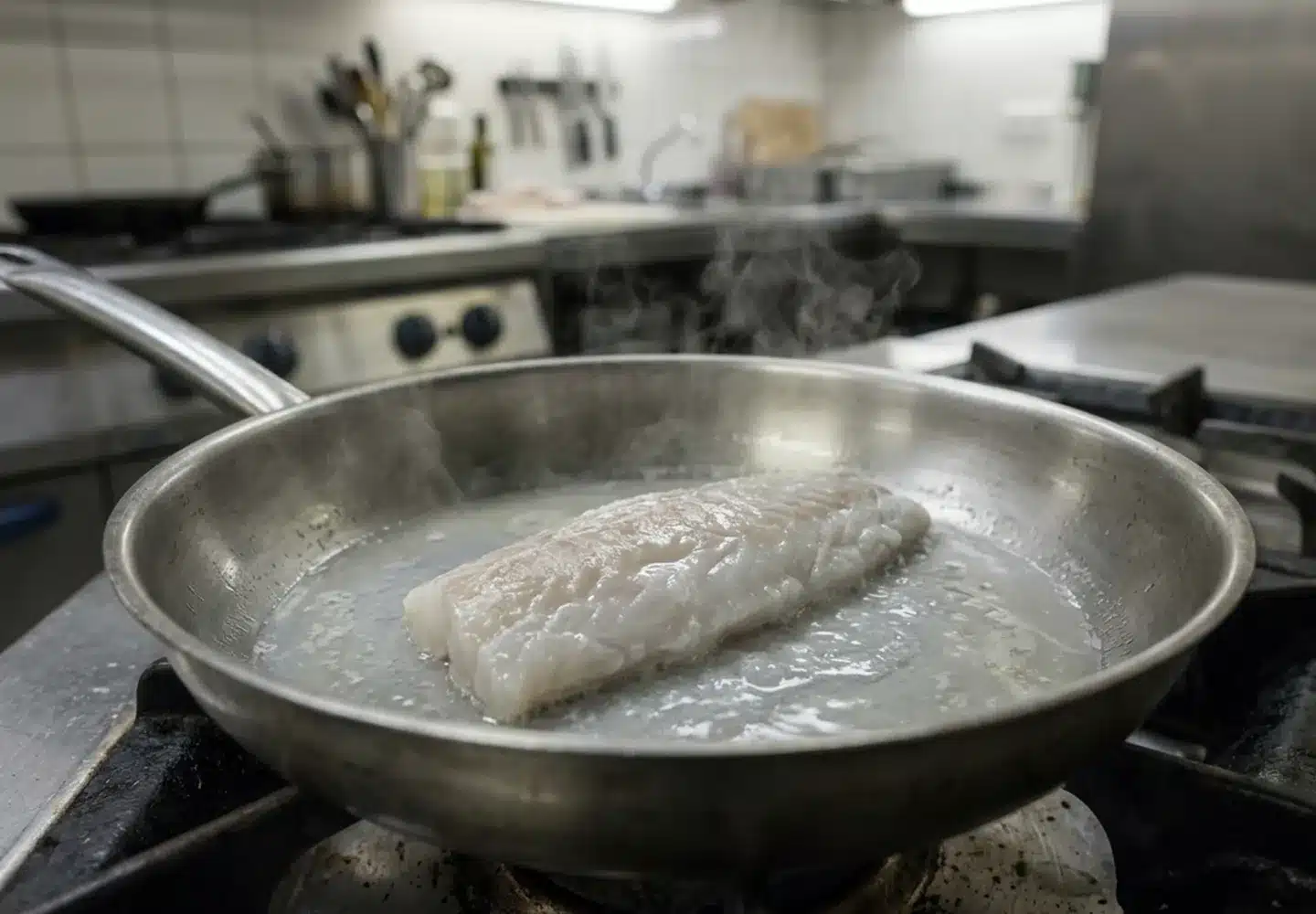
Moisture. Water at the surface cannot go above its boiling point, so while it is there the fish steams and will not brown. This is the one that ruins more fish than everything else combined, and it is the subject of pat fish dry before cooking.
Adhesion. Fish bonds chemically to hot metal, then releases itself once a crust forms. It is supposed to stick at first. Knowing that turns a technique problem into a timing problem, which is the whole of why fish sticks to the pan.
Contact. Skin curls off the pan as its collagen contracts, and once the middle lifts it steams while the edges burn. Two mechanical fixes solve it, and neither appears in most recipes. That is crispy fish skin.
Salt and time. Salt changes how fish holds water, in a direction most people have backwards, and when you apply it matters more than how much. Dry brine vs wet brine fish covers it.
Heat. Where to set it and why the pan matters more than the dial, in cooking fish temperature.
Five things. Learn them once and every recipe you read afterwards becomes usable, because you can supply the parts it left out.
Why the genre is built this way
Recipes are not badly intentioned. They are shaped by what they are for.
A recipe is a unit of publishing. It has a title, a photograph, an ingredient list and a schema markup block, and it competes against other recipes for the same search. Nothing in that format rewards explaining that your pan is the variable. Technique does not photograph, it does not list, and there is only one correct answer, so there is nothing to differentiate on.
The result is an industry producing infinite variation on the easy half of the problem.
We publish recipes too, and this is not an argument against them. A good recipe is a genuinely useful thing: an idea, a ratio, a combination somebody worked out so you do not have to. What it is not is an instruction manual for the physics. That is what the five posts above are for, and it is why they exist separately.
What to do instead
Read the five above once. Together they take less time than scrolling one page of salmon recipes, and they do not expire.
Then cook the same fish four or five times in a row. Not four different recipes: the same piece of fish, the same way, until you can tell by looking. That is how anybody who cooks fish well learned it, and it is the only part nobody sells you, because there is nothing to sell.
Then go and use the harissa recipe. It will work.
Cooking fish at home, in short
Cooking fish at home was never a problem of what to put on the fish. It is moisture, adhesion, contact, salt and heat, and a recipe is structurally incapable of telling you about any of them because it does not know your pan, your fillet or your stove.
Learn those five and the whole genre becomes useful to you. Skip them and no recipe will save you, however good it looks.
If you want to practise, our haddock is lean, quick and unforgiving in a way that teaches fast, and the market is stocked on the same principle.