The hard part about seafood for a crowd is not the cooking. It is that almost everything worth eating takes four minutes and then immediately starts getting worse.
A roast sits happily under foil for twenty minutes and arguably improves. A seared scallop does not. A few minutes after it leaves the pan it is a different and sadder object, and nothing fixes it.
So the question is not what to cook. It is what tolerates the gap between finishing and serving. With more than four people at the table, there is always a gap.
The clock starts before you think it does
There is a second constraint running underneath the first, and most people only count half of it.
Canadian food safety guidance puts the danger zone between 4 and 60 degrees. Perishable food gets a two-hour limit in that range before it should be discarded, or one hour if the room is above 32.
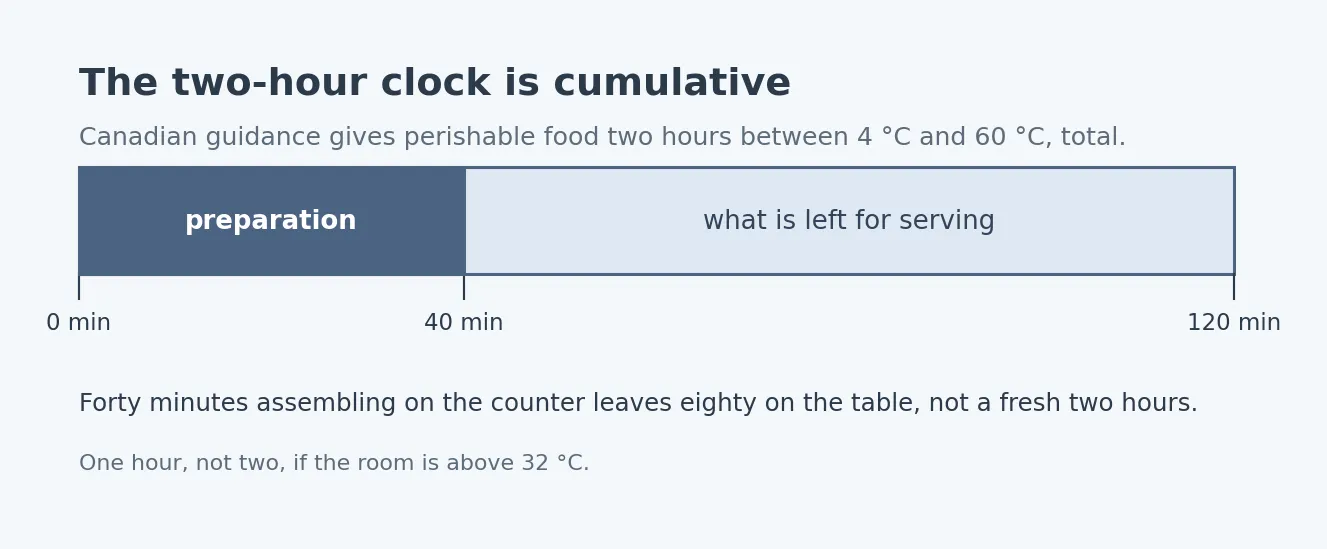
The part that catches people out is that the two hours is cumulative. It covers preparation and serving, not just the time the platter sits on the table. Spend forty minutes assembling something on the counter and the platter has eighty minutes left, not two hours.
For a dinner that runs long, which every good one does, that is a real constraint. It is also why the advice below leans towards things served cold from the fridge or held properly hot.
What holds and what does not
| Holds well | Falls apart |
|---|---|
| Chowder and stews | Seared scallops |
| Baked gratins and casseroles | Pan-fried fillets |
| Cured and cold preparations | Anything with crisp skin |
| Dips and spreads | Breaded or battered fish |
| Shrimp served cold | Delicate white fish, hot |
The pattern is not about difficulty. It is about whether the dish has a texture that depends on its last moments in the pan.
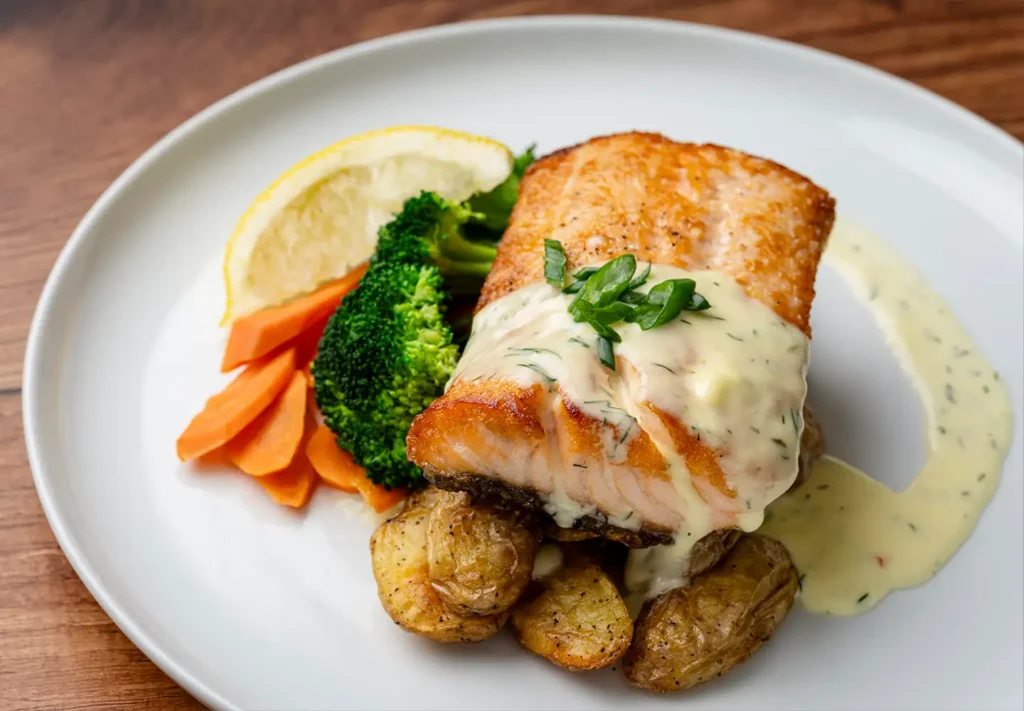
Crisp skin is the clearest case. It is a structure built in the pan and it starts collapsing the moment steam reaches it, which is why crispy fish skin is a technique rather than a result. Put it on a platter for ten minutes and you have undone the work.
A chowder has no such structure. It is already a held dish by design, it reheats, and it is arguably better the next day. How to make seafood chowder covers the building blocks.
The pan arithmetic nobody does
Here is the calculation that decides most of this, and it is worth doing before you plan a menu rather than after.
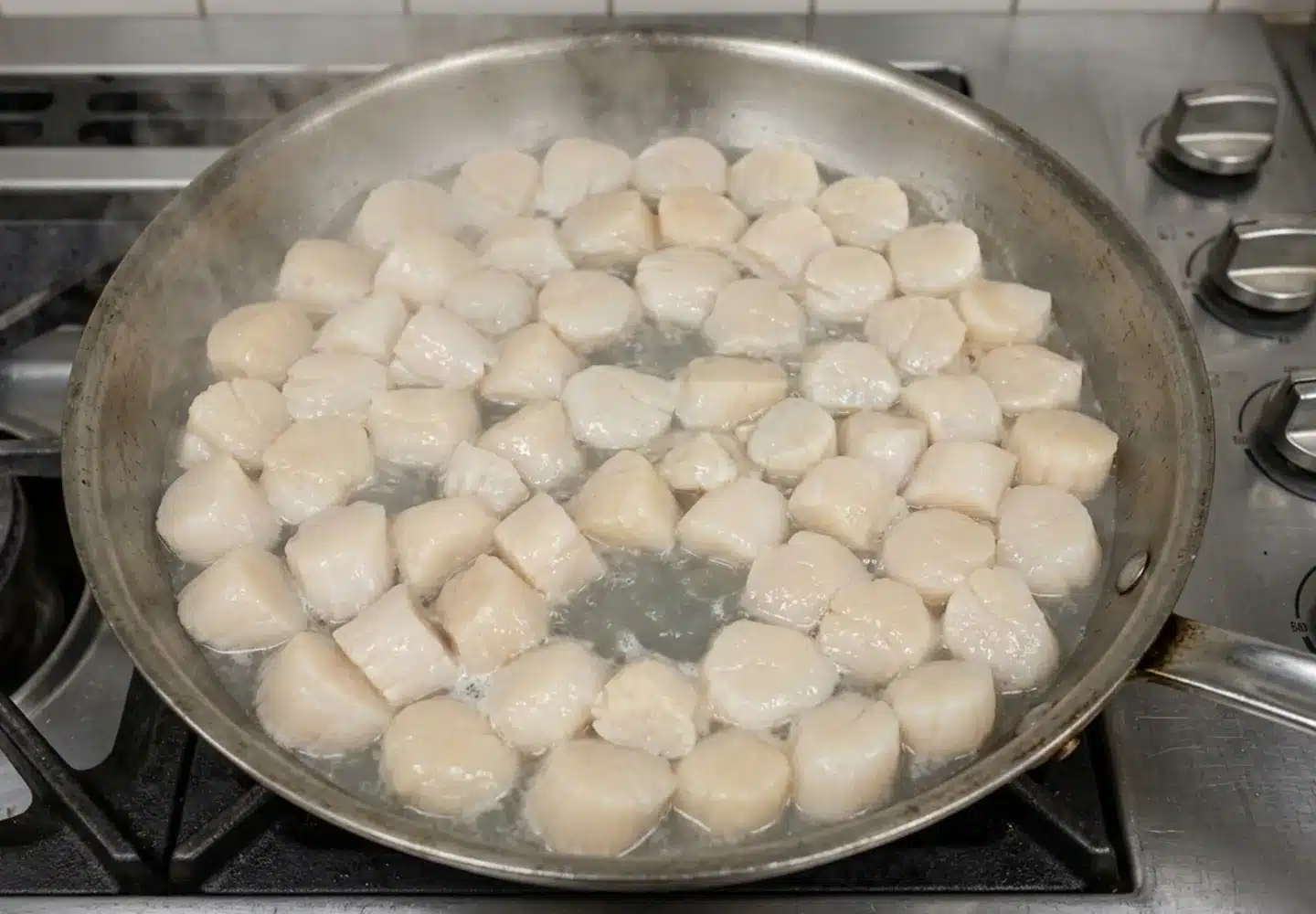
A twelve-inch skillet holds about ten or twelve scallops in a single layer without crowding. Crowding turns searing into steaming, for reasons covered in why fish sticks to the pan.
Eight people at four scallops each is thirty-two scallops. That is three batches. Each batch takes about four minutes plus the time to wipe and reheat the pan. The first batch has been sitting for roughly ten minutes when the last one comes out.
You now serve one of two things. Thirty-two scallops that are all slightly cold, or eight portions that arrive at eight different times.
Neither of those is a cooking failure. It is a planning failure, and the fix is choosing a dish whose quality does not live in its final minute.
What we would actually serve
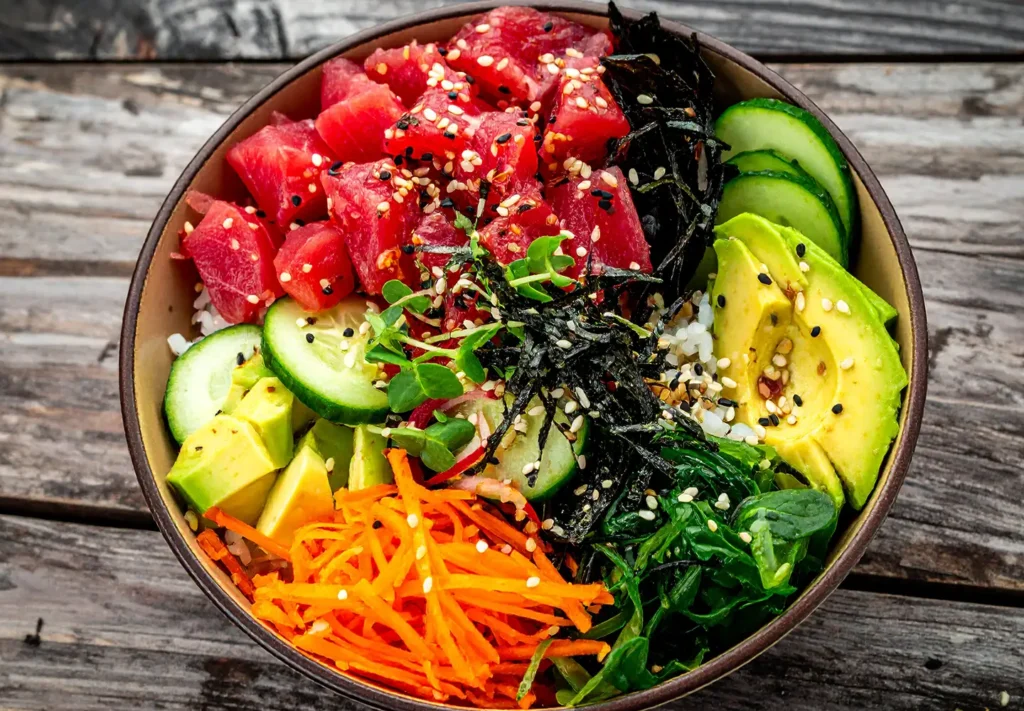
Cold shrimp, properly. Not the defrosted supermarket ring, which is usually overcooked before it was frozen. Poach good shrimp yourself, chill them, and serve them cold with something sharp. It is better, it is done hours ahead, and it waits in the fridge.
One hot thing, held hot. A chowder, a gratin, a baked dish in a low oven. One thing you are actively managing is manageable. Three is not.
Bacon-wrapped scallops, which sidestep the whole problem. The bacon protects the scallop and the oven does the work. No pan, no batching, and a tray goes in while people are arriving. Ours are here, and they exist in that form for this reason.
And if you want to sear scallops for a group, feed four people, not twelve. Seared scallops are a dinner party dish for a small table where you can plate and hand them over immediately. How to cook scallops is the method, and what to serve with scallops covers the plate around them.
The honest shape of a seafood menu for a group
One thing cold and ready. One thing hot and held. Nothing that needs a pan in the last ten minutes.
That is less exciting than a menu built around something seared to order. It is also the difference between enjoying your own party and standing at the stove through it. Every professional kitchen is built around exactly this problem, which is what a pass, a hot line and a service window are for.
Seafood for a crowd, in short
Choose seafood for a crowd by the gap, not by the plate. Most seafood is at its best in the first minute or two after it is cooked. A group guarantees you cannot serve everyone inside that window.
Choose dishes that were never relying on it. Keep the two-hour clock in mind and remember it started while you were still chopping.
Our Bacon-Wrapped Scallops and the Seafood Medley are both built for this kind of cooking. The rest of the market is stocked on the same principle.