Walk into any grocery store and you will see the same quiet calculation happening over and over again. People are constantly looking for the best protein per dollar, even if they do not phrase it that way. They pick up a pack of chicken, glance at the price, then maybe reach for eggs instead. Some pause at the seafood counter, hesitate, and move on.
But here is the problem. Most of us are solving the wrong equation.
When we ask for the best protein per dollar, what we usually mean is the cheapest protein we can find. And those are not the same thing.
What does best protein per dollar actually mean?
If you reduce protein down to a number, the math is simple. Cost per gram. Lower is better. But food does not behave like math on a spreadsheet.
Two proteins can cost the same and do very different things in your body. One might leave you full for hours. Another might not. One might provide nutrients you are missing. Another might not.
It is a bit like buying tools. You can buy the cheapest one, and sometimes that works. But sometimes the better tool saves you time, effort, and frustration in ways that are harder to measure.
Protein works the same way.
The cheapest protein sources (and why they usually win on price)
If your goal is strictly cost per gram of protein, there are clear winners.
- Chicken
- Eggs
- Beans
These are efficient, widely available, and hard to beat on price.
Data from USDA FoodData Central consistently shows that these foods deliver high amounts of protein for relatively low cost.
If you are feeding a family or working within a tight budget, these are reliable staples. There is no need to argue against that.
But they only tell part of the story.
Where fish fits into the conversation
Fish does not compete on price alone. It competes on what you get for that price.
According to the Food and Agriculture Organization, fish provides high-quality protein along with nutrients that are often lacking in modern diets, including:
- Omega-3 fatty acids
- Vitamin D
- Iodine
- Selenium
These are not small details. They are the difference between eating enough and eating well. So the question shifts.
It is no longer “what is cheapest?” It becomes “what is actually worth it?”
Best value fish options if you are budget-conscious
Not all fish sits at the same price point. Some options quietly deliver excellent value.
| Fish | Protein | Cost level | Why it works |
|---|---|---|---|
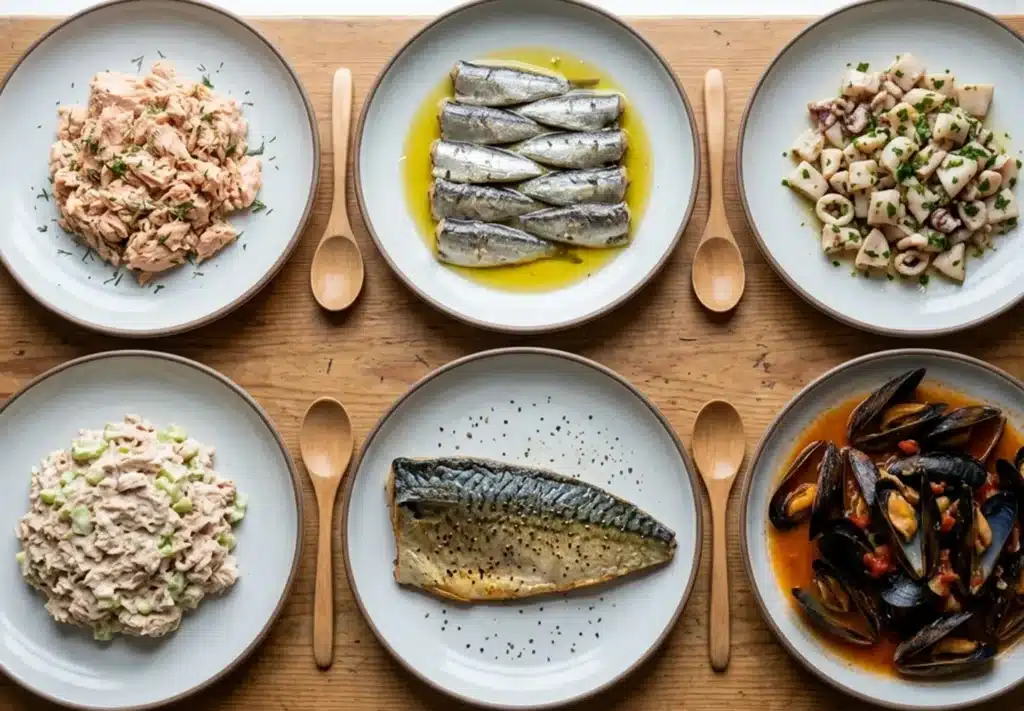
| Mussels | High | Low | One of the best value proteins available |
| Mackerel | High | Low | Nutrient dense and often overlooked |
| Sardines | High | Low | Affordable with strong omega-3 content |
| Pollock / Cod | Moderate | Medium | Lean, versatile, easy to use |
| Haddock | Moderate | Medium | Mild flavour, widely available, great everyday option |
| Shrimp | High | Medium | Efficient, quick, and practical |
| Salmon | High | Higher | More expensive, but rich in nutrients |
Nutritional values are approximate and based on standard 100g portions from Canadian Nutrient File (Health Canada) and USDA FoodData Central.
This is where things start to get interesting. Because even within fish, there is a spectrum of value.
Why mussels might be the most underrated protein
Mussels are rarely the first thing people think of when they want more protein.
But they probably should be.
They are high in protein, often lower in cost than many fish, and packed with nutrients. They also tend to be easy to cook in batches, which makes them practical for real meals, not just ideal scenarios.
If you are looking for value, mussels are difficult to ignore. Looking to try them out? Here’s a recipe for Thai red curry mussels.
Salmon and higher-cost fish: are they still worth it?
This is where people usually pause.
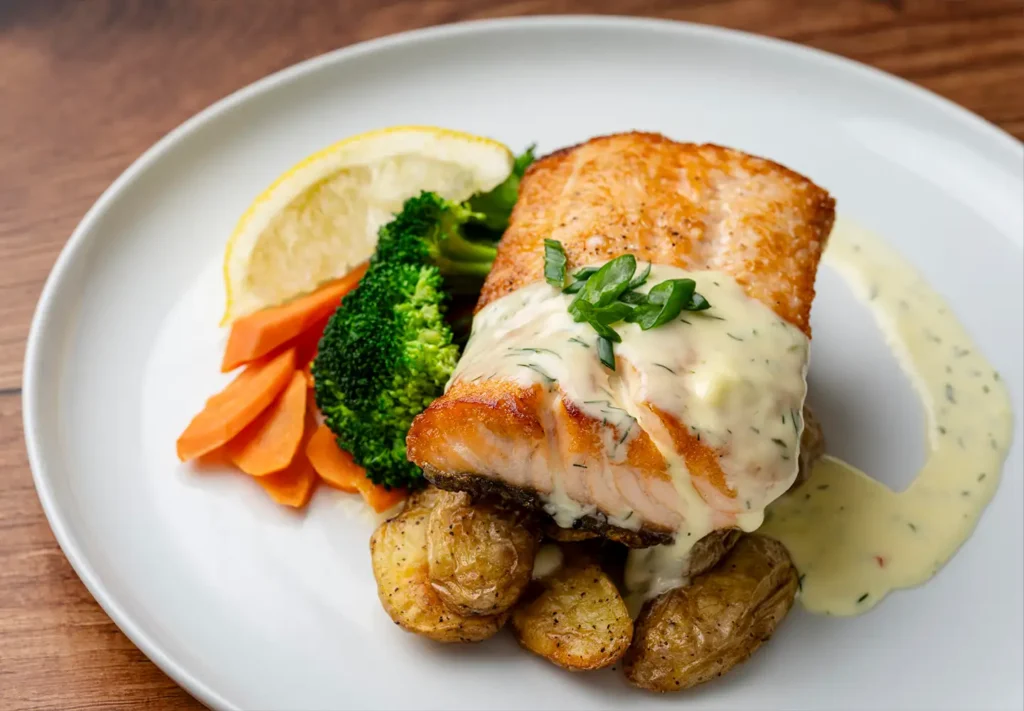
Salmon is more expensive. That part is clear. But the question is not whether it costs more. It is whether it gives you something in return.
Salmon provides omega-3 fatty acids that are not present in meaningful amounts in cheaper proteins like chicken. The Harvard T.H. Chan School of Public Health highlights the role of these fats in supporting heart health.
It also tends to be more satisfying. Meals feel more complete. That matters more than people expect. So no, salmon is not the cheapest option. But if it fits within your budget, it can still be a smart one.
Cost per gram vs cost per meal
There is another piece people often miss. We do not eat grams of protein in isolation. We eat meals.
A piece of fish with rice and vegetables stretches just as far as chicken does. Sometimes further, because of how filling it is.
When you think in terms of full meals instead of raw numbers, the gap between proteins starts to narrow.
Frozen vs fresh: where you can actually save money
If you are trying to make fish work within your budget, this is one of the easiest adjustments.
Frozen fish is often more affordable, lasts longer, and reduces waste. You are less likely to throw it out, which immediately improves value.
If you have ever dealt with thawing or storing seafood, you already know how much that matters. Planning ahead can make a bigger difference than the price tag itself.
How to get more value from fish without overspending
A few small changes can make fish much more accessible:
- Choose frozen seafood options when possible
- Try less popular species like mackerel or mussels
- Rotate fish with other proteins instead of replacing everything
- Plan meals so nothing goes to waste
None of these require a major shift. They just require a bit more intention.
Simple, affordable ways to use fish
Fish does not need to be complicated to be valuable.
Simple combinations work:
- Fish with rice and vegetables
- Mussels with broth and bread
- Shrimp bowls with grains and greens
If you are looking for more ideas, exploring a curated collection of recipes can make it easier to use what you buy without overthinking it.
Best protein per dollar? Final thoughts
The idea of the best protein per dollar sounds simple. But it is not just about price. Chicken, eggs, and beans will almost always win on cost. That is not going to change. But fish offers something different. It brings nutrients, variety, and long-term value that cheaper proteins do not.
The smartest approach is not to choose one over the other. It is to understand what each brings and use them accordingly. Because in the end, value is not just about what you spend. It is about what you get back.