
Picture a lakeshore about one million years ago. Early humans gather at the water’s edge as dusk settles and a small fire glows. Archaeologists have evidence of fire from this period at Wonderwerk Cave in South Africa, where ancient sediments preserve ash and burned bone. In these simple gatherings by the fire, the story of fish and brain evolution begins and marks a turning point that helped set our species apart.
Much later, in the Jordan Valley, researchers find the earliest strong sign that people actually cooked freshwater fish, around 780 000 years ago. Fire, fish, and intention arrive in the same place. However, in the next section, we will see that people were eating fish long before this.
Fish in the archaeological record
If you want a single scene that resets the story, go to Lake Turkana in northern Kenya. At Koobi Fora, an Oldowan site dated to about 1.95 million years ago, archaeologists uncovered stone tools with a scatter of animal remains that included fish, turtles, and crocodiles. The site shows that early Homo did not only butcher land animals. They also exploited aquatic resources when the opportunity was right. That is not proof of regular fish dinners night after night. It is proof that water made food available and that our ancestors knew what to do with it.
The power of this image lies in its ordinariness. A group on a lakeshore, scavenging and butchering with rough stone tools. Not dramatic hunts of giant mammals, but careful use of what the water offered. These quiet scenes remind us that human history is not just about great leaps but about repeated, thoughtful choices. Each fish taken from the shallows was another step toward the brain we now carry.
Fish and brain evolution: Structural fuel from fish
Fish are rich in long chain omega-3 fatty acids, like DHA (docosahexaenoic acid). DHA is a major structural component of brain cells, especially in the cerebral cortex, skin, and retina. It supports neuronal conduction and the function of membrane proteins such as receptors and enzymes. Without adequate DHA, neural function suffers. It must come from the diet because humans cannot produce enough of it on their own.
Picture early families cooking by the tide, trading smoke, salt, and stories. Much of that shoreline world is gone now, sunk beneath modern seas, so the true scale of what they gathered is hidden from us. In plain terms, Human Brain Evolution: The Influence of Freshwater and Marine Food Resources (edited by Stephen C. Cunnane and Kathlyn M. Stewart, 2010) says that omega-3 rich fish and shellfish show up again and again in the evidence, and that DHA is vital for brain development. The book also notes, drawing on Jon Erlandson’s chapter, that many ancient coasts are underwater, which masks how much seafood people relied on. Seafood did not explain everything about our rise. It was one important part of a larger evolutionary picture.
The imagination fills in what the record hides. Nets of reeds, baskets of shellfish, fires tended against the wind. These were not only meals but exchanges of knowledge, passed down with each generation: where to gather, how to cook, which fish offered the richest reward. In the rhythm of this daily work, nutrients became neurons, and neurons became thought.
A metabolic trade: The expensive tissue idea
Anthropologists have a tidy phrase for the puzzle of our big brains. The expensive tissue hypothesis. It says that enlarging one costly organ, like the brain, requires savings elsewhere, like a shorter, easier-to-feed gut, paired with energy-dense diets that are simpler to digest. Animal foods fit that bill. Fish very likely did too. The hypothesis itself is not fish specific, but fish make intuitive sense in the package, especially once cooking enters the record.
Once cooking enters the record, the math gets even easier. Heating food raises the net energy we get from it by making starches and proteins more digestible and by lowering the costs of digestion. Experimental work shows that cooked foods yield more usable energy than raw foods, which helps explain how a species with a large, expensive brain could afford it.
It is a thought experiment worth considering. If our ancestors had continued to rely mostly on fibrous plants and tough roots, brain expansion might never have taken place. The shift to nutrient-rich foods like fish made intelligence possible, and intelligence changed everything. This was not a sudden revolution but a slow bargain, struck one bite at a time, that tilted the balance of our biology.

What modern studies say about brains and fish
- People who eat fish more often tend to keep their thinking skills a bit sharper as they age. A 2024 review of 35 studies found that higher fish intake was linked with a lower risk of cognitive decline. Evidence for dementia is more cautious but points in the same direction. Associations, not proof.
- In midlife, having more omega-3s in your blood is linked to a healthier “memory center” in the brain and better reasoning on tests. This comes from the Framingham Heart Study in adults in their 40s and 50s.
- Big reviews in 2025 suggest seafood can support parts of children’s brain development, but the overall certainty is modest. The advice is simple. Choose a variety of low-mercury options and make seafood part of a balanced diet.
- Why this is plausible. Animal studies show that when diets are low in omega-3s, learning and memory suffer. Adding omega-3s can improve markers of brain plasticity and performance. These models help explain the human patterns.
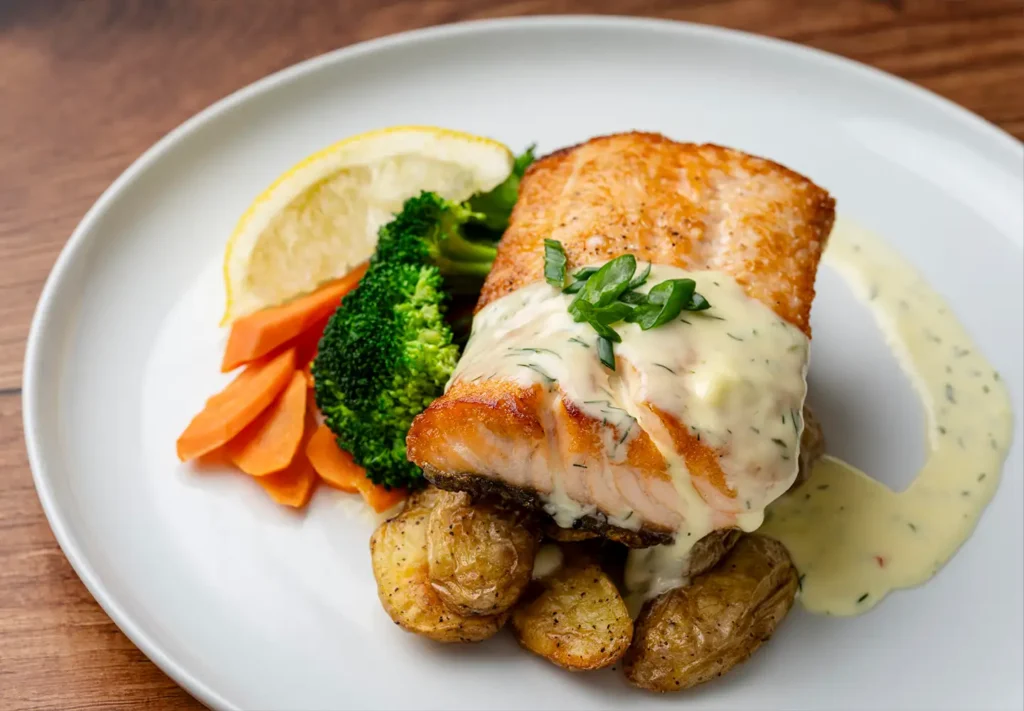
The thread is not broken. From the first fires on the lakeshore to modern clinical studies, fish continue to touch the brain. The continuity across such vast time is striking. A child eating salmon in a school cafeteria and a family cooking fish beside Lake Turkana share more than a meal. They share a lineage of nutrition that fuels the human mind.
Skulls, fossils, and what they say about brains
Paleoneurobiology examines ancient brain structure by studying endocasts, natural impressions of brain volume in fossil skulls. These provide direct evidence of brain size and shape over time. When combined with the nutritional data and the archaeological record showing sustained fish consumption, they offer one of the clearest pathways linking food to brain evolution.
The skulls of early Homo species tell a story. With every increase in cranial capacity, our ancestors gained new cognitive abilities. And behind each jump in brain size lies the steady presence of nutrient-rich diets that included fish. It is as if each fossil whispers a reminder: intelligence has a history, and fish are part of it.
Why this matters to Afishionado
Fish did not make us human by themselves. They gave us access to hard-to-make molecules at exactly the moment our lineage began to trade guts for brains. They were dense, portable nutrition that fit the new metabolic math. When Afishionado talks about seafood as culture and community, it is not just poetry. It is an echo of a very old bargain between water and mind.
To eat fish today is to step into that long current. It is to accept the gifts of shorelines and tides, and also to consider how we give back. The same choices that shaped our past can shape our future, depending on whether we honour the waters that once fed us.
Conclusion: Fish and brain evolution
Every time a child eats a fish finger or a family shares salmon on a weeknight, they join a pattern that is older than fire pits and older than pottery. Shorelines concentrate opportunity. Fish concentrate nutrients. Brains concentrate energy. That triangle shows up again and again in the record. It lives on in our kitchens.
The story of fish and brain evolution is not finished. It is still unfolding every time we cook, eat, and share. The choices we make now decide whether the partnership between people and fish will continue to nourish both body and mind for generations to come.