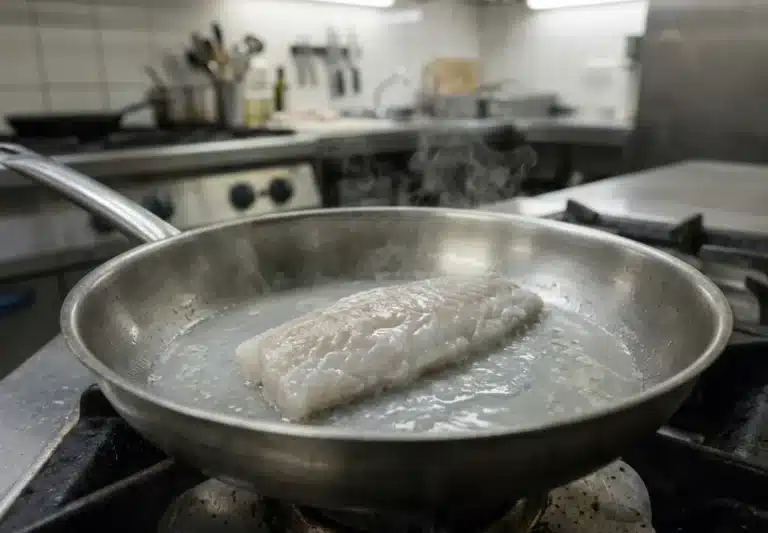
Knowing why fish sticks to a pan is not the same as being able to cook it. We have written at length about why recipes cannot teach you this, and the five fish cooking techniques below are what that argument was pointing at.
Here is the thing worth knowing before you start. If you can cook a steak or a chicken thigh, you already do four of these. You dry the surface. You wait for the pan. You put the thing down and leave it alone. You take it off before it looks done. Those are the same habits, and none of them is a fish skill.
What changes is the margin. A steak gives you minutes and forgives a fidget. A fillet gives you seconds, and the penalty is not that it goes grey, it is that it tears. So the habits you can be a bit sloppy with on beef are the ones that decide the outcome on fish.
That is also why these are worth practising rather than just reading. None of them has a number attached, and all of them are judged by feel, which is true of steak too. You have just had more chances to get it wrong with beef.
So each one comes with three things: what it is, what it feels like when it is right, and a drill to build the habit.
One note before the list. These are not the same five as the mechanisms in that piece, and they are not meant to be. Mechanisms and habits do not map one to one. Adhesion alone gives you two separate things to do with your hands, and the curl gets folded into a press that takes thirty seconds.
1. Drying, and then drying again
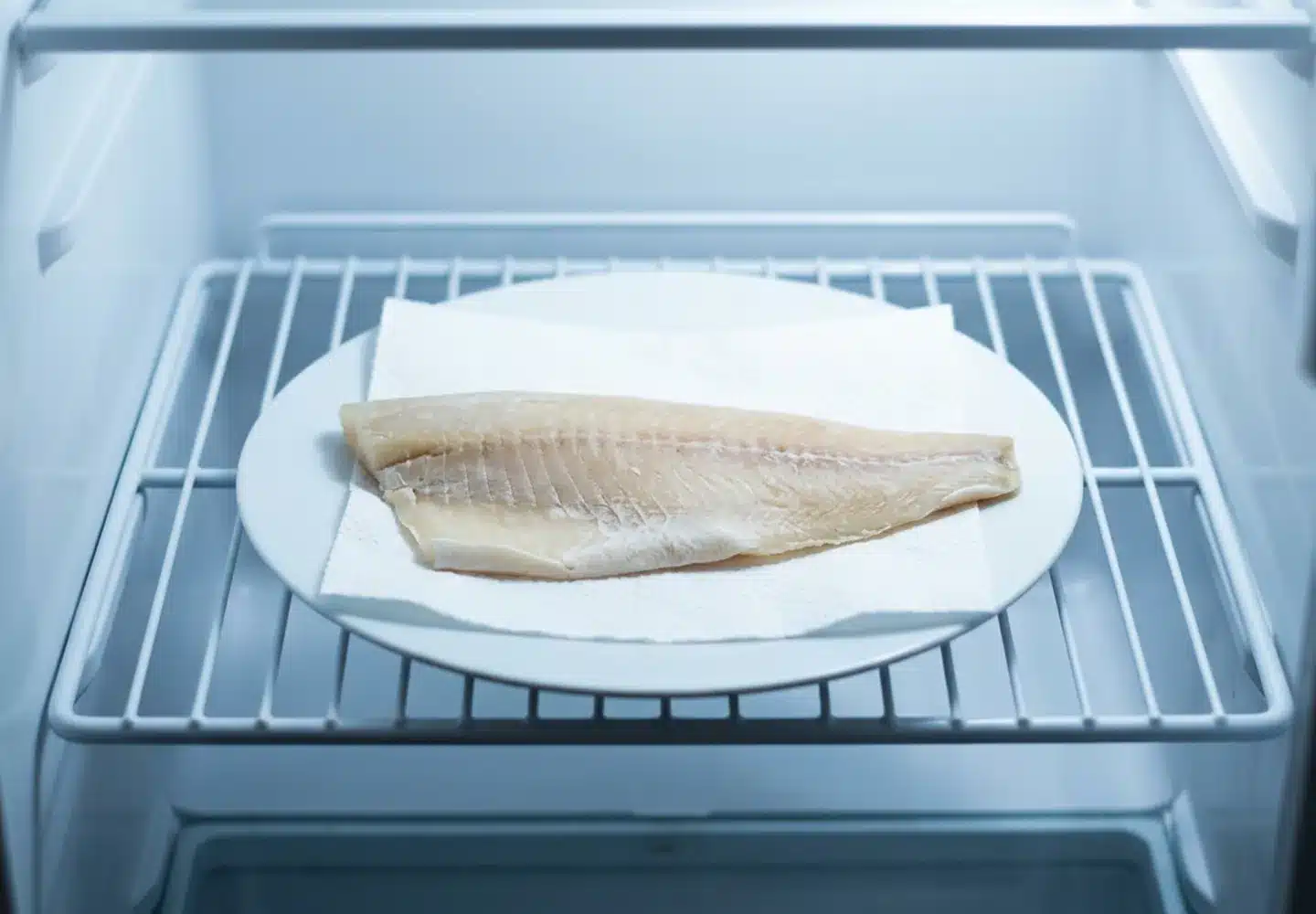
What it is. Pat both faces of the fillet dry with paper towel. Then put it uncovered on a paper-towel-lined plate in the fridge for twenty minutes to an hour, and pat it again before it goes in the pan.
If you already sear steak, this is the same step for the same reason. Fish just holds more water, so the fridge rest does more work.
What right feels like. The surface should feel tacky rather than slippery. If your fingertip slides, there is still water on it. If it grips slightly, it is ready.
The drill. Next time, do half the job deliberately. Dry one fillet properly and rest it. Take the other straight from the packet and pat it once. Cook them in the same pan, one after the other. The difference is not subtle, and you will never skip the fridge step again.
The reason this matters more than anything else on the list is in pat fish dry before cooking.
2. Reading the pan
What it is. Knowing the pan is ready without a thermometer and without guessing.
You almost certainly know this signal already. It is the same pan at the same moment you would drop a steak into. Nothing about it changes for fish.
What right feels like. Oil that shimmers and moves in fast thin ripples, just short of smoking. A drop of water should crack and vanish instantly rather than sitting and rolling. If the oil is still and glassy, the pan is cold.
The drill. Heat an empty dry pan on medium-high and watch it without adding anything. Every thirty seconds, flick one drop of water in from a wet fingertip. You are learning the moment the sound changes from a hiss to a sharp crack. Do it once and you will recognize it forever, on that pan.
That last part is the point. You are not learning a universal signal. You are learning your pan, which is the variable no recipe knows. Cooking fish temperature covers why the pan matters more than the dial.
3. Putting it down and leaving it alone
What it is. The fillet goes in away from you, flat, and then you do not touch it. Not to check, not to reposition, not to peek.
This is the “do not move the steak” rule with a shorter fuse. Same instruction, less time, and a worse outcome if you break it.
What right feels like. Genuinely uncomfortable. Every instinct says to move it, and the sound will not reassure you. It is supposed to stick at first, which is the whole subject of why fish sticks to the pan, and knowing that is what makes the waiting bearable.
For skin-on fillets, add a press: a flat spatula held across the middle for twenty to thirty seconds as it goes down. That is holding the skin flat through the window where it wants to curl, and it is covered in crispy fish skin.
The drill. Set a timer for ninety seconds the moment the fish hits the pan and put your hands behind your back. Literally. The timer is not for the fish, it is for you.
4. The release test
What it is. How you find out whether it is ready to turn, without tearing it.
Chicken thighs do exactly the same thing skin-down. They grip, then let go once the skin has browned. The only difference is that chicken forgives you for arguing with it and fish does not.
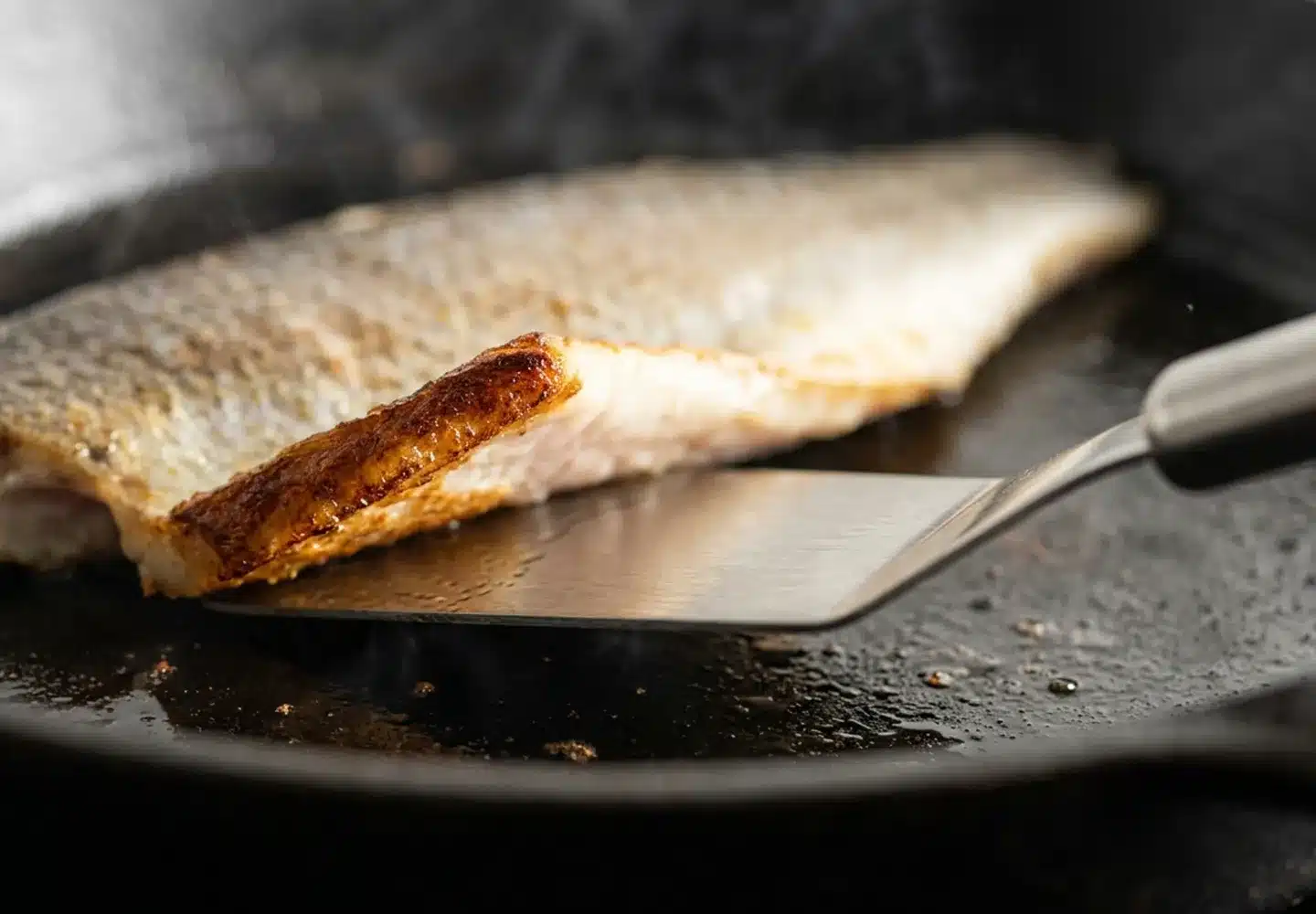
What right feels like. Slide a thin spatula under one edge and lift gently. If it comes, the whole fillet comes. If it resists at all, it is not ready. There is no in-between and you should not negotiate with it.
The bond breaks itself once a crust forms. Prying is how people tear fish and then decide they cannot cook fish.
The drill. When the ninety seconds from technique 3 are up, test it knowing it will probably still resist. Feel what “not ready” feels like. Then test every thirty seconds until it releases. You are calibrating the difference between resistance and readiness, and once you have felt both you will not confuse them again.
5. Salting at the right moment, and pulling early
Two habits, and they bracket the cook.
What it is. Salt either well ahead or at the last second, and never in between. Then take it off the heat while the centre is still slightly translucent.
Both halves are borrowed from meat. Salting a steak the night before is a dry brine, and pulling a roast off before the thermometer reads done is carryover. Fish wants the same two things on a tighter clock.
What right feels like. The surface should be dry when the fish goes in the pan, whichever route you took. Salt pulls water out first and lets the fish reabsorb it later, so twenty minutes after salting is the worst possible moment to start cooking: the water is on the surface and has not gone back in. Salt an hour ahead, or salt as it leaves your hand for the pan.
For doneness, the fillet should feel firm at the edges and give slightly in the middle, and it should look a shade underdone when it leaves the pan.
The drill. Cook two portions from the same fillet. Pull one when it looks right on the plate and the other a full minute earlier. Let both rest three minutes and then eat them side by side. You will probably find you have been overcooking fish by about a minute.
Salting well ahead has a name, and it is a dry brine. It is the better of the two routes and it is genuinely worth the planning, because salt expands the protein lattice and improves how the fish holds water rather than drawing it away. That runs opposite to most people’s intuition, and dry brine vs wet brine fish has the mechanism.
When it still goes wrong
| What happened | Which technique | Where to read |
|---|---|---|
| It stuck and tore | 3 and 4. You moved it too early | Why fish sticks to the pan |
| No browning at all, liquid in the pan | 1, or 2. Wet surface or cold pan | Pat fish dry before cooking |
| Edges burnt, middle pale | The skin curled and lifted off the pan | Crispy fish skin |
| Dry and chalky | 5. Pull it a minute earlier | Cooking fish temperature |
| Wet even after drying | Not you. The fish released water it could not hold | Frozen fish quality |
Practising these fish cooking techniques on purpose
Do not practise all five at once. Cook the same fish five times over a few weeks and give each session one job: drying, then reading the pan, then leaving it alone, then the release test, then salt and timing.
Use the same fish every time, because you are learning what one thing feels like, and changing the fish changes the feedback. A lean white fillet is the hardest teacher and therefore the best one: it gives you no fat to hide behind and no margin on timing.
Our Nova Scotia Haddock is exactly that, which is why we suggest it here, and the rest of the market is stocked on the same principle. Five sessions with these fish cooking techniques and you will stop reading recipes for instruction and start reading them for ideas, which is what they were always for.