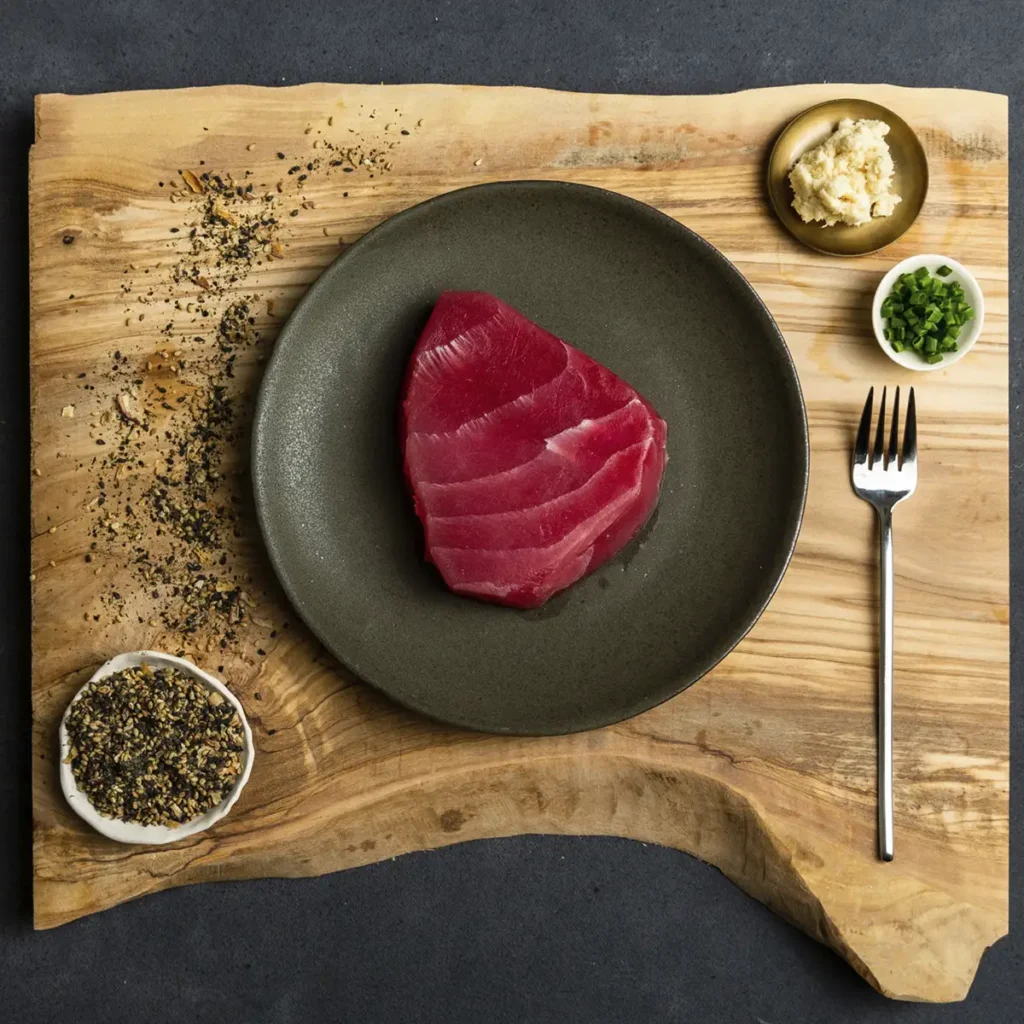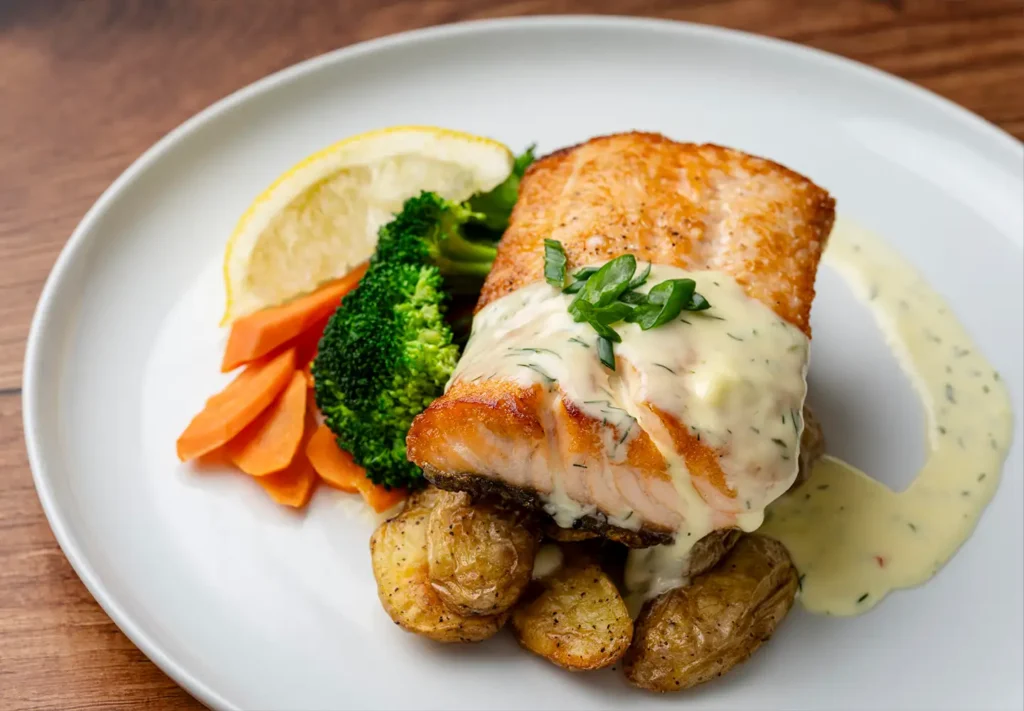
If your fish has ever stuck to the pan, refused to brown, or released a pool of liquid while cooking, moisture is usually the reason. This is not just an issue with seafood, either. The same principle applies to all proteins. Whether you are cooking fish, steak, or chicken, excess surface moisture interferes with how heat works. That is why learning to pat fish dry before cooking is one of the simplest ways to improve results.
This step allows the surface to cook properly instead of steaming, which leads to better texture, improved browning, and more consistent outcomes.
Why moisture is the biggest barrier to good cooking
Moisture affects how all proteins cook, not just fish. When any protein is wet, heat is first used to evaporate surface water before it can begin browning.
This creates a delay. Instead of searing, the surface steams.
With fish, this effect is even more noticeable because it cooks quickly and contains more water than most land-based proteins. There is less room for error, so a wet surface has a bigger impact on the final result.
That leads to:
- poor browning
- sticking to the pan
- uneven texture
The goal is the same across all proteins. Remove excess surface moisture so heat can work efficiently from the start.
What happens when fish is wet in the pan
When wet fish hits a hot surface, the temperature drops immediately as water begins to evaporate. This prevents the surface from reaching the temperatures needed for browning.
Browning, also known as the Maillard reaction, requires higher surface temperatures. If moisture is present, those temperatures are harder to achieve.
The result is fish that looks pale, cooks unevenly, and lacks depth of flavour. Food science research shows that surface moisture inhibits the Maillard reaction, reducing browning and flavour development.
What happens when fish is dry
When fish is properly dried, heat can act directly on the surface. This allows the exterior to develop texture while the interior cooks more gently.
Dry fish gives you:
- better sear
- improved texture
- more controlled cooking
It also reduces sticking because the surface can form a crust more quickly.
Why this matters more for fish than other proteins
All proteins benefit from being dry before cooking, but fish is especially sensitive.
Fish contains more water than most land-based proteins and has a more delicate structure. This means excess moisture has a greater impact on how it cooks.
Because fish cooks quickly, there is less time to recover from a poor start. If the surface begins by steaming, it is difficult to correct later.
When fish is more likely to be wet
Not all fish arrives in the same condition. Some situations increase surface moisture.
Common causes include:
- previously frozen fish that has been thawed
- improper thawing methods
- storage in sealed packaging
- natural moisture release during handling
If you want to understand why thawed fish often releases more liquid, read our guide on how to thaw frozen fish.
How to properly pat fish dry before cooking
Drying fish is simple, but it should be done carefully.
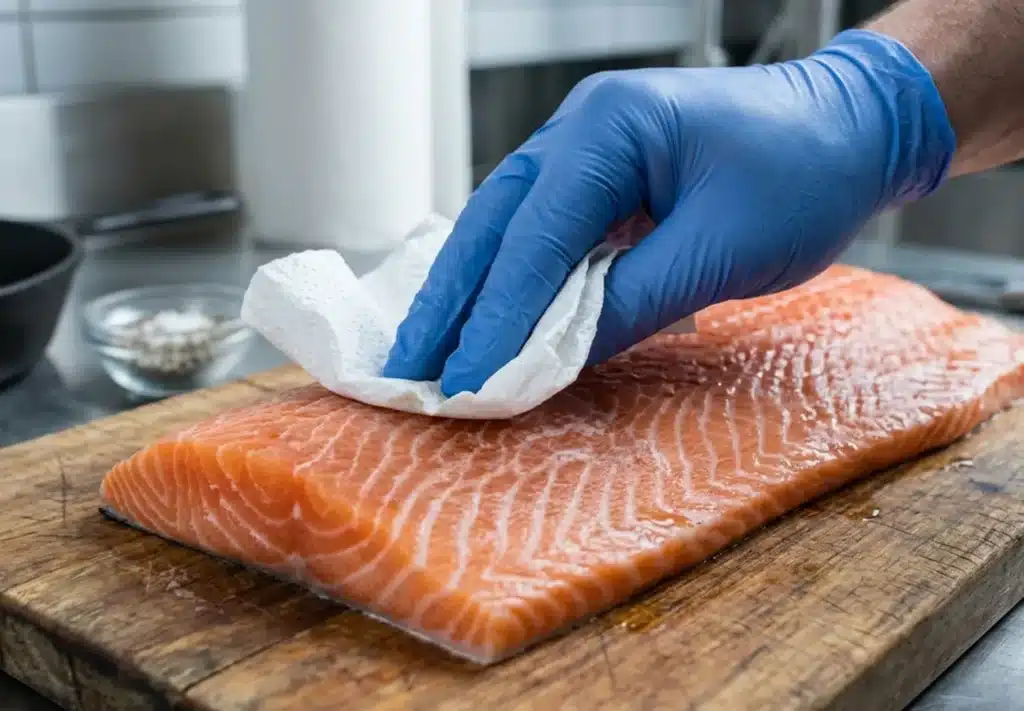
Use paper towels to gently press against the surface of the fish. Focus on removing visible moisture without damaging the flesh.
Do not rub aggressively. Fish is delicate, and too much pressure can affect its structure.
For best results:
- dry both sides
- dry just before cooking
- replace towels if they become saturated
This step takes less than a minute but has a significant impact.
Should you pat fish dry after marinating
Marinating adds moisture back to the surface of the fish, which brings you back to the same problem. A wet surface prevents proper browning and can lead to steaming instead of searing.
Even when marinating, removing excess moisture before cooking is still important.
After marinating, take the fish out and gently blot the surface with paper towels. The goal is not to remove the marinade completely. It is to remove excess liquid while leaving flavour behind.
This helps:
- improve browning
- reduce sticking
- maintain better texture
Why this matters scientifically
Most marinades contain water, salt, acid, and oil. While they add flavour, they also leave a wet surface.
For browning to occur, the surface needs to reach higher temperatures. Like previously mentioned, excess moisture lowers surface temperature because energy is used to evaporate water first.
When you might not want to fully dry it
There are cases where you want to leave more of the marinade on.
- Low heat methods like baking or roasting
- Marinades that form a glaze
- Oil-heavy marinades designed to coat the fish
In these cases, you still want to remove excess liquid, but you do not need a completely dry surface.
Practical takeaway
Marinating and drying are not opposites. They work together.
- Marinate for flavour
- Pat dry for better cooking performance
If you skip the drying step, even a well-balanced marinade can lead to weaker results in the pan.
How drying affects different cooking methods
Drying fish improves results across multiple cooking styles.
High heat methods like searing and grilling benefit the most. A dry surface allows immediate browning and better crust formation.
Low heat methods still benefit, but the effect is more subtle. Removing excess moisture helps maintain a cleaner texture and prevents dilution of flavour.
When you might not want completely dry fish
There are a few exceptions where moisture is less of a concern.
Poaching and steaming rely on moisture as part of the cooking process. In these cases, drying is less critical.
However, even in these methods, removing excess surface water can help maintain better control over flavour and consistency.
How this connects to freezing and handling
Surface moisture is often a result of earlier handling. Fish that has been frozen and thawed may release more water due to structural changes.
If the proteins have been weakened, they cannot hold moisture as effectively. This leads to more liquid on the surface.
If you want to understand this in more detail, read our guide on frozen fish quality and how it affects texture.
Practical tips for better results
A few simple habits can improve your cooking consistency:
- always pat fish dry before high heat cooking
- preheat your pan properly
- avoid overcrowding
- use the right amount of oil
These steps work together. Drying the fish is just one part of a larger system.
If you want to build flavour after drying, our guide on <u>how to season fish</u> covers simple techniques that work.
Pat fish dry before cooking: Bringing it back to quality
Patting fish dry before cooking is a small step with a large impact. It allows heat to work properly, improves texture, and helps you get consistent results.
It does not fix poor fish, but it helps good fish perform the way it should.
Browse our online fish market to start with fish that is handled properly and cooks the way you expect.