Since the earliest days, the symbolic meaning of fish has been about more than dinner. In our first two pieces we looked at how nutrient-rich seafood helped human brains grow and how people settled where the fish were. This chapter follows the meanings that grew from that bond. Across religions and rituals, myths and star charts, fish and other sea creatures came to stand for life, renewal, wisdom, and belonging.
How symbols grow out of supper
Fish live in water, the element most cultures treat as the source of life. That simple fact shaped a shared vocabulary: fish as signs of birth and rebirth, of abundance and gratitude, of journeys and safe return. You can see it in how people pray, celebrate, and even choose what to eat on particular days.
The symbolic meaning of fish in religion
Christianity
Early Christians used the ichthys or “Jesus fish” as a quiet badge of belonging. In Greek, the letters of ichthys form an acronym for “Jesus Christ, God’s Son, Savior,” and the symbol appears in early Christian contexts. Fish also show up beside bread in catacomb art tied to Gospel feeding stories and Eucharistic themes. In Catholic practice, fish on Fridays during Lent expresses abstinence and remembrance.
Hindu traditions
In Hindu mythology, Vishnu’s first avatar, Matsya, appears as a fish who warns of a coming flood and saves life, linking fish with protection and renewal. The broader visual language of Indian religions often includes water creatures such as the makara, a riverine or sea creature motif in jewelry and temple art. Encyclopedia Britannica+1
Buddhism and Jainism
Walk into a temple and you may see a pair of golden fish. In Buddhist iconography, the pair is one of the Eight Auspicious Symbols and is commonly explained as happiness and freedom of movement, like beings who pass through life without drowning in suffering. Some Jain traditions also include a paired fish among auspicious emblems of good fortune.
Buddhist storytelling goes further. In Jātaka tales about the Buddha’s previous lives, the Bodhisattva sometimes appears as a fish, including stories where self-sacrifice feeds the hungry or where a wise fish saves others. These stories underline fish as teachers as well as food.
Indigenous salmon ceremonies
Along the Northwest Coast of North America, many Indigenous nations treat salmon as relations rather than mere resources. “First Salmon” ceremonies welcome the run, share the first fish with the community, and return bones to the water as a promise of care and reciprocity. The ritual affirms identity and responsibility to river habitats.
Ancient Egypt
In the Nile Delta city of Mendes, the goddess Hatmehit was “Foremost of the Fishes.” Her emblem appears on ritual standards and crowns, a local signal that linked community identity to the river’s bounty.
Sindh’s river saint
Among Sindhi Hindus, Jhulelal is often shown riding a fish, a river guardian linked in local Muslim tradition with Khidr, the guide associated with life and greenery. The shared imagery shows how water symbols cross religious lines.
Across these settings, the symbolic meaning of fish holds a common thread. Take what you need, return respect, and recognize the waters that sustain you.
The symbolic meaning of fish in mythology and folklore
China. The word for fish (yú) sounds like “surplus,” so whole fish at Lunar New Year signal “may you have abundance every year”. The carp that swims upstream and leaps the Dragon Gate becomes a dragon, a lesson about perseverance and transformation.
Ireland. The Salmon of Knowledge promises wisdom to whoever tastes it, a story that ties food to insight and leadership.
Myths like these treat fish as more than resources. They are messengers, guides, and sometimes the way wisdom travels from one world to another.
Eating fish as a reflection of belief and identity
Feasts and fasting. On Fridays in Lent, many Catholics choose fish instead of meat as an act of remembrance and restraint. Among Italian-Americans, the Feast of the Seven Fishes on Christmas Eve turns that abstinence into celebration, with multiple seafood courses shared across generations.
Ceremony and stewardship. First Salmon practices in Coast Salish communities pair gratitude with obligations to habitat, reminding everyone that honouring a fish means caring for the river it returns to.
In each case, eating fish is not only nutrition. It is participation in a story about memory, community, and care.

The symbolic meaning of fish in astrology and star signs
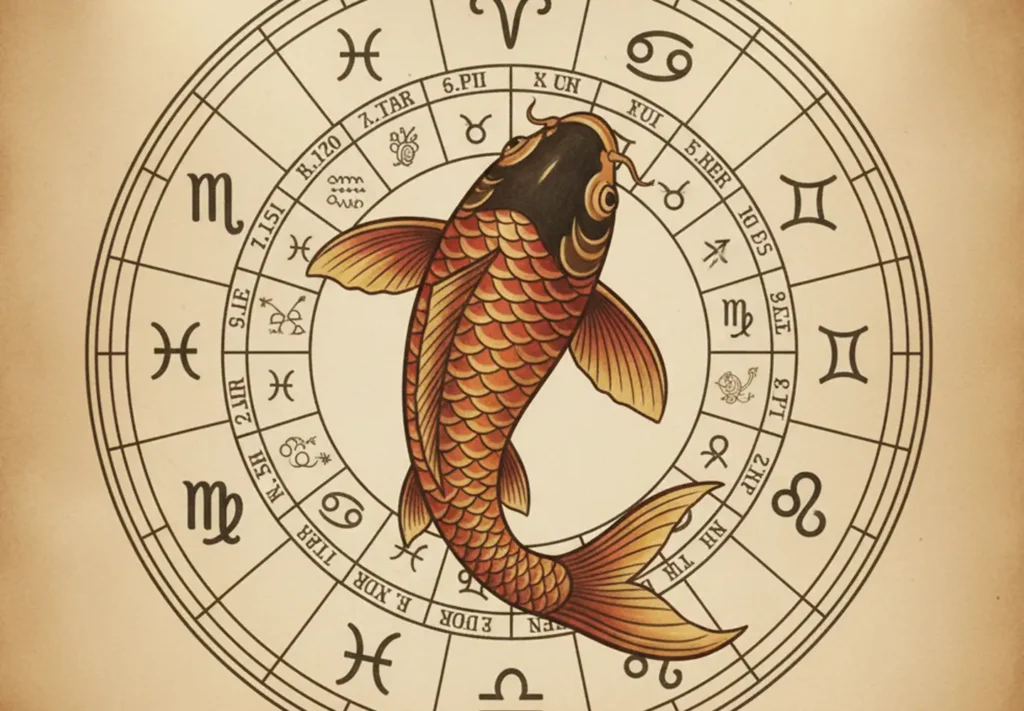
Western astrology borrowed heavily from Mesopotamia. The idea of a twelve-part zodiac matured in Babylon and spread through the Greek and Roman worlds..
Within that system:
- Pisces, the fishes. Two fish tied together appear in classical imagery and are commonly linked to the story of Aphrodite and Eros escaping danger by taking fish form or by being carried by fish. The constellation marks the tail end of winter and the promise of renewal.
- Cancer, the crab. In Greek myth, a crab nips Heracles during his battle with the Hydra. Hera rewards the crab with a place in the sky, which is why a shellfish holds a spot among the zodiac animals.
- Capricorn, the sea-goat. A goat with a fish’s tail likely reflects very old Mesopotamian imagery of the water god Ea or Enki. One hoof on land and one fin in water is a reminder that boundaries blur where rivers meet the sea.
Astrology’s sea creatures show how easily practical ties to water became symbols of identity, fate, and character.
The symbolic meaning of fish today: logos, ink, and everyday signals
Symbols do not retire. They move from temple walls to bumper stickers, from shrine offerings to the skin on someone’s forearm. The symbolic meaning of fish is no exception. You can spot it in parking lots, on seafood labels, and in tattoo studios, where old stories become very personal.
On skin: tattoos that borrow old meanings
Walk into a modern tattoo shop and you will see motifs that reach back centuries. The koi that struggles upstream shows up again and again, a nod to the old East Asian legend of a carp that leaps the Dragon Gate and becomes a dragon. That story is shorthand for perseverance and transformation, and it is why koi remain a favourite in Japanese irezumi and global tattoo culture.
Zodiac signs live on skin too. Pisces appears as a pair of fish tied together, a reference to Greek and Roman tales about escape and protection. Cancer appears as a crab from the story of Heracles and the Hydra. People choose these not just for birthdays but for traits they want to carry with them.
Christian fish imagery took on a new life in the tattoo era as well. The ichthys, once a quiet emblem among early believers, is now common as a small line-work tattoo, a necklace, or a car badge. Its modern use is widely recognized, and it still signals belonging.
On bumpers and T-shirts: signals and counter-signals
You have probably seen the classic ichthys on a bumper, and you may have seen parodies too. One adds legs and the word “Darwin,” a cheeky play on evolution that answers a religious symbol with a scientific one. Whatever you think of the joke, it proves the point. Fish are flexible symbols, and people use them to say who they are.
On packaging: a blue fish that stands for care
There is another modern fish you see often, this time in the grocery aisle. The Marine Stewardship Council’s blue fish label tells you a wild product comes from a fishery that has met the MSC standard for sustainability, from stock health to environmental impact and traceability. A small fish logo becomes a quick way to connect dinner with stewardship. Want to learn more about MSC? Check out this article that breaks down all the major seafood certifications you should be looking out for.
Why these modern signs work
All of these are new surfaces for old ideas. The koi carries a story about effort that goes back to painted scrolls. Pisces and Cancer lift their shapes from the night sky and ancient myths. The ichthys moves easily from catacombs to car chrome and skin. A blue fish on a label turns a private choice into a public value. The symbolic meaning of fish lasts because it keeps finding useful places to live.
Why the symbolic meaning of fish endures
Fish fed bodies first. Then they fed imaginations. They signalled wisdom in Ireland, surplus in China, humility in Christian practice, protection in Hindu stories, and freedom in Buddhist and Jain art. Those meanings lasted because the relationship lasted. When people honoured fish, they honoured the waters that made life possible.
Eating meaningfully today
Choosing responsibly harvested seafood is a modern way to keep the symbol alive. It links dinner to stewardship and keeps communities connected to the ecosystems that feed them. At Afishionado, we trace every fish to its source so you can see that connection for yourself.
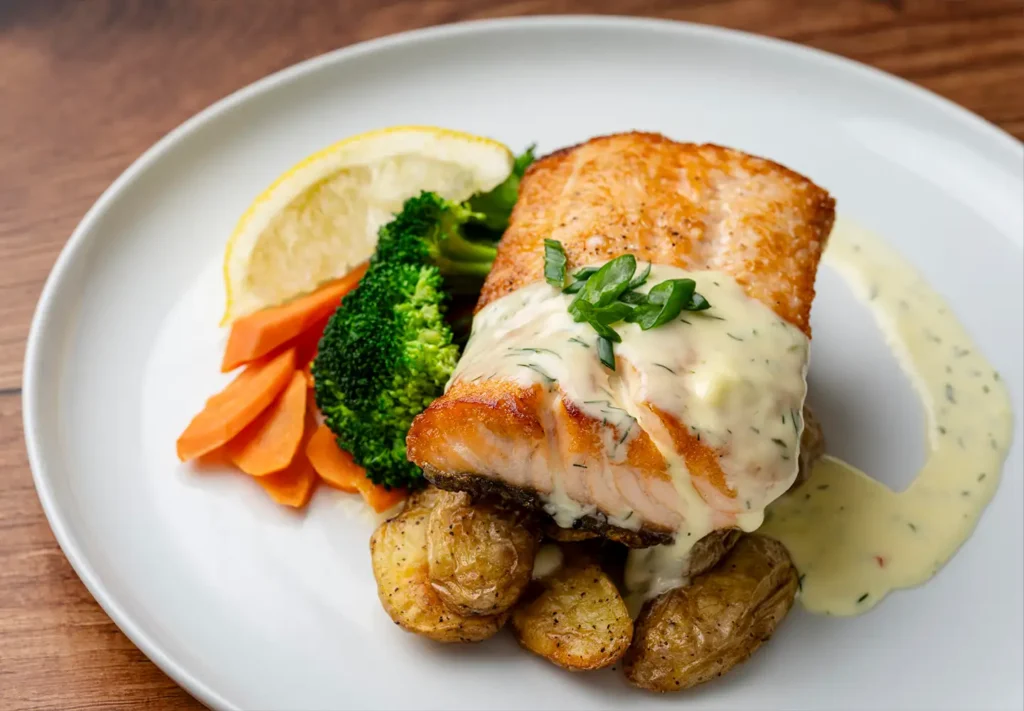
When you sit down to salmon, cod, mackerel, or shellfish at a feast or a simple Friday supper, you touch the same symbolic meaning of fish that runs through catacombs and temple walls, winter festivals and spring ceremonies. Food and belief travel together. We eat, and we remember what the water has given.