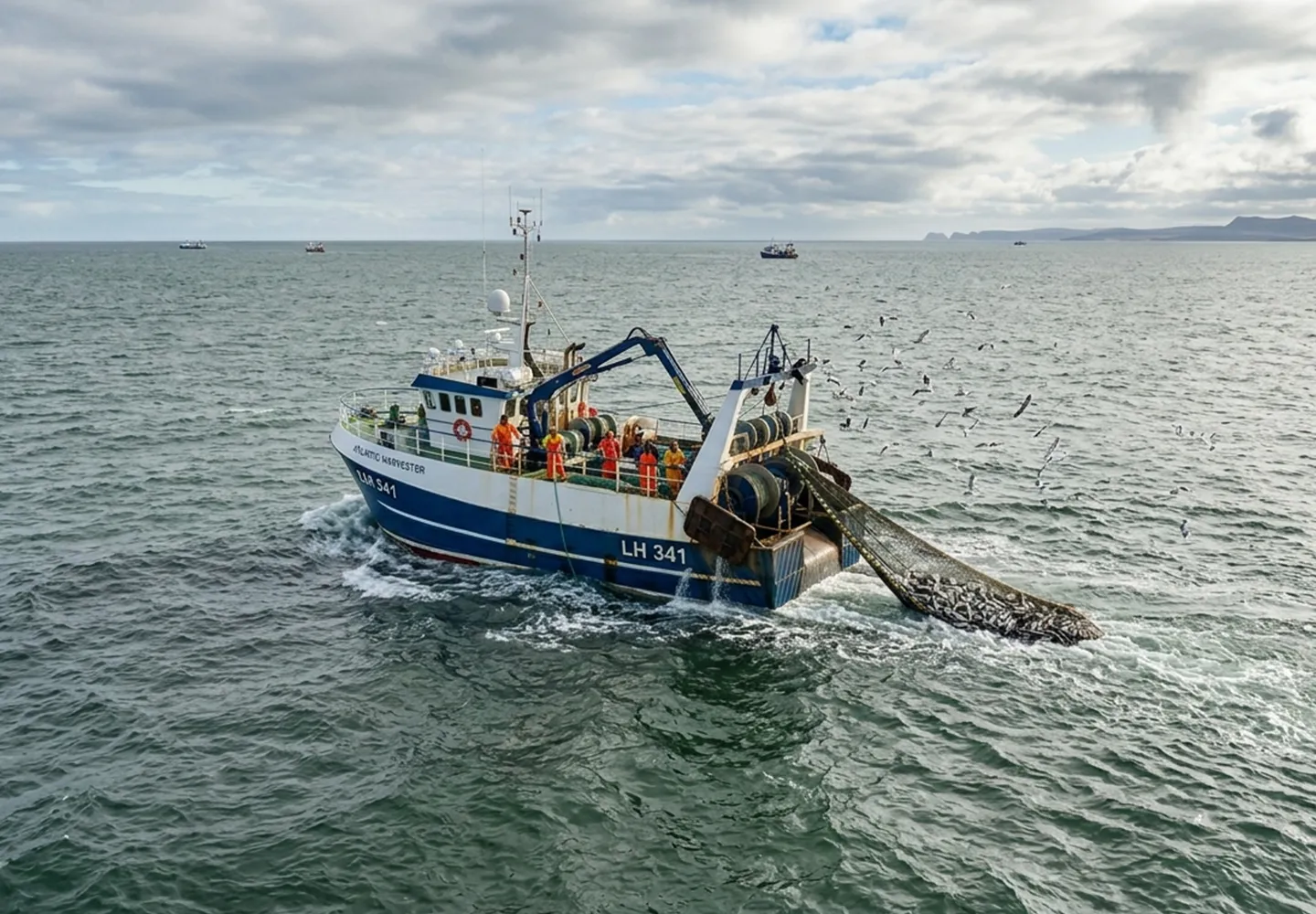
Atlantic Canada haddock nearly vanished from commercial fishing in 1993. The Canadian government imposed a moratorium on haddock and cod on the Scotian Shelf that year after populations collapsed under decades of industrial pressure. Thirty years later, haddock has come back in ways that cod has not. It’s a story worth understanding, because it explains a lot about the current state of the fishery, why supply is still tighter than it once was, and why the Atlantic Canadian haddock in our Haddock Fillets is genuinely worth sourcing carefully.
What happened in 1993
The collapse wasn’t sudden. It was the result of decades of industrial-scale fishing on the Scotian Shelf, the productive underwater plateau stretching along Nova Scotia’s Atlantic coast. Through the 1960s and 1970s, large factory trawlers harvested cod, haddock, and other groundfish at volumes that exceeded what the populations could sustain. According to Fisheries and Oceans Canada, reported annual haddock landings from the southern Scotian Shelf and Bay of Fundy had historically reached as high as 43,000 tonnes. By 1988 they had fallen below 11,000 tonnes and kept falling. The moratorium in 1993 was the endpoint of a long slide.
The closure was painful for fishing communities from Lunenburg to Yarmouth. Atlantic Canada haddock and cod had defined the regional economy for three centuries. Removing the directed fishery didn’t just affect income. It took away an identity. The history of Atlantic Canada’s fishing communities runs deeper than most industries anywhere in the country.
Why Atlantic Canada haddock recovered when cod didn’t
This is the part of the story that surprises most people. Both species were under the same moratorium. Both were depleted. But their trajectories after 1993 diverged sharply.
Cod on the Scotian Shelf has remained at critically low levels. Haddock came back.
The reasons are biological and ecological. Haddock reproduce faster than cod and reach spawning maturity earlier. According to DFO species data, approximately 50% of female haddock are mature by age 3. When fishing pressure was removed, strong year-classes in the 1990s established a foundation for recovery.
Then came the 2013 year-class. A DFO biologist at the St. Andrews Biological Station estimated that 264 million Atlantic Canada haddock hatched on the southern Scotian Shelf in 2013 and survived their first year. According to CBC reporting on the stock assessment, that figure was five times higher than the next highest year-class on record since 1985. Industry and scientists were cautiously optimistic about what it meant for the coming decade.
The cod story is more complicated. Cod recovery has been hampered by ecosystem shifts, bycatch in other fisheries, and persistent challenges that the moratorium alone couldn’t fix. Haddock, by contrast, turned out to be more resilient once the direct pressure was removed.
Where Atlantic Canada haddock stands today
Recovery doesn’t mean the fishery is back to where it was before the collapse. It means haddock populations are rebuilding under managed conditions, with science-based quotas, spawning closures, and annual stock assessments that have been in place since 1970.
DFO conducted a comprehensive framework review of the assessment method for the western Scotian Shelf and Bay of Fundy haddock stock (NAFO divisions 4X5Y) in 2023 and 2024, updating the tools used to provide catch advice. Annual stock status updates compare current biomass indices against long-term medians to guide quota decisions. The fishery is MSC certified, the global benchmark for well-managed wild fisheries.
That certification and the ongoing assessment framework matter because they represent real institutional commitment to keeping this recovery on track. The fishery isn’t just recovering. It’s being actively managed to stay that way.
What that means practically is that Atlantic Canadian haddock supply is reliable but not unlimited. Quotas constrain how much comes to market in any given season. That constraint is part of why the fish is worth eating: it means someone is watching the numbers.
What this means for how we source
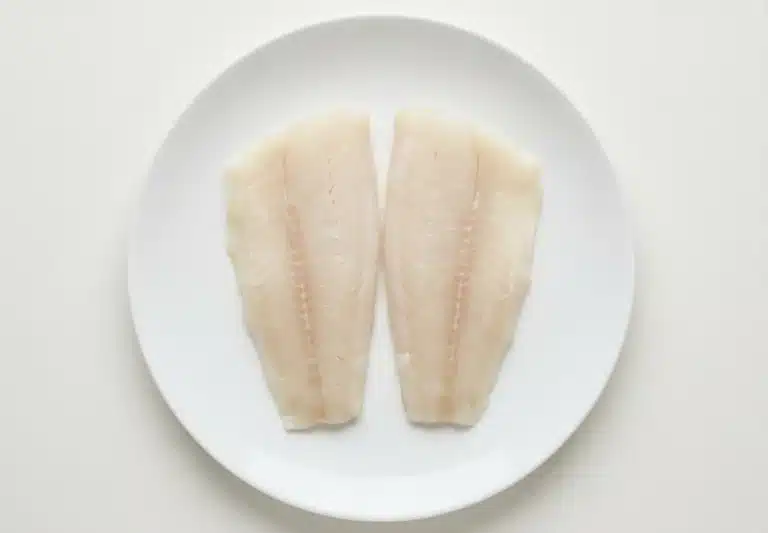
We use Atlantic Canadian haddock for our Haddock Fillets because the fish is excellent, the fishery is well managed, and buying from it supports harvesters on the Scotian Shelf and in the Bay of Fundy who have spent decades fishing within the constraints required to keep it viable.
We use Icelandic haddock for our Breaded Haddock because the physical characteristics of Icelandic cold-water haddock (density, low fat content, firmer flesh) make it the better choice for a breaded product that needs to hold a crust. The full reasoning on that decision is in our piece on where our haddock comes from.
These aren’t competing sourcing decisions. They reflect different product requirements and different fishery contexts. The Atlantic Canadian supply is genuinely excellent for fillets. The volume isn’t always sufficient to run a breaded product at the consistency we need, and the fish characteristics differ in ways that matter for that application.
Supporting the Atlantic Canadian haddock fishery is something we do deliberately. It’s not a marketing position. It’s a purchasing decision that reflects what we think the supply chain should look like when it’s working properly: science-based management, third-party certification, harvesters who’ve committed to fishing within sustainable limits, and buyers who pay attention to where the fish comes from.
The longer view
The 1993 moratorium is a cautionary story about what industrial fishing does when it runs ahead of what ecosystems can absorb. But the haddock recovery is a different kind of story. It shows what happens when management actually works: populations rebuild, fisheries reopen, and communities that depend on them get something back.
That recovery is not finished. Haddock populations on the Scotian Shelf are still well below their pre-collapse highs, and ongoing monitoring exists precisely because the science requires it. But the direction is right, and the institutional infrastructure around the fishery is better than it was thirty years ago.
When you eat Atlantic Canadian haddock, you’re eating fish from a fishery that went through a genuine reckoning and came out the other side with a more careful approach to its own long-term survival. That’s not a small thing.
If you want to understand more about haddock as a species, including flavour, texture, how to buy it, and how to cook it, our Haddock 101 guide covers the full picture. If you’re ready to cook, our guide on how to cook haddock walks through three methods that work for both product types. Both our Haddock Fillets and Breaded Haddock are available in the Afishionado market.