Fun facts about haddock tend to get stuck at fish and chips. That’s a shame, because the biology, history, and cultural story of this fish are genuinely more interesting than the dinner table conversation suggests. Here are ten facts worth knowing. A few of them might change how you think about the fish on your plate.
1. Its name literally means “black letter”
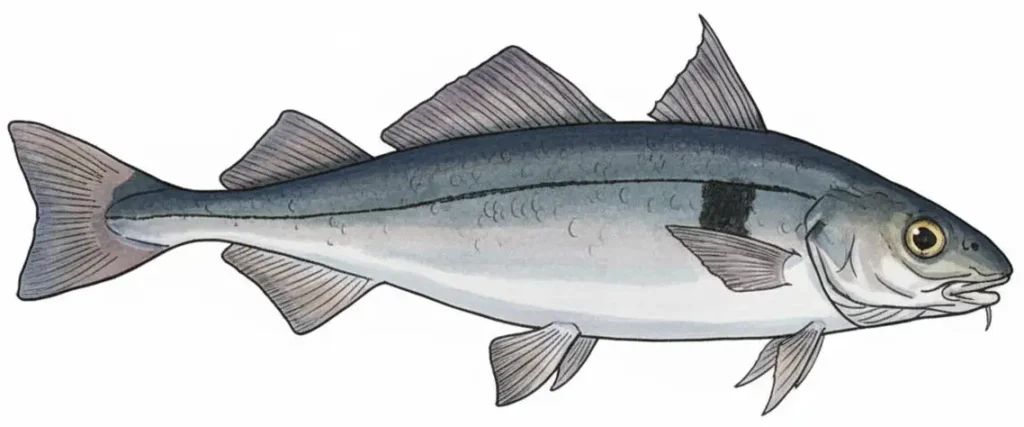
The scientific name for haddock is Melanogrammus aeglefinus. The genus name comes from the ancient Greek words melanos, meaning black, and gramma, meaning letter or signal, according to Wikipedia’s entry on haddock. The reference is to the dark lateral line that runs along the fish’s flank and the distinctive black blotch above each pectoral fin. Every haddock is, in a sense, already labelled.
That black blotch has its own folklore name: the Devil’s thumbprint. The legend holds that the devil reached into the sea to grab a fish and left his mark when the haddock slipped away. It’s one of the most reliable visual identifiers for the species and, incidentally, one of the easiest ways to tell haddock from cod at the counter.
2. Juvenile haddock shelter under jellyfish
Young haddock, before they’re large enough to defend themselves in open water, have developed a remarkable strategy for avoiding predators. According to research cited in EBSCO’s zoology reference on haddock, juvenile haddock shelter beneath the stinging tentacles of large jellyfish while drifting in the water column. The tentacles deter most predators. The haddock, though not immune to the stings, appear to tolerate them well enough to use the jellyfish as moving cover.
It’s a behaviour common enough to be documented across multiple populations. It also means the haddock’s early survival is partly dependent on jellyfish abundance, which links it to broader changes in ocean conditions in ways that are still being studied.
3. A large female can produce over a million eggs in a single season
Haddock are broadcast spawners. Females release eggs into the water column, males fertilize them, and the fertilized eggs drift as plankton before hatching. The number of eggs a female produces scales dramatically with her size: according to FAO species data, the count ranges from around 100,000 for a smaller fish to more than a million for a large one. For the largest females recorded, the number approaches 1.8 million.
Those eggs are tiny — between 1.2 and 1.7 millimetres in diameter — and take one to three weeks to hatch. After hatching, the larvae drift with ocean currents, feeding on microscopic organisms, until they’re large enough to settle to the seafloor and begin a demersal life. Very few of those millions of eggs survive to adulthood.
4. Haddock grow faster now than they did 40 years ago
This one surprises most people. According to Wikipedia’s haddock entry, recorded growth rates for haddock underwent significant change over the 30 to 40 years up to 2011. Haddock are now attaining adult size considerably earlier than was documented in stock assessments from the 1970s and 1980s.
Researchers have not fully settled the reasons, but they point to reduced competition from other groundfish after the 1993 collapse, changes in prey availability, and shifts in ocean temperature as possible contributing factors.What is clear is that the fish on your plate today is, biologically speaking, a product of a changing North Atlantic ecosystem.
5. The 2013 year-class on the Scotian Shelf was one of the strongest ever recorded
In 2013, an extraordinary number of haddock hatched and survived their first year on the southern Scotian Shelf. A DFO biologist at the St. Andrews Biological Station estimated the figure at 264 million juveniles, according to CBC reporting on the stock assessment — five times higher than the next highest year-class on record since 1985. Scientists and industry were cautiously optimistic about what it meant for Atlantic Canadian supply in the decade that followed.
That recovery story is directly connected to why Atlantic Canadian haddock is a viable commercial product today. For more context on what happened after the 1993 moratorium and how the fishery rebuilt, see our piece on Atlantic Canada’s haddock comeback.
6. Finnan haddie almost couldn’t reach London
Smoked haddock has been made in northeastern Scotland since at least the 17th century. The best-known variety, Finnan haddie, originated in the fishing village of Findon (pronounced “Finnan”) near Aberdeen, where fishwives smoked lightly salted haddock over peat fires. According to Wikipedia’s entry on Finnan haddie, the product had a shelf life of at most three days because of the light smoking it received.
Aberdeen fishers could bring smoked haddock to local markets within hours of the catch, but they could not move it to London quickly enough to stop it from spoiling.
Mail coaches introduced the fish to London consumers, but the railway connection between Aberdeen and London in the 1840s finally made smoked haddock widely available. Before refrigeration, the Industrial Revolution solved the logistics problem that had limited the expansion of smoked haddock as a food.
7. Haddock is lean enough that almost all its calories come from protein
A 100g cooked serving of haddock provides approximately 20 grams of protein and fewer than 90 calories, according to Health Canada’s nutrient data for fish and shellfish. That makes it one of the leanest protein sources available: the fat content is under 1 gram per 100g, meaning the caloric composition is almost entirely protein.
That same leanness affects how it cooks. Unlike salmon, which bastes itself from within as fat renders during cooking, haddock has nothing to protect it from the heat. It needs attentive technique: shorter cooking times, moderate heat, and not a moment of inattention, or it dries out. The leanness is also what makes it ideal for breaded preparations, since there’s no fat to migrate into the crust and make it soggy.
Our guide on how to cook haddock covers the three methods that work best for both of our haddock products.
8. The Scotia-Fundy haddock fishery has been MSC certified since 2010
The Canada Scotia-Fundy haddock fishery received its first Marine Stewardship Council certification on 22 October 2010. It has maintained that certification continuously since, with the current certificate running to May 2027. The certification covers multiple gear types including hooks and lines, gillnets, and bottom trawls, across the Northwest Atlantic stock area.
MSC certification requires independent annual audits and a full reassessment at each five-year renewal. A fishery that has held the certification for fifteen years has done so by consistently meeting the standard, not by passing it once. For a full explanation of what MSC certification actually means in practice, our guide to MSC, ASC, and Ocean Wise certifications covers the differences between the major labels.
9. Haddock is one of the most culturally embedded fish in the North Atlantic world
No other fish appears as consistently across as many distinct food traditions. In Nova Scotia it is the default for fish and chips, a role it has held since British immigrants brought the dish in the 19th century. In Scotland it is the basis for Cullen Skink, the smoked haddock soup that predates formal recipe documentation. In Victorian Britain it became the centrepiece of kedgeree, a dish that arrived via India and colonialism and stayed. The Savoy in London still serves the Arnold Bennett omelette, which chefs named after the novelist and built around smoked haddock.
Across northern European fishing cultures and the Atlantic Canadian coast, haddock has functioned as everyday food, special occasion food, preserved food, and cultural marker simultaneously. Few fish carry that range. Our piece on the history of fishing communities explores the broader context of how fish like haddock shaped Atlantic Canadian coastal life.
10. We source our haddock from two different fisheries for two different reasons
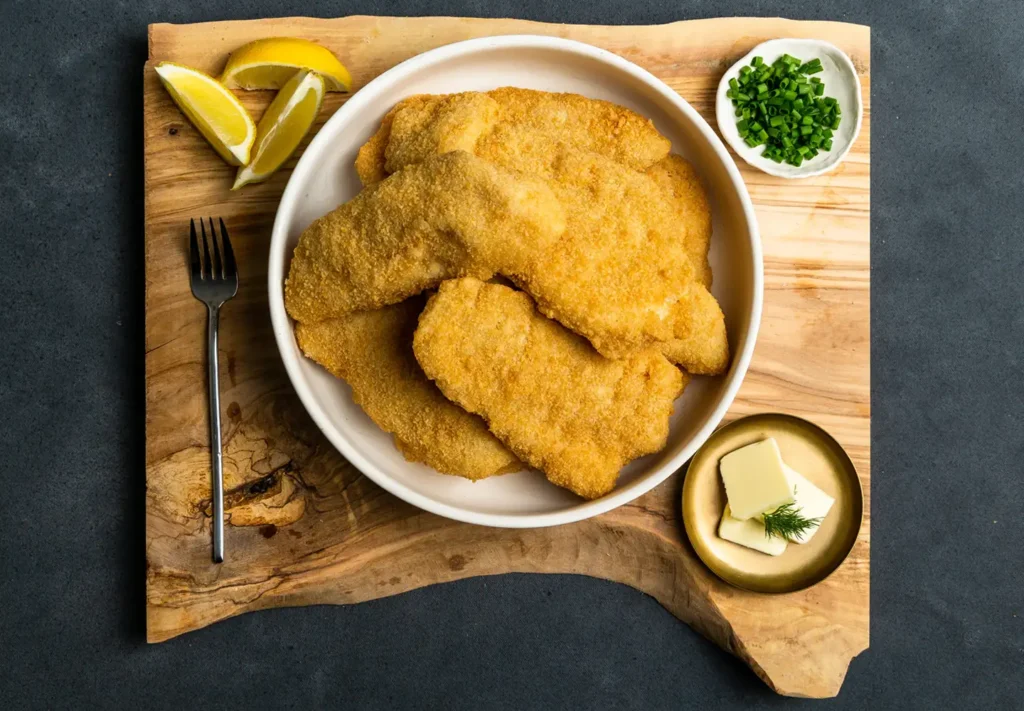
This is less biology and more transparency: our Haddock Fillets use Atlantic Canadian haddock from the Scotian Shelf and Bay of Fundy. Our Breaded Haddock uses Icelandic haddock, chosen because the cold sub-Arctic water produces denser, lower-fat flesh that holds a breadcrumb crust better than warmer-water equivalents.
Both fisheries are MSC certified. Both operate under science-based management with annual stock assessments. The sourcing decision comes down to what each product physically requires, not convenience or cost. The full reasoning is in our piece on where our haddock comes from.
If you want the full picture on haddock, our Haddock 101 guide covers the species in depth: what it tastes like, how it compares to cod, how to buy it fresh or frozen, and how to cook it. Both products are available in the Afishionado market.