Haddock vs cod is one of the most common questions at the seafood counter, and for good reason. Both are North Atlantic white fish. Both are lean, mild, and versatile. Both end up in fish and chips.
At the counter, with the skin off and the fillets side by side, most people genuinely can’t tell them apart. But they’re not the same fish, and the differences between them become clear the moment you start cooking. This guide covers how to identify them, how they taste, how they cook, how the nutrition compares, and which one is the better choice depending on what you’re making.
How to tell haddock and cod apart
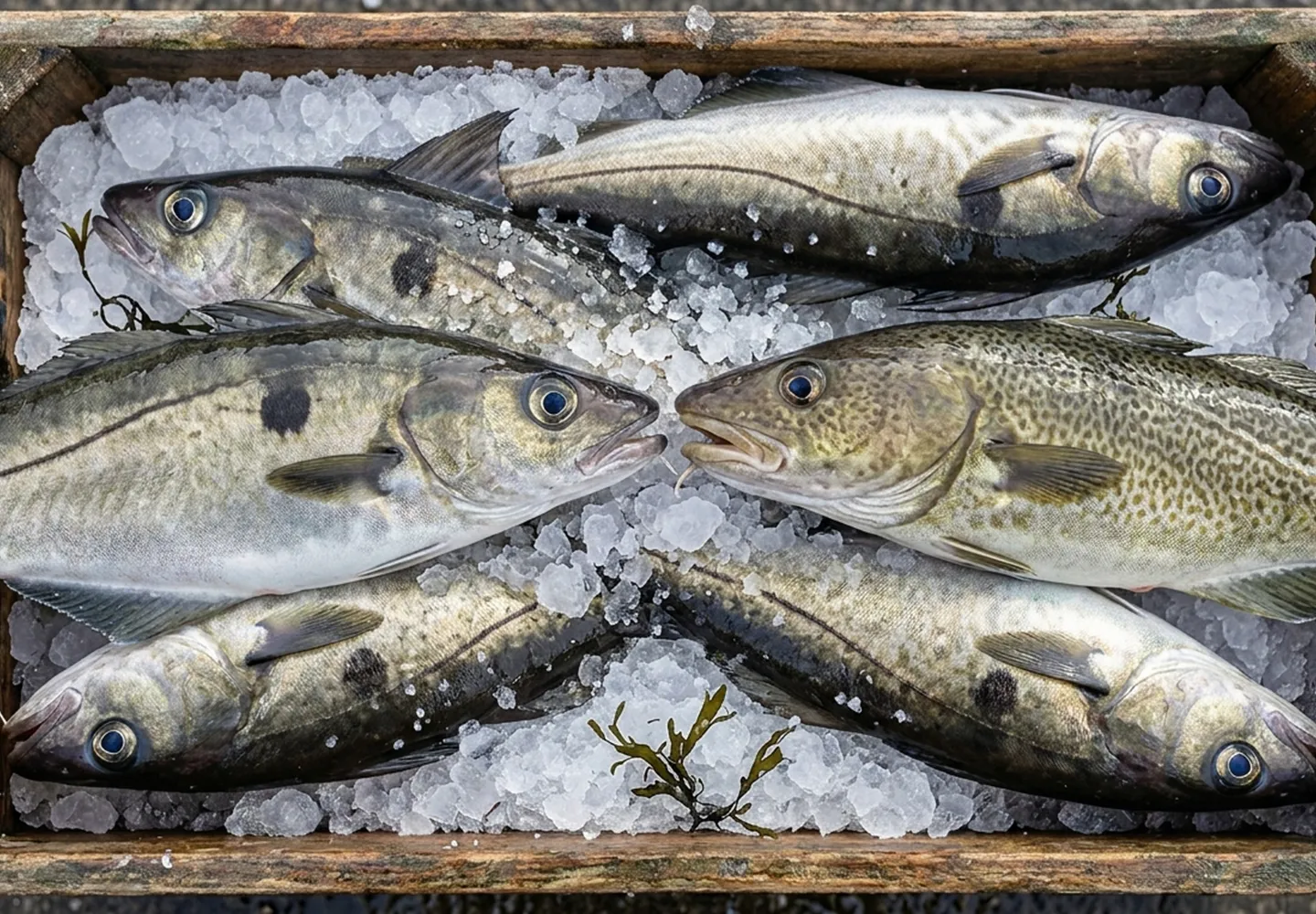
The easiest way to tell them apart in the water or on the boat is the lateral line. Haddock have a dark black or grey lateral line running the length of the body. Cod have a pale cream or white lateral line. According to NOAA Fisheries species data, cod also have a more pronounced chin barbel — the small fleshy protrusion under the lower jaw — which is barely visible on haddock. Haddock have a pointed first dorsal fin; cod’s dorsal fins are more uniform in height.
The most distinctive haddock marking is the thumbprint: a large, oval black blotch sitting just above the pectoral fin. Cod have no equivalent mark. It’s the single most reliable visual identifier for haddock, and it’s present on every individual of the species. The body colour is also different. Haddock are darker, with blue-grey to near-black on the upper sides, while cod are typically brownish-green and mottled. Haddock are also generally smaller and more slender than cod, which grow into much thicker, bulkier fillets.
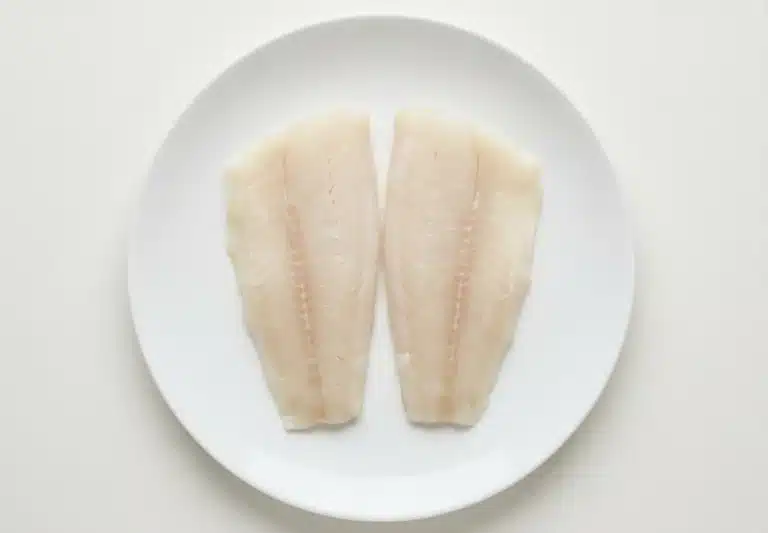
At the fish counter with skin-off fillets, the thumbprint is gone and the lateral line is harder to see. What you can still look for: cod fillets are thicker, have larger flakes you can see in the raw flesh, and often have a slightly translucent pinkish-white colour. Haddock fillets are thinner, finer in grain, and bright white. There’s a thin connective tissue layer on the flesh side of a raw haddock fillet that’s absent on cod, a detail that takes some experience to notice but becomes obvious once you’ve seen it.
What haddock and cod taste like
Both are mild white fish. That’s the similarity. The differences become apparent when you cook them without distraction: just oil, heat, and salt.
Haddock has a slightly sweeter, more delicate flavour with a fine, soft flake that falls apart cleanly. It’s a little more pronounced than cod in terms of flavour, though the difference is subtle enough that most people wouldn’t identify it blind. Where haddock really distinguishes itself is in how well it absorbs what surrounds it: batters, breadcrumbs, butter, smoke, aromatics in a poaching broth. It takes flavour in rather than competing with it.
Cod has a cleaner, more neutral taste with a firmer, larger flake and a slightly meatier texture. There’s a mild brininess to it that haddock doesn’t have. The flesh is denser and holds together better under heat, which makes it more forgiving and better suited to preparations where the fish needs to stay in large pieces: stews, chowders, tacos, grilled portions.
The practical upshot: if you want the best-tasting battered or breaded fish, haddock is the call. If you want something that handles a wider range of cooking methods without much attention, cod is easier.
How they cook differently
The flavour difference is subtle. The cooking difference is more significant.
Haddock in the kitchen
Haddock fillets are thinner and more delicate than cod. They cook quickly. Three to four minutes per side in a hot pan is usually enough, and they dry out fast if pushed past done. The fine flake that makes them so pleasant to eat also means they fall apart if handled roughly in a stew or braise. They’re best suited for:
- Frying and breading: Haddock’s lean, fine-grained flesh holds a crust better than cod because there’s minimal fat to render into the coating. This is why it’s the traditional choice for fish and chips in Nova Scotia and northern England.
- Poaching: The lean flesh absorbs poaching liquid beautifully. Milk, stock, and white wine with aromatics all work. Cullen Skink and kedgeree both depend on this quality.
- Broiling and baking with a topping: A breadcrumb or brown butter topping protects the delicate flesh from direct heat while adding texture.
- Pan-searing: Works well with attentive timing. Stays close to medium-high heat, flip once, rest off the heat.
Our broiled haddock with brown butter breadcrumbs is the recipe that shows what haddock can do when treated right. For a full breakdown of methods, see our guide on how to cook haddock.
Cod in the kitchen
Cod fillets are thicker and firmer. The flesh holds together under high, dry heat in a way haddock doesn’t. Cod is more forgiving: harder to overcook into dryness, and it stays in large pieces when stirred in a liquid.
- Baking and grilling: The thick fillet handles direct, dry heat without falling apart or drying out as quickly. A baked cod fillet can handle 15 minutes in the oven where a haddock fillet needs 10 or less.
- Fish stews and chowders: The firm flesh stays in identifiable chunks. Haddock works in chowder too, but needs to go in last and handled gently. Cod is more relaxed about it.
- Fish tacos: The large flake and meatier texture hold up to bold toppings and wrapping.
- Fish cakes: The firm, meaty flesh binds and holds shape well.
Haddock vs cod: nutrition comparison
Both are lean white fish with almost identical nutritional profiles. The differences are real but narrow enough that they shouldn’t drive the buying decision.
| Nutrient | Haddock (per 100g cooked) | Atlantic cod (per 100g cooked) |
|---|---|---|
| Calories | ~90 kcal | ~105 kcal |
| Protein | ~20g | ~23g |
| Fat | Under 1g | Under 1g |
| Vitamin B12 | ~50% DV | ~40% DV |
| Selenium | ~40% DV | ~45% DV |
| Phosphorus | ~20% DV | ~20% DV |
Sources: Health Canada nutrient data for fish and shellfish and USDA FoodData Central.
Cod provides slightly more protein and slightly more calories per 100g. Haddock is a little lower in both. Haddock is higher in vitamin B12; cod has a slight edge on selenium. Neither difference is significant enough to matter nutritionally in practice. Both are excellent, lean, high-protein choices. If you’re choosing between them for health reasons, both qualify.
For a broader comparison of how these fit into a high-protein diet, see our guide on how much protein in fish.

Sustainability: the real difference
This is where haddock and cod diverge most sharply, and it matters.
Atlantic cod populations on the Scotian Shelf collapsed under decades of overfishing. The 1993 moratorium stopped the directed fishery, but most stocks have not meaningfully recovered. According to Fisheries and Oceans Canada’s 2024 stock assessment data, the spawning stock biomass of Southern Gulf of St. Lawrence Atlantic cod at the start of 2023 was estimated at 12,000 tonnes. In the 1950s, the same stock averaged approximately 400,000 tonnes. That’s a population at roughly 3% of its historical baseline.
Haddock has recovered more substantially from the same moratorium period. The Scotia-Fundy haddock fishery has held MSC certification since October 2010 and operates under annual science-based quotas. The 2013 year-class produced an estimated 264 million juveniles on the Scotian Shelf, one of the strongest on record. The fishery is still managed carefully because the recovery is not complete, but the trajectory and the institutional oversight are meaningfully different from cod.
Pacific cod is a separate species (Gadus macrocephalus) from Atlantic cod (Gadus morhua) and its stocks are in better condition, particularly in Alaska. If you want cod specifically, Pacific cod from certified Alaskan fisheries is the more defensible sustainability choice.
For Afishionado’s perspective on how we evaluate sourcing decisions, see our piece on where our haddock comes from.
Which one should you buy?
The honest answer is that it depends entirely on what you’re making.
- Choose haddock when:
- You’re frying or breading: haddock holds a crust better and doesn’t make the coating soggy
- You’re poaching: the lean flesh absorbs flavour in ways cod doesn’t
- You want the traditional Nova Scotia fish and chips experience
- You’re smoking: haddock was built for this; it’s why Finnan haddie exists
Choose cod when:
- You want a thicker fillet that handles dry heat and stays in pieces
- You’re making a stew or chowder and want chunks that hold their shape
- You’re grilling or want a firmer texture for tacos or a substantial baked preparation
- You want something slightly more protein-dense per gram
Either fish works for: baking with a simple topping, pan-searing, meal prep where texture retention matters, and most situations where the recipe calls for “a white fish.”
On sustainability grounds, haddock from certified Atlantic Canadian or Icelandic fisheries is the cleaner choice. If you want cod, look for MSC-certified Pacific cod from Alaska.
What we carry
Our Haddock Fillets are Atlantic Canadian haddock from the Scotian Shelf and Bay of Fundy — MSC certified, quota-managed, and sourced from a fishery with a genuine recovery story behind it. Our Breaded Haddock uses Icelandic haddock, chosen specifically because the cold sub-Arctic flesh density and low fat content produce the best fish-to-crust ratio available in a breaded product.
We don’t currently carry cod. That’s a deliberate decision given where most Atlantic cod stocks stand. When the sustainability picture changes, so will our assessment.
For the full guide on haddock as a species — flavour, history, buying tips, and cooking methods — see our Haddock 101 guide. Both haddock products are available in the Afishionado market.