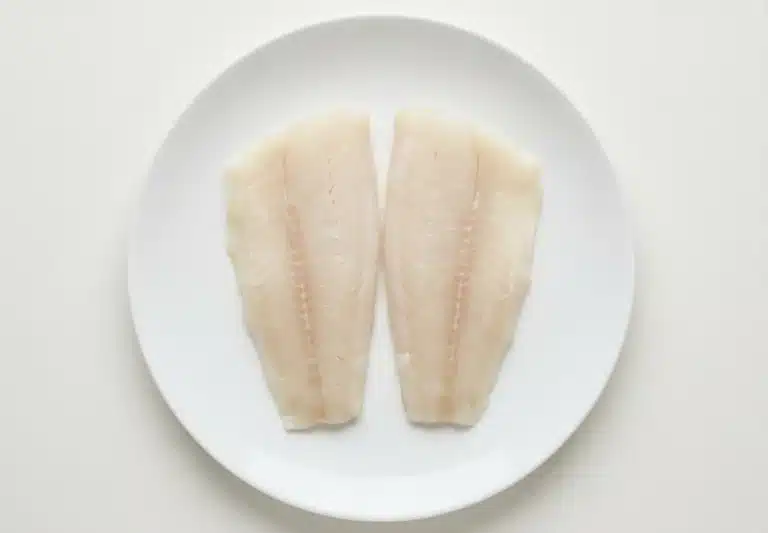
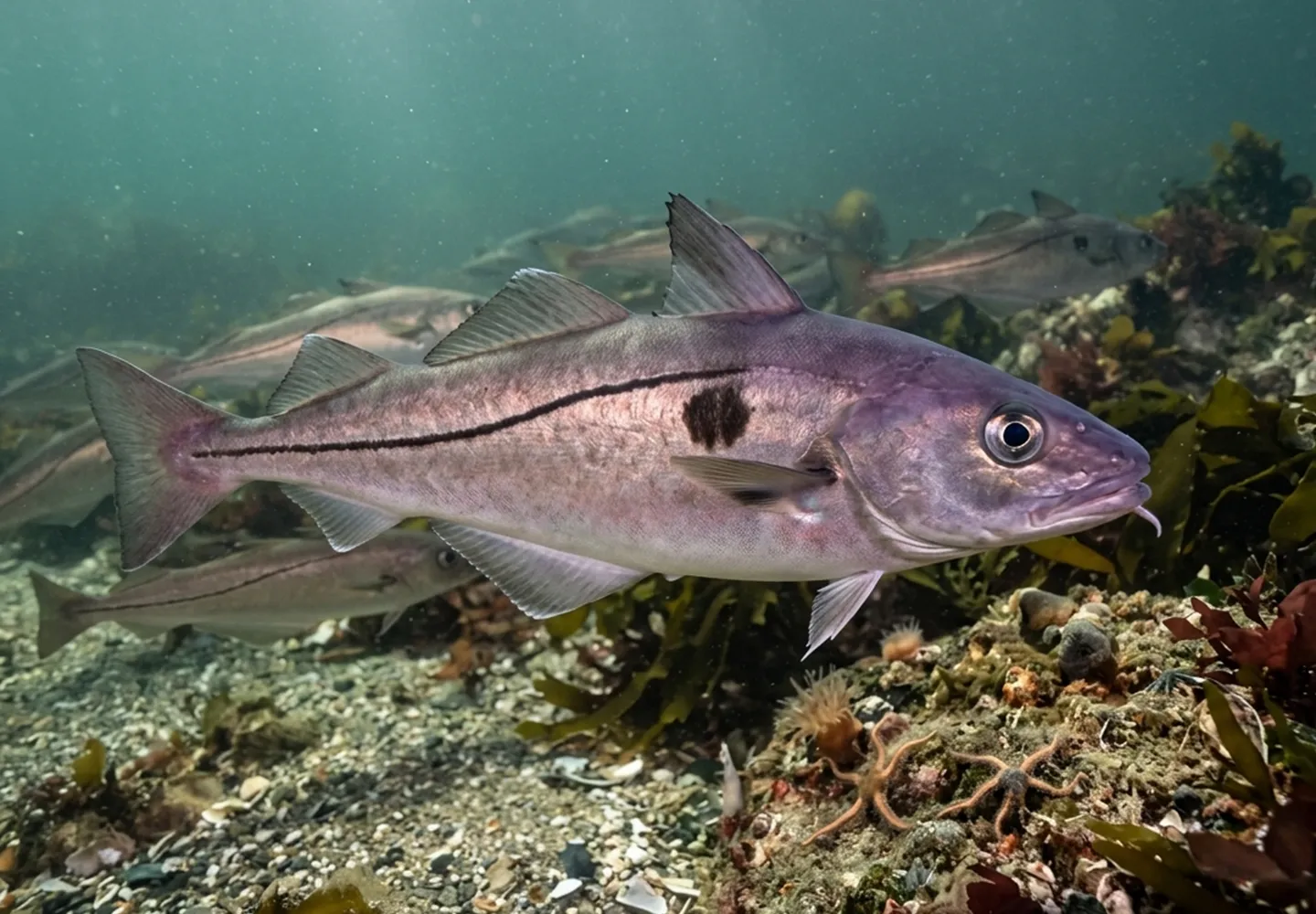
Is haddock good for you? Yes, and it’s not a close call. A single 100g serving delivers nearly a full day’s vitamin B12, more than half your daily selenium, 20 grams of complete protein, and almost zero fat. For 90 calories. What makes haddock interesting nutritionally isn’t just the lean protein story everyone already knows. It’s the micronutrients: specifically the ones that many people are quietly short on and don’t realise it.
What’s actually in haddock
The numbers below come from USDA FoodData Central and Health Canada’s nutrient database for fish and shellfish. These are cooked values per 100g.
| Nutrient | Per 100g cooked | % Daily value |
|---|---|---|
| Calories | 90 kcal | 4% |
| Protein | 20g | 40% |
| Total fat | 0.6g | Under 1% |
| Carbohydrates | 0g | 0% |
| Vitamin B12 | 2.1 µg | ~88% |
| Vitamin B6 | 0.33mg | ~25% |
| Niacin (B3) | 4.1mg | ~26% |
| Selenium | 32 µg | ~58% |
| Phosphorus | 278mg | ~40% |
| Potassium | 351mg | ~10% |
The protein-to-calorie ratio here is exceptional. Nearly all the calories come from protein because there’s essentially nothing else: no fat to speak of, no carbohydrate, no sugar. A 200g fillet comes in at roughly 180 calories and 40 grams of protein. That’s a complete, filling meal for less than most protein bars.
The B12 story
This is where haddock earns its reputation among people who actually pay attention to what they eat. One 100g serving provides approximately 88% of your daily B12. That’s almost the full amount from a single modest portion of mild white fish.
Why does that matter? B12 is essential for producing red blood cells, synthesising DNA, maintaining nerve function, and building myelin, the protective sheath around nerve fibres. According to the NIH Office of Dietary Supplements, roughly 3.6% of North American adults are clinically deficient in B12, and a further 12.5% fall in the insufficient range. Those numbers rise significantly in older adults and in people with absorption issues. B12 only comes reliably from animal proteins. Haddock is one of the most efficient sources of it.
The selenium and iodine story
Most people can name what salmon does well. Fewer people think about selenium, and almost nobody thinks about iodine until their thyroid gives them a reason to. Haddock is genuinely useful for both.
A 100g cooked serving provides around 58% of your daily selenium requirement. Selenium’s job in the body includes antioxidant defence and, critically, thyroid hormone conversion. Research published in the NIH’s PMC database shows that the enzymes responsible for converting inactive T4 to the active thyroid hormone T3 are selenoproteins. They need selenium to function. Without adequate selenium, that conversion is impaired. Seafood is one of the most reliable dietary sources of selenium because unlike plant foods, the amount isn’t dependent on how much happens to be in the local soil.
Iodine doesn’t appear consistently in nutrient databases because measurement methodology varies, but cold-water white fish from the North Atlantic typically provides 110 to 250 micrograms of iodine per 100g, according to NHS-cited data compiled by Bolt Pharmacy. Health Canada’s recommended daily intake for adults is 150 micrograms. Iodine and selenium work as a pair in thyroid function: iodine enables T4 production, selenium enables the conversion to T3. Haddock provides both. For people who don’t eat much dairy, it’s one of the few practical ways to get meaningful quantities of both in the same meal.
The rest of the profile
The B vitamins beyond B12 are worth a mention, even if they’re not the headline. Niacin (B3) at 26% of your daily value supports energy metabolism. Vitamin B6 at 25% supports amino acid processing, neurotransmitter production, and red blood cell formation. Both are water-soluble, which means your body uses what it needs and moves on. Eating haddock regularly is a simple way to keep those numbers topped up.
Phosphorus sits at 40% of the daily value per 100g. It works alongside calcium in bone and tooth mineralisation and plays a role in ATP production, which is how cells store and use energy. Most protein-rich diets cover phosphorus adequately, but haddock’s contribution is significant.
Is haddock good for weight management?
Yes. The numbers make the case without any help. At 90 calories and 20 grams of protein per 100g, haddock is about as efficient as lean protein gets. A 200g fillet filling enough to build a proper dinner around costs roughly 180 calories. Add a side of roasted vegetables and you have a complete meal that doesn’t move the needle much on total caloric intake.
Protein is the most satiating macronutrient. A meal built around haddock tends to hold people longer than the calorie count would suggest. For more on how it fits into a higher-protein diet, our guide on how much protein in fish breaks down the numbers across species. For fat loss specifically, see our piece on the best fish for weight loss.

Is haddock good for heart health?
The heart health case for haddock is real, but it works differently than it does for fatty fish. Haddock isn’t going to move your omega-3 numbers meaningfully. At approximately 0.17g of EPA and DHA per 100g, it’s a long way from salmon at around 1.5g. That gap is real and worth being honest about.
What haddock does for cardiovascular health is more indirect. It contains under 0.2g of saturated fat per 100g, which is essentially zero. Swapping red meat or processed protein for haddock several times a week reduces saturated fat intake without touching protein adequacy. The selenium adds some antioxidant support. And regular fish consumption as part of a varied diet is associated with lower cardiovascular risk regardless of species. Haddock plays its part. It’s just not carrying the omega-3 load.
For the full breakdown on which fish to eat for heart health, including the fatty fish that do carry that load, see our guide on best fish for heart health.
Mercury: is haddock safe to eat regularly?
Yes. The FDA’s fish consumption guidance lists haddock in its “Best Choices” category with a mercury concentration of approximately 0.055 parts per million. That’s low enough that the FDA explicitly names haddock in the subset of Best Choices fish considered safe for children and pregnant women to eat in higher quantities.
The practical ceiling is two to three servings per week from the Best Choices list, though that’s a general recommendation, not a haddock-specific concern. The NHS in the UK takes a more direct position, noting that people can eat as many portions of white fish like haddock per week as they like.
The contrast is with larger predatory fish. Swordfish, king mackerel, shark, and certain tuna species sit at the other end of the mercury spectrum because they accumulate it through the food chain over long lives. Haddock, which is smaller, shorter-lived, and feeds lower in the food chain, doesn’t accumulate mercury at anything close to those levels.
How haddock compares to other white fish
| Haddock | Cod | Pollock | |
|---|---|---|---|
| Calories per 100g cooked | 90 | 105 | 92 |
| Protein | 20g | 23g | 20g |
| Fat | 0.6g | 0.9g | 1g |
| Vitamin B12 | ~88% DV | ~40% DV | ~51% DV |
| Selenium | ~58% DV | ~45% DV | ~40% DV |
Source: USDA FoodData Central and Health Canada.
Cod has more protein per gram. On everything else, haddock leads or matches. The B12 gap is particularly significant: haddock provides more than double cod’s contribution in a single serving. If micronutrient density is your priority in a white fish, haddock is the cleaner choice.
For the full comparison of haddock and cod across taste, texture, cooking, and sustainability, see our haddock vs cod guide.
How often should you eat haddock?
Two to three times a week is a reasonable baseline. The FDA’s Best Choices guidance supports that. For haddock specifically, the mercury profile is low enough that there’s no hard ceiling on frequency if you’re eating a varied diet.
The more useful question is how haddock fits alongside other fish. It doesn’t replace oily fish. A diet that includes haddock for lean protein, B12, selenium, and iodine alongside salmon or mackerel for omega-3s and vitamin D covers substantially more nutritional ground than either fish alone. Our best fish for meal prep guide covers how to build that rotation practically.
What haddock doesn’t do well
Omega-3s. That’s the honest answer. At approximately 0.17g of EPA and DHA per 100g, haddock is not the fish to eat if omega-3 intake is your primary goal. Salmon at 1.5g and mackerel at around 2g are in a different category entirely.
That’s not a flaw in haddock. It’s a lean white fish, not an oily fish. It does lean protein, B vitamins, selenium, iodine, and very low saturated fat better than most things you can put on a plate. Omega-3s are what salmon is for. A diet that has both covers the full picture.
Where to start
Our Haddock Fillets are Atlantic Canadian, Ocean Wise recommended, and give you a plain fillet to work with however you choose. Our Breaded Haddock needs no prep: oven or air fryer, consistent result.
For cooking technique, our how to cook haddock guide covers the three methods that work best for this fish. The full species picture, including sourcing, history, flavour, and buying tips, is in the Haddock 101 guide. Both products are in the Afishionado market.