Haddock is the fish Atlantic Canada built its dinner table around. Not cod, despite what the history books emphasize. Not salmon, despite what grocery stores push hardest. Haddock. Mild, clean, and fine-flaked, it has anchored Maritime kitchens for three centuries and still holds up as one of the most versatile white fish you can cook at home. This guide covers everything: what haddock is, what it tastes like, how it compares to cod, how to buy it frozen or fresh, how to cook it, and where to start if you’re new to it.
What is haddock?
Haddock (Melanogrammus aeglefinus) is a cold-water groundfish native to the North Atlantic. It belongs to the cod family and lives close to the ocean floor, typically at depths of 50 to 250 metres. According to Fisheries and Oceans Canada, the most important Canadian populations occur from the Bay of Fundy to Cape Breton and the Grand Banks, with peak spawning on Browns Bank each April and May.
You can spot a haddock by its dark purplish-grey back, silver flanks, and a large, distinctive black spot above each pectoral fin. That spot has a name in Maritime folklore: the Devil’s thumbprint. The story goes that when the devil reached into the sea to pull out a fish and failed, he left his mark. Haddock kept it.
For a deeper look at the species and some genuinely surprising facts about it, see our 10 fun facts about haddock.
What does haddock taste like?
Haddock has a clean, mildly sweet flavour with a fine, delicate flake. It’s subtly more flavourful than cod, with a slightly more pronounced taste of the sea, but it never tips into fishiness when it’s fresh and properly handled. The texture is finer and more tender than cod’s, which makes it particularly well suited to frying and breading.
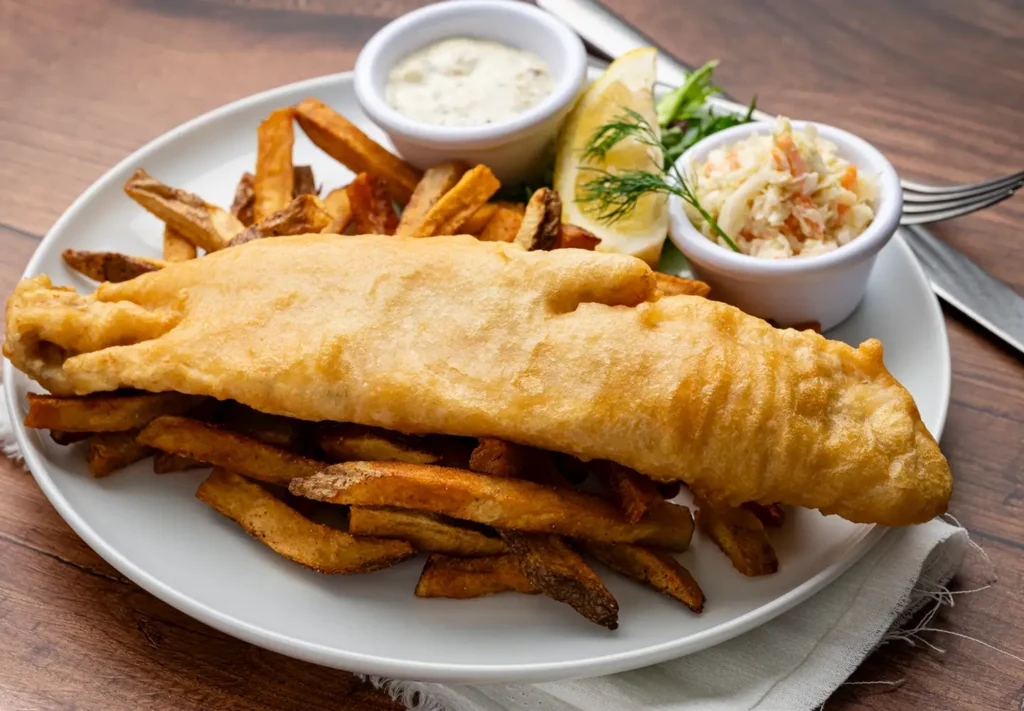
That mild sweetness is one reason haddock became the default for fish and chips in Nova Scotia. It takes flavour from whatever surrounds it, whether that’s batter, brown butter, breadcrumbs, or a light broth, without fighting back. It’s a fish that makes other ingredients look good.
Haddock vs cod: what’s the difference?
Most people can’t tell them apart at the counter. Both are white, lean, cold-water groundfish from the North Atlantic. Both are mild. Both cook similarly. But they’re not the same fish, and the differences matter once you’re in the kitchen.
| Haddock | Cod | |
|---|---|---|
| Flavour | Mildly sweet, slightly more pronounced | Clean, mild, subtly briny |
| Texture | Fine, delicate flake | Larger, firmer flake |
| Thickness | Thinner fillets | Thicker fillets |
| Best for | Frying, breading, poaching | Baking, grilling, fish stews |
| Forgiveness | Less forgiving, cooks quickly | More forgiving, holds up to dry heat |
The practical difference: haddock’s thinner, more delicate fillets cook fast and can dry out if you push them too long. Cod’s thicker fillets handle higher heat and longer cooking times better. If you’re new to cooking white fish, cod is slightly more forgiving. If you want better flavour in a battered or breaded preparation, haddock is the right choice. Our guide to flaky vs firm fish covers this in more detail if you want to understand the full category.
Where our haddock comes from
We source two types of haddock depending on the product. Our Haddock Fillets use Atlantic Canadian haddock from the Scotian Shelf and Bay of Fundy, MSC certified and quota-managed. Our Breaded Haddock uses Icelandic haddock, chosen for its specific physical characteristics. The cold sub-Arctic water produces denser, lower-fat flesh that holds a crust better than most other sources.
The full reasoning behind both sourcing decisions is in our piece on where our haddock comes from. And if you want the broader story of what happened to Atlantic Canadian haddock after the 1993 moratorium and how the fishery has recovered, Atlantic Canada’s haddock comeback covers that ground.
How to buy haddock
Fresh haddock
Fresh haddock should smell like cold, clean ocean water. Not fish. Not ammonia. Not anything sharp or sour. The moment a fillet smells actively fishy rather than mildly oceanic, it’s telling you something about how it was handled or how long it’s been sitting.
Beyond smell, look for:
Flesh: Clean, slightly translucent white. No yellowing, browning, or dull patches. When you press it, the flesh should spring back. If it stays indented, it’s past its best.
Skin (if present): Should look shiny and intact, not dry or curling.
Liquid in the display: If there’s liquid pooling around the fillet, it should be clear. Milky or cloudy liquid is a sign of age.
Whole fish: Clear, bright, slightly bulging eyes. Bright red gills. Shiny, firm skin. Dull eyes, brown gills, or soft flesh are all signs to walk away.
Fresh haddock is best used within one to two days of purchase.
Frozen haddock
Frozen haddock, when handled properly, is genuinely excellent. In Canada, much of what’s sold as “fresh” at a grocery store has been previously frozen anyway, particularly inland, where no fish arrives truly fresh. IQF (individually quick frozen) haddock frozen close to harvest often tastes better than fillet that’s been in transit for days.
When buying frozen, look for packaging that’s airtight with no ice crystals or freezer burn visible through the bag. Freezer burn appears as dry, whitish patches and indicates moisture loss. The fish is still safe but the texture will suffer.
Our guides on frozen fish quality and how to thaw frozen fish cover what to do once it’s in your freezer.
What to buy: fillets vs breaded
If you want to cook haddock your own way, Haddock Fillets give you a plain fillet that works across every method below. If you want something oven-ready with no prep, our Breaded Haddock is built for exactly that.

Haddock nutrition
According to Health Canada’s nutrient data for fish and shellfish, a 100g cooked portion of haddock provides approximately:
| Nutrient | Per 100g cooked |
|---|---|
| Calories | ~90 kcal |
| Protein | ~20g |
| Fat | Under 1g |
| Vitamin B12 | ~50% daily value |
| Selenium | ~40% daily value |
| Phosphorus | ~20% daily value |
Haddock is one of the leanest proteins available. Almost all of its caloric content comes from protein, with virtually no fat in the muscle tissue. That leanness is also why it behaves differently than salmon in the pan. There’s nothing to render, nothing to baste the fish from within. It needs the heat managed carefully, which is why technique matters more with haddock than with a fattier fish.
For a broader comparison of how haddock fits into a high-protein diet, see our guide to how much protein in fish.
How to cook haddock
Haddock is an unforgiving fish in one specific way: it overcooks fast. A fillet that’s perfect at three minutes on each side can be dry and chalky at five. The fix is to stay close, use medium-high heat, and pull the fish off the heat just before it looks completely done. Residual heat finishes the job.
Our full guide on how to cook haddock covers three methods in depth. Below is a practical overview of four approaches.
Baking
Baking is the most forgiving method for haddock and a good starting point. Preheat your oven to 400°F (200°C). Brush fillets with olive oil or melted butter, season with salt, pepper, and whatever herbs you like, and bake for 10 to 12 minutes until the flesh is opaque and just beginning to flake. Thicker fillets may need a minute or two more. Thinner fillets need less.
The addition of breadcrumbs and butter at the end is a natural pairing. Our broiled haddock with brown butter breadcrumbs recipe is the best version of this approach we’ve put together.
For a Maritime classic with more richness, Baked Haddock au Gratin from My Island Bistro Kitchen is a well-made version of the cream sauce preparation that’s been a Nova Scotia staple for generations.
Pan-searing
Pan-searing gives haddock a caramelized crust and keeps the inside tender. Pat fillets completely dry first. Moisture on the surface prevents browning. Heat a cast iron or stainless pan over medium-high heat with a neutral oil until shimmering. Lay the fillet in, press gently to prevent curling, and leave it alone for three to four minutes. Flip once. Finish with a minute or two on the second side, then rest briefly off the heat.
Brown butter in the last minute of cooking, poured over the fillet as it rests, is one of the better things you can do with a haddock fillet. Our guide on patting fish dry before cooking explains why that step is non-negotiable.
Poaching
Poaching produces the most delicate result and works particularly well with haddock because the lean flesh absorbs whatever it’s cooked in. Bring a wide pan of liquid to a bare simmer: fish stock, milk, white wine with aromatics, or water with a bay leaf and peppercorns. Add fillets gently and cook for six to eight minutes until fully opaque. Remove carefully; the flake at this stage is more fragile than any other method.
Poached haddock in milk is the base for Cullen Skink, the Scottish smoked haddock soup that is one of the more quietly great things the North Atlantic fishing tradition produced. Smoked haddock kedgeree is the other classic: rice, eggs, curry spices, and fish, a dish that moved from colonial India to Victorian Britain and then to every decent Scottish kitchen. For the kedgeree, BBC Good Food’s version is the standard reference.
Air frying and breaded preparations
For our Breaded Haddock, air frying at 400°F (200°C) for 16-18 minutes produces the crispiest result. Baking on a wire rack over a sheet pan is the oven equivalent. The rack keeps the bottom from going soggy. Either way, the fish comes out with the texture it was designed for: a clean snap through the crust giving way to moist, fine-flaked white flesh.
Health Canada recommends cooking fish to an internal temperature of 70°C (158°F) to ensure it’s safe to eat.
What pairs well with haddock
Haddock’s restraint is its strength. It doesn’t dominate. It defers. Which means the sides and sauces you pair it with have room to do something interesting.
Acids work particularly well: Lemon, capers, white wine, pickled vegetables. The tartness cuts through the fish’s mild sweetness and makes the whole plate feel brighter.
Brown butter is the classic: Nutty, slightly bitter, deeply savoury. It complements haddock the way a good frame complements a painting. It elevates without taking over.
Breadcrumbs add the texture the fish lacks: Because haddock has such a fine, soft flake, a crunchy element on top makes the plate more satisfying. Panko, browned in butter with garlic and lemon zest, takes thirty seconds and changes the whole dish.
Vegetables that don’t fight: Asparagus, green beans, spinach, kale. Our garlicky sautéed spinach and kale and roasted asparagus with garlic were both designed as sides for fish exactly like this.
Tartar sauce: If you’re going the fried or breaded route, our dirty-style tartar sauce is the right companion. More aggressive than the standard, with capers, dill, and real acid.
The sustainability picture
Haddock has a complicated history in the Northwest Atlantic. After the 1993 moratorium that shut down much of the Scotian Shelf groundfish fishery, cod has struggled to recover while haddock has come back more significantly. The fishery now operates under DFO’s Sustainable Fisheries Framework, with science-based quotas, annual stock assessments, and MSC certification for both the Atlantic Canadian and Icelandic fisheries we source from.
That recovery is real but not complete. Buying from certified sources matters because it funds the monitoring infrastructure that keeps the fishery honest. For the full story on what happened and where things stand, see Atlantic Canada’s haddock comeback.
Where to start
If you haven’t cooked haddock before, or you haven’t cooked it much, the Breaded Haddock is the lowest-effort entry point. It’s oven-ready, consistent, and designed for the fish-to-crust ratio that makes this preparation work. From there, Haddock Fillets give you a blank canvas for baking, pan-searing, or poaching.
The broiled haddock with brown butter breadcrumbs is the recipe that shows you what haddock can be when it’s treated well: crisp, buttery, and light in a way that salmon never quite manages. Make it once and you’ll understand why this fish has held its place in Atlantic Canadian kitchens for as long as it has.
Both products are available in the Afishionado market as a one-time purchase or subscription.