There is no such thing as sushi grade fish.
Not in the sense of a standard, a certifying body, an inspection, or a threshold a fillet has to clear. The term has no legal definition in the United States, where it was invented, and no federal agency there defines or certifies it. Canada has not adopted one either. The Canadian Food Inspection Agency requires that label claims be truthful and not misleading, which is the general rule that applies, and there is no sushi grade standard for anyone to meet.
So any seller can put it on anything.
It is a sales term, and we know roughly when and why it was invented.
Where the term came from
Yuji Haraguchi, a fishmonger who now runs the Osakana shop in Brooklyn, has described using “sushi grade” as a sales tool in the early 2000s while working in wholesale distribution at True World Foods. The problem it solved was commercial rather than culinary. North American customers were wary of raw fish, and a label that implied inspection made the sale easier.
It worked, which is why it is everywhere. It has never meant anything.
The people who work in the trade are fairly direct about this. John Burrows, technical director at the Alaska Seafood Marketing Institute, has called sushi grade and sashimi grade “essentially marketing terms” when asked about it. The point he makes afterwards is the useful one: variation within a single species is wide enough that the label cannot be describing anything consistent.
What the term is standing in for
Strip away the label and there is a real question underneath, which is whether the fish is safe to eat raw.
That is a parasite question. It has a precise answer, and the answer has nothing to do with grading, freshness, or how good the fillet looks in a case.
It is a freezing question. Parasites in wild marine fish are killed by cooking, or by freezing to a specific temperature for a specific time. There are three accepted treatments, and they are alternatives, not a sequence:
- -20 °C or below, for seven continuous days
- -35 °C or below until frozen solid, then held at -35 °C for 15 hours
- -35 °C or below until frozen solid, then held at -20 °C for 24 hours
Those come from the FDA Food Code and its Fish and Fisheries Products guidance, and Canadian public health authorities work from the same figures.
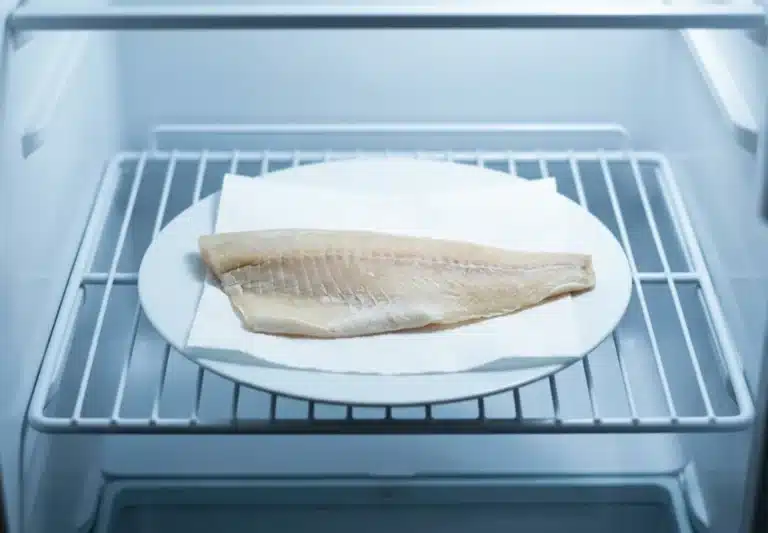
Now compare them with your kitchen. Health Canada recommends a home freezer at -18 °C or lower, and that is what domestic appliances hold. It is warmer than all three. Most home freezers cannot reach -20 °C, and none will approach -35 °C.
So you cannot do this at home. Buying fish and freezing it yourself does not make it safe to eat raw.
Two things the old version of this article got wrong
We are going to say this plainly rather than quietly fix it.
This post used to tell readers that if fish is frozen, it can be eaten raw. That is wrong. The freezing has to meet one of the three treatments above, and a domestic freezer meets none of them.
It also said that unfrozen fish carries very slim risk if it has been filleted properly. Filleting is a knife skill. It does not remove parasites from flesh.
Both have been corrected. We would rather point at the error than leave it in the archive and hope nobody notices. There is more on why frozen is the answer rather than the compromise.
The exception, and it is a real regulatory category
Not every fish needs the treatment.
Farmed fish raised in a controlled system, fed formulated feed containing no live parasites, is never exposed to the parasite cycle. There is nothing to destroy. The Canadian Food Inspection Agency’s position on exempting fish species from parasite destruction, published through the BC Centre for Disease Control, sets out that category.
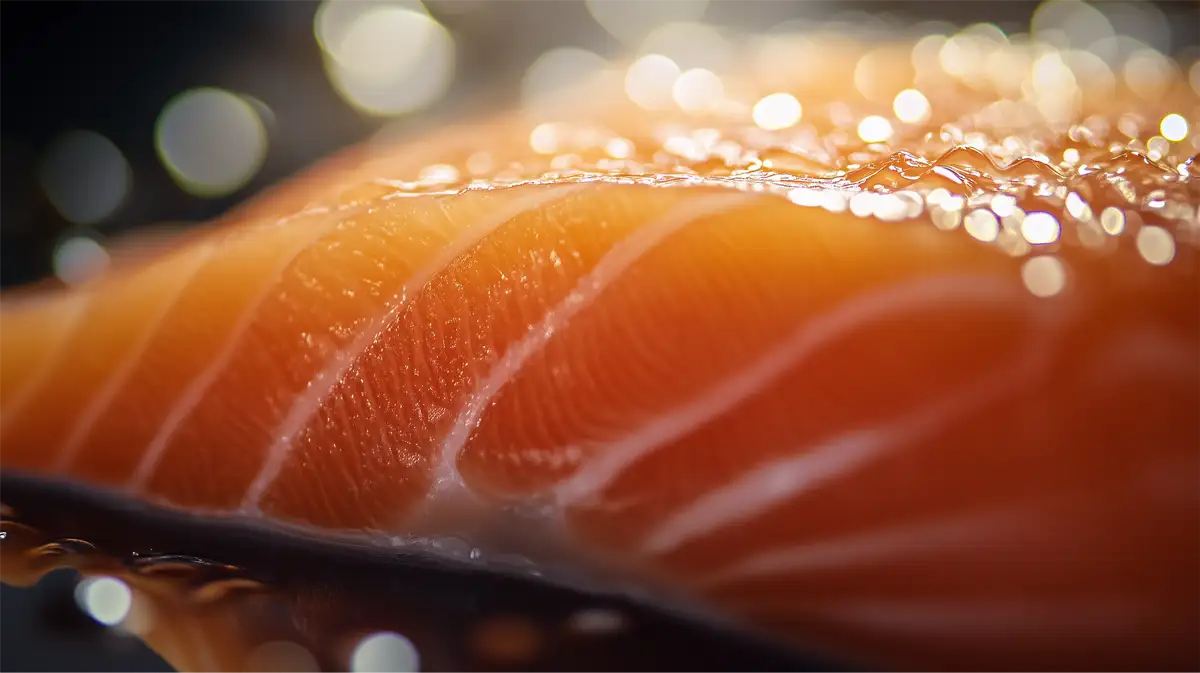
Our Sustainable Blue salmon sits in it. It is raised on land in a closed system with no ocean contact and no exposure to wild fish. That is the whole point of the model, and it is covered in land-based salmon farming. The absence of parasite exposure is a consequence of the engineering, not a claim about our handling.
That applies to that one product and nothing else we sell. Bivalves such as scallops sit outside these rules entirely and are governed separately.
What to ask instead of looking for a label
Four questions, and any seller who can answer them is telling you more than the word ever did.
1. Was it frozen for parasite destruction, and by which method? The three are above. A seller who freezes to those parameters, or buys from a processor who does, can name the method.
2. What species is it, precisely? Market names cover many species, and substitution is common enough to be measured. Close to half of sampled seafood came back mislabelled in Canadian DNA testing, the subject of seafood mislabelling.
3. Where was it landed or farmed? Not the country. The fishery or the farm.
4. When was it frozen? Not when it was delivered to the shop.
A seller who answers all four has a supply chain short enough to know. One who answers by pointing at a sticker does not.
What is sushi grade fish, in short
Sushi grade fish is a term a distributor invented to make raw fish easier to sell to a nervous market. It has never corresponded to any standard and never will, because there is no body that defines it.
The thing it was pretending to describe is real, and it is a freezing process your kitchen cannot perform. So the question is not whether a fillet has been called sushi grade, but whether the person selling it can tell you what was done to it.
Our Sustainable Blue salmon is the one fish here we would put in front of you raw without qualification, for the regulatory reason above and not because of a label. Everything else in the market is worth cooking, and ask us if you want the detail on any of it.