Ask where does shrimp come from and you will usually get a country back. India. Ecuador. Vietnam. Canada, if you are lucky. It sounds like an answer, but it works more like a postal code: technically true, and close to useless for working out whether the thing in the bag was produced well.
We sell two shrimp. They come from about as far apart as two shrimp can come from. The distance is the least interesting part of the story. What matters is what each one had to prove before we would put our name on the bag.
The coldwater shrimp arrive already cooked
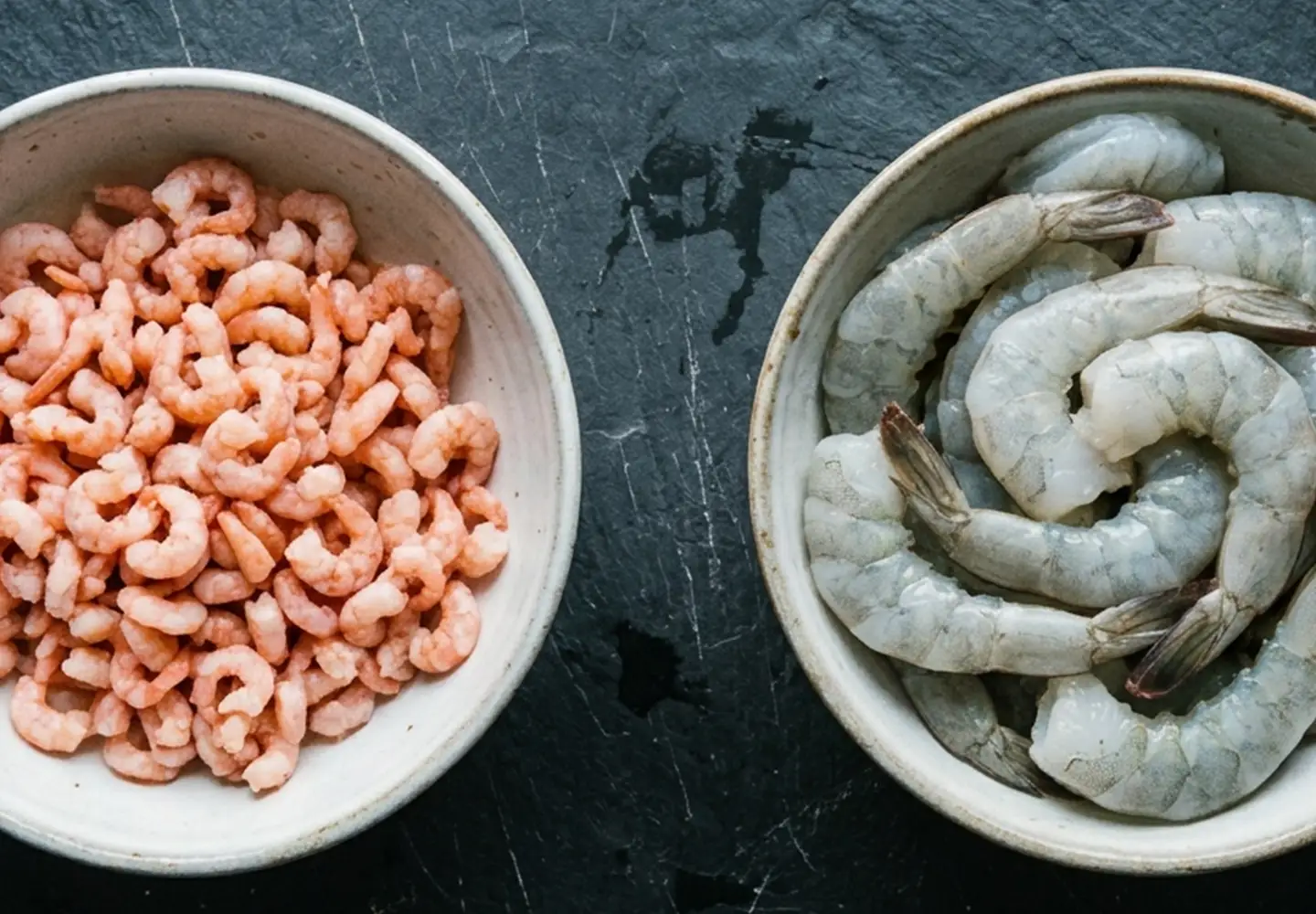
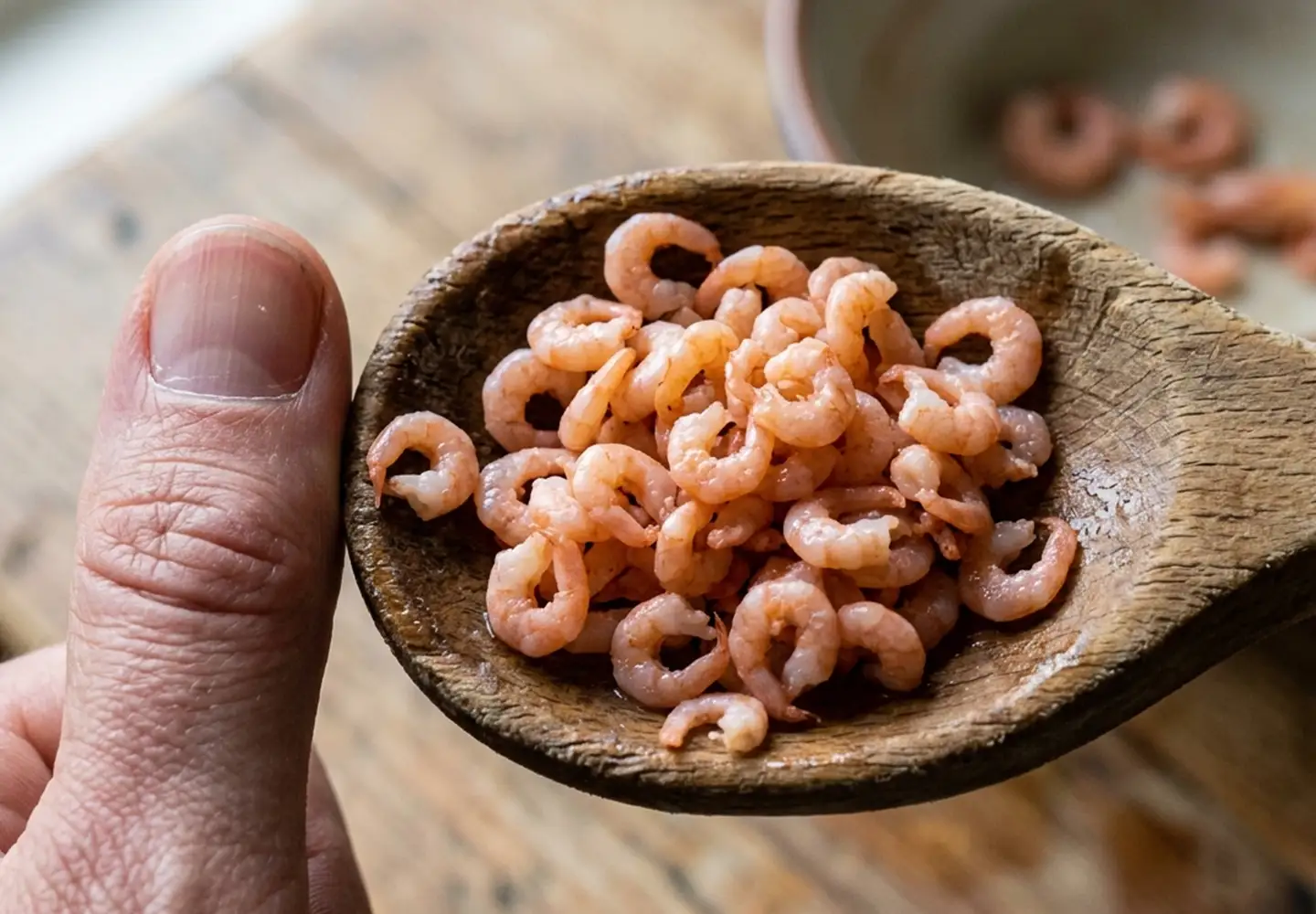
Our Coldwater Shrimp are Pandalus borealis, wild-caught in cold Atlantic Canadian water. They are small, pink, and they show up in your freezer already cooked.
That last part is not a processing shortcut applied in a plant somewhere. They are cooked on the boat, in salt water, within minutes of coming out of the ocean. When the bag says seasoned, that is what it means: sea water, not a spice blend. It is one of the oldest tricks in the North Atlantic, and it exists because these shrimp are too small and too delicate to survive a long trip to shore raw.
Two things follow from that. The first is the flavour. Cold water grows shrimp slowly, and slow-grown shrimp taste sweeter. Cooking them at the moment of harvest locks that in rather than letting it drain away over a week of handling. The second is that you cannot ruin them. There is no cooking step, so there is no overcooking step. They are the most forgiving protein in your freezer.
One thing on the bag that confuses people: ours are graded Jumbo, at 90 to 150 count. That is shrimp per pound, not a promise of size. Coldwater shrimp are naturally small, so Jumbo is the largest grade available, not a large shrimp. If you want a shrimp with heft, that is the other bag. More on that in a minute.
At 8 lb per case and 26 servings, they work out to $5.66 a serving, and they earn it in situations where you want seafood in a dish without building the dish around seafood. Salads. Fried rice. Chowder. Cold, with something sharp to dip them in.
The part of the story that usually gets left out
Here is what most coldwater shrimp copy will not tell you: this fishery nearly disappeared.
The numbers are hard to soften. As CBC News reported, the fishable biomass of northern shrimp fell from 785,000 tonnes in 2006 to 104,000 tonnes in 2016. The quota in Shrimp Fishing Area 6, off Newfoundland’s northeast coast, dropped from 48,196 tonnes in 2015 to 10,400 tonnes, a cut of roughly 78 percent in two years. Warming water, more predators, and fishing pressure were all named as causes. Thousands of jobs went with it. In 2015, the Northwest Atlantic Fisheries Organization closed the commercial fishery in Division 3L outright.
Then, in June 2026, Fisheries and Oceans Canada reopened the domestic commercial fishery in Shrimp Fishing Area 7, off eastern Newfoundland and Labrador, with a total allowable catch of 1,367 tonnes for the 2026 to 2027 season. It was the first time in over a decade that area had been open.
It is worth being precise about why. Part of it is the stock. Part of it is that Canada introduced a new assessment framework in 2025 that redefines assessment areas to line up better with where the shrimp actually live, and under that framework the population in the South Stock Assessment Region was judged to be in the healthy zone. Better measurement and genuine recovery are both in the mix. Anyone telling you the shrimp simply came back is skipping a step, and so is anyone telling you the numbers were just rearranged.
If that arc sounds familiar, it should. It is the same shape as the northern cod story, and it is the argument for taking sustainable seafood in Atlantic Canada seriously rather than treating a Canadian label as a guarantee.
It is also the best argument we know of for farmed shrimp.
The Pacific White shrimp are farmed in India, and certified one farm at a time
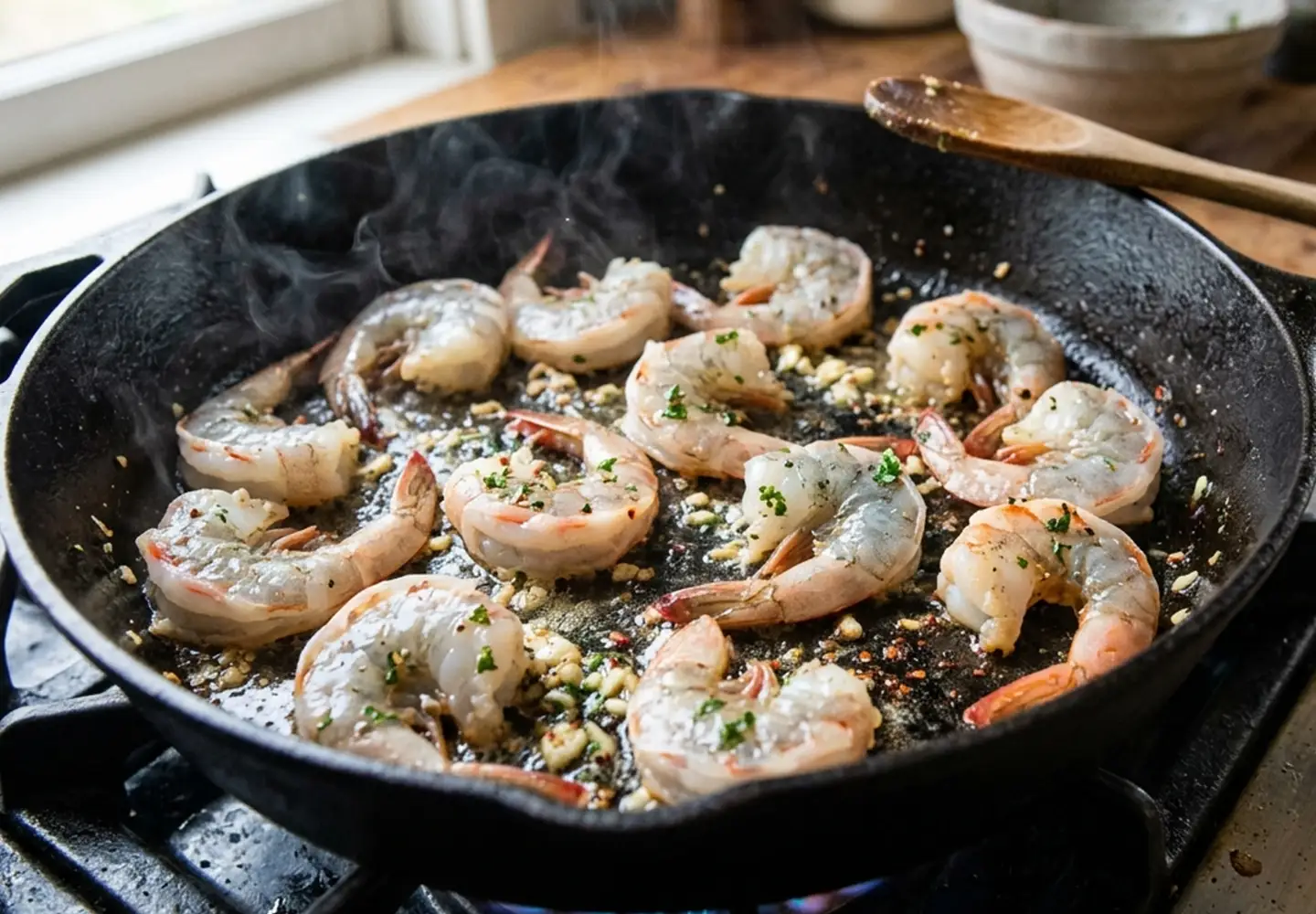
Our Pacific White Shrimp are Litopenaeus vannamei, a product of India. They are raw, peeled, tail-on, 21 to 25 count, and frozen using IQF so you can pour out six shrimp without committing to the bag. Thirty-two servings per case, $3.28 a serving, 18 g of protein and under 100 calories in each one.
Now the part that requires some honesty.
India is the second largest producer of whiteleg shrimp on earth, turning out roughly a million tonnes a year on the strength of available land, labour, and lower production costs. That scale is why farmed shrimp is affordable. It is also why the sector is difficult. As Fishwise notes, the majority of Indian farmed whiteleg shrimp currently carries a red, or avoid, rating, on the strength of disease outbreaks, weak health management, limited farm registration, and poor data availability.
So why do we sell it?
Because certifiers do not rate countries. They rate farms. Our shrimp are certified to the Aquaculture Stewardship Council standard, which audits an individual operation against requirements covering habitat, water quality, feed, antibiotic use, traceability, and labour. And Ocean Wise, which builds its recommendations from Seafood Watch assessments and from benchmarked eco-certifications, clears ASC certified farmed shrimp while declining to recommend shrimp carrying the more common BAP certification. That distinction is not marketing trivia. It is the whole reason these two bags sit on our market and a great many others do not. If you want the longer version, we wrote a guide to MSC, ASC and Ocean Wise labels.
The sector is also not static. A multidimensional study published in Environment, Development and Sustainability scored Indian vannamei farming at a mean sustainability index of 0.77, with 61 percent of surveyed farms operating at moderate to high sustainability, strong on technology, economics, and social benefit, and in need of work on environmental and institutional dimensions. Meanwhile the Monterey Bay Aquarium is running an improvement program with vannamei farms in Andhra Pradesh aimed at better environmental and social outcomes by 2030. Buyers who insist on certification are part of why that program has any leverage at all.
Which is a longer way of saying what we already say about aquaculture in Canada: farmed is a feature here, not a compromise. The wild coldwater fishery collapsed and has only just cracked open again. Farmed shrimp is a large part of why there is still shrimp to cook.
Where does shrimp come from matters less than who checked
The instinct to read country of origin as a quality signal is understandable and mostly wrong. Two farms in the same Indian district can be a well-run certified operation and a mess. The coldwater collapse happened in Canadian water, under Canadian management, to a Canadian fleet.
So origin is context, not a verdict. What actually tells you something is narrower: the species name in Latin, whether a third party has audited the specific farm or fishery, and whether the person selling it to you will answer the question at all. That last one is not a small test. Traceability is the difference between a story and a supply chain.
Two shrimp, two jobs
They are not competing. They do different work.
- Coldwater Shrimp. Already cooked, so no heat required and none advisable. Fold them into salads, chowders, noodle bowls, and fried rice, or serve them cold. Sweet, small, and impossible to overcook.
- Pacific White Shrimp. Raw and large enough to stand up to real heat. These are for grilled skewers, smoky shrimp tacos, honey garlic shrimp, and Greek lemon herb shrimp. If you are watching protein per dollar, this is the one, and the nutrition case for shrimp is stronger than its reputation suggests.
If you want the wider view on sizes, grades, and technique, the ultimate guide to shrimp covers it properly.
So, where does shrimp come from?
Ours comes from cold water off Atlantic Canada and from certified farms in India. Both are Ocean Wise recommended, which is the floor we set for everything we sell rather than the ceiling we are aiming at. One is wild and recovering from a hard decade. One is farmed, at scale, on a continent where the sector-wide picture is genuinely mixed and the farm-level picture is audited.
We would rather give you that answer, with the awkward parts intact, than a country name and a nice photograph. If it is useful, both bags are on the market, and the questions are always welcome.