If you have ever struggled with why fish sticks to the pan, you are not alone. It is one of the most common problems when cooking seafood at home.
The good news is that sticking is not random. It is driven by science. Once you understand what is happening at the surface of the pan, you can fix it consistently and improve your results.
Why fish sticks to the pan: The real cause
Fish sticks to the pan because of how proteins, heat, and the surface of the pan interact.
When raw fish hits a hot pan, the proteins on its surface begin to denature. This means they unfold and become more reactive. As this happens, they can bond directly to the metal surface of the pan.
At the same time, most pans are not perfectly smooth. On a microscopic level, they have tiny ridges and pores. These small imperfections give proteins places to latch onto, which increases sticking.
A science-based explanation highlighted by Gizmodo shows that as proteins heat up, they form new bonds both within the food and with the cooking surface, especially when moisture and temperature are not properly controlled.
Moisture also plays a key role. If the surface of the fish is wet, it creates steam when it hits the pan. This steam prevents proper browning and increases the chance of sticking.
As cooking continues and the surface dries out, a crust begins to form. Once that crust develops, the bond between the fish and the pan weakens, allowing the fish to release naturally.
The science behind why fish sticks to the pan
The key to understanding sticking lies in protein chemistry and heat transfer.
As fish cooks, proteins tighten and release water. If the pan is not hot enough, this water stays on the surface and creates steam. Steam prevents direct contact between the fish and the pan, which blocks browning.
When the pan is hot enough, water evaporates quickly and allows the fish to make full contact with the surface. This is when browning begins.
The Maillard reaction is a chemical process where heat causes proteins and natural sugars in food to react, creating browned surfaces and complex flavours. This reaction is critical. It not only builds flavour, but also helps form a crust that naturally releases from the pan when ready.
Research from Science Direct confirms that the Maillard reaction plays a central role in flavour and surface development.
How to prevent fish from sticking
The process that causes sticking is not unique to fish. It happens with all proteins, including meat, poultry, and seafood. When proteins are exposed to heat, they denature and can bond to the cooking surface. Moisture, temperature, and timing determine whether that bond becomes sticking or a clean release.
Fish is simply more sensitive to these conditions. It has a higher water content and a more delicate structure than most meats. This makes it more likely to stick if the right steps are not followed.
Understanding this helps you approach fish with better control.
Step-by-step instructions to prevent sticking
- Dry the fish thoroughly
Surface moisture is one of the main causes of sticking. When water hits a hot pan, it turns to steam and prevents direct contact with the surface. Without that contact, browning cannot happen properly. Pat the fish dry with paper towel before cooking. - Heat the pan to the right temperature
A properly heated pan should reach about 190°C to 230°C (375°F to 450°F surface temperature). At this range, moisture evaporates quickly and allows the fish to form a crust instead of steaming. - Preheat before adding oil
Always heat the pan first, then add oil. This helps the oil spread evenly and form a thin barrier between the fish and the pan surface. - Use the right oil
Choose oils with a high smoke point, such as canola or avocado oil. These remain stable at higher temperatures and help prevent sticking. - Place the fish and leave it alone
When the fish first hits the pan, it may stick slightly. This is normal. As the surface dries and browns, a crust forms and the fish will release naturally. - Flip only when ready
If the fish resists when you try to turn it, it is not ready. Wait until it releases easily before flipping to avoid tearing.
By following these steps, you control the key factors that cause sticking and give the fish the conditions it needs to cook properly.
Why your fish may still stick even when you do everything right
Even when you follow proper technique, fish will often stick at the beginning of cooking. This is not a mistake. It is part of the process.
The reason comes down to how proteins, heat, and moisture interact at the surface.
When fish first touches a hot pan, its surface proteins denature and form bonds with the metal. At this stage, the surface is still moist, and the protein structure is soft and reactive. This creates strong adhesion between the fish and the pan.
As heat continues to transfer into the fish, several changes happen at once.
First, water at the surface begins to evaporate. Fish contains a high percentage of water, and removing that moisture is critical. As the surface dries, direct contact between the fish and the pan improves.
Second, the proteins tighten and reorganize. This reduces their ability to bond with the metal surface. At the same time, browning reactions begin to occur, forming a firmer outer layer.
The Maillard reaction causes proteins and natural sugars in food to react, creating browned surfaces and complex flavours.
As this browned layer develops, it acts as a barrier between the delicate inner flesh and the pan. This barrier is less sticky and more structurally stable. As proteins cook and moisture is driven off, the nature of the bond between food and pan changes, allowing the food to detach more easily over time.
At this point, the adhesion weakens enough that the fish releases naturally. This is why forcing it too early causes tearing, while waiting allows a clean release.
In simple terms, fish sticks early because the surface is wet and chemically reactive. It releases later because the surface becomes dry, firm, and less able to bond.
Best cookware for cooking fish
The type of pan you use has a direct impact on sticking.
Stainless steel pans are common in professional kitchens. They allow strong browning but require proper technique. The surface contains microscopic pores that can trap proteins if not heated correctly.
Non-stick pans reduce the risk of sticking. They are easier to use, especially for delicate fish, but they do not produce the same level of browning.
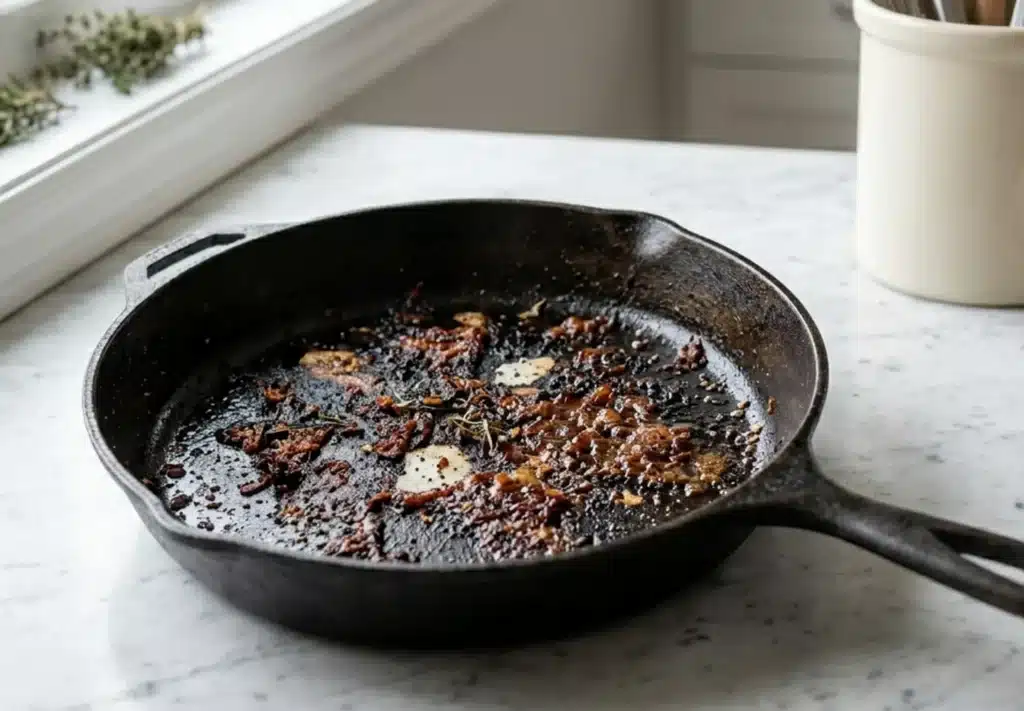
Cast iron pans retain heat well and can create excellent crusts. When properly seasoned, they develop a natural non-stick layer that improves over time.
Each option works, but the key is understanding how heat and surface interaction affect the fish.
How your pan heats differently than your stove
Your stovetop does not directly control cooking temperature. It controls how much energy is sent to the pan. The pan determines how that heat is stored and transferred to the fish.
This is why the same dial setting can produce very different results depending on the cookware you use.
Stainless steel pans, especially multi-layer or clad, heat gradually but retain heat well once preheated. Cast iron heats more slowly but holds heat extremely well, keeping a stable surface temperature. Non-stick pans heat quickly but lose heat faster, which makes them better for moderate cooking rather than aggressive searing.
The key concept is heat transfer. A heavier pan stores more energy. When fish is added, it maintains temperature instead of dropping. A thinner pan loses heat quickly, which can lead to steaming instead of searing.
In practical terms, you are not cooking with your stove. You are cooking with your pan.
How to match heat level to your pan
Because pans behave differently, dial settings should be treated as guidelines, not exact rules.
A heavy stainless steel or cast iron pan can reach proper searing temperatures around 180–220°C (355–430°F) even on medium or medium-low, if preheated long enough.
A lighter or non-stick pan often needs slightly higher settings to maintain that same surface temperature, especially after adding fish.
Instead of relying only on the dial, use visual cues:
- Oil should shimmer, not smoke heavily
- Fish should sizzle immediately when it touches the pan
- Browning should begin within 1 to 2 minutes
If these are not happening, the pan is not hot enough, regardless of the number on the dial.
Best practices by fish type
| Fish type | Examples | Fat level | Sticking risk | Best pan approach | Recommended heat level |
|---|---|---|---|---|---|
| Fatty, firm fish | Salmon, Arctic char | High | Low | Sear skin-side first, moderate oil, stable heat | 5–7 (medium to medium-high) |
| Lean, firm fish | Halibut, thick cod | Low to moderate | Medium | Use more oil, full preheat, avoid moving early | 5–7 (medium to medium-high) |
| Lean, delicate fish | Haddock, pollock, sole | Low | High | Use non-stick or well-oiled pan, gentle handling | 4–6 (medium) |
| Shellfish | Scallops, shrimp | Low | Medium | Very dry surface, quick sear, shorter cook time | 6–8 (medium-high) |
| Previously frozen fish | Most fillets | Varies | Higher | Pat very dry, allow moisture to evaporate first | 5–7 (medium to medium-high) |
Stovetops vary widely. Your ideal setting may be lower or higher depending on your equipment. Focus on how your pan behaves rather than the exact number on the dial.
Common mistakes that cause sticking
- Cooking fish that is still wet
- Using a pan that is not fully preheated
- Moving the fish too early
- Using too little oil
- Overcrowding the pan
These mistakes interfere with proper browning and increase the chance of sticking.
How seafood quality affects sticking
The way fish is handled before it reaches your pan has a direct impact on how it cooks and whether it sticks.
Fish muscle holds a large amount of water, but that water is not just sitting freely. It is held in place by proteins that act like a structure or network. When that structure changes, the fish loses its ability to retain moisture during cooking.
Freezing and storage play a major role in this. The issue is not just ice crystals damaging the flesh. More importantly, freezing and thawing can change the structure of proteins, reducing their ability to hold onto water. This leads to increased moisture loss, often called drip loss, when the fish is thawed or heated.
A simple way to think about this is a sponge. When the sponge is new, it holds water well and keeps its shape. If you twist or damage it, it cannot hold water the same way, and liquid drains out more easily. Fish behaves in a similar way when its protein structure is altered.
When excess water is released at the surface, the fish is more likely to steam instead of sear. This prevents proper browning and increases the chances of sticking.
Handling also matters with fresh fish. As fish ages, natural enzymes begin to break down protein structure. This weakens the muscle and reduces water retention, leading to similar issues during cooking.
The result is consistent. Fish with better protein integrity holds moisture more effectively, dries properly at the surface, and forms a crust that releases cleanly from the pan.
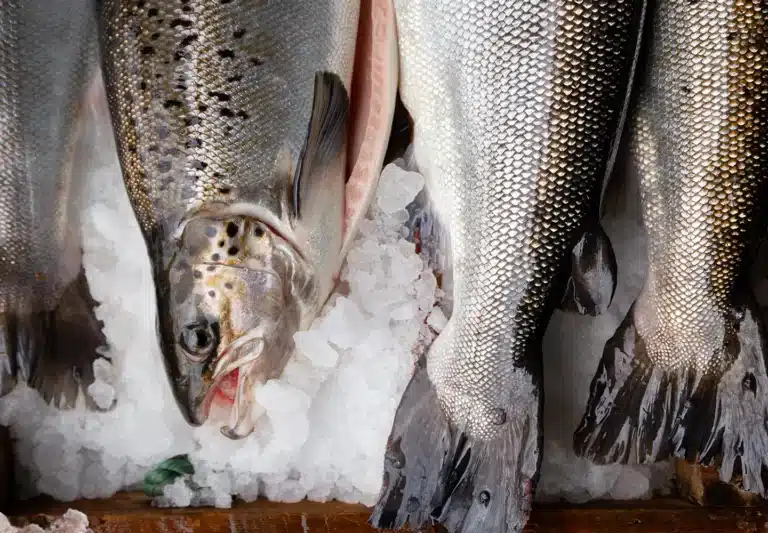
Sustainably sourced seafood from Afishionado is handled with care to preserve protein structure and minimize excess water loss, helping you achieve a better sear with less sticking.
Quick troubleshooting guide
- Fish sticks immediately: pan is too cold
- Fish tears when flipping: it is not ready yet
- No browning: heat is too low or surface is too wet
Why fish sticks to the pan: Final thoughts
Understanding why fish sticks to the pan gives you more control in the kitchen. The process is driven by science, not guesswork.
When you manage moisture, heat, and timing correctly, sticking becomes predictable and preventable.
With the right technique and high-quality seafood, you can achieve a clean release, better flavour, and consistently strong results every time you cook.