The best fish for meal prep is not the fish you cook best on a Tuesday night. It’s the fish that still tastes good on Friday after three days in the fridge and one trip through the microwave. Those are very different things.
Most fish suffers when stored and reheated. Lean white fish dries out. Delicate fillets fall apart. Flavour fades. Texture turns rubbery. This is why meal prepping with fish has a reputation for being either complicated or disappointing. But it doesn’t have to be. With the right fish, the right cooking method, and proper storage, fish meal prep is one of the most efficient ways to put high-protein, nutrient-dense meals on the table all week.
Why some fish work for meal prep and others don’t
Fat content matters more than anything else.
Fatty fish like salmon retain moisture beautifully during cooling and reheating. The natural fat acts as a buffer, holding water inside the muscle structure. Lean white fish like cod and haddock have less of this buffer, so they release moisture faster as they cool and reheat.
Muscle structure also matters. Some fish have firm, dense flesh that holds its shape through reheating. Others have delicate, flaky structure that breaks down with handling.
Then there’s the protein science. When fish is first cooked, proteins denature and tighten. As the fish cools, proteins continue to contract, expelling more moisture. When you reheat, the proteins tighten further still, pushing out whatever water remains. This is the source of dry, rubbery reheated fish.
Think of fish muscle as a sponge. When the structure is intact, it holds water perfectly. When that structure breaks down from poor handling, overcooking, or repeated freeze-thaw cycles, water leaks out. The same fish, treated differently, can be either succulent or sawdust. For deeper context on why protein structure matters, our guide on frozen fish quality covers the science.
The best fish for meal prep, ranked
Here’s what actually works.
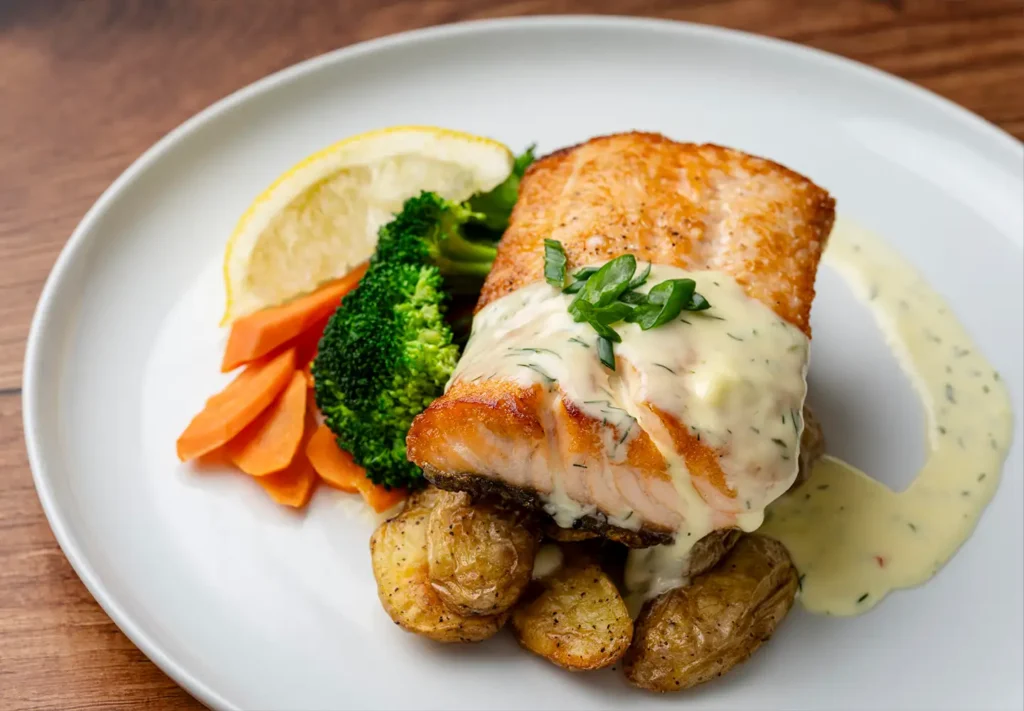
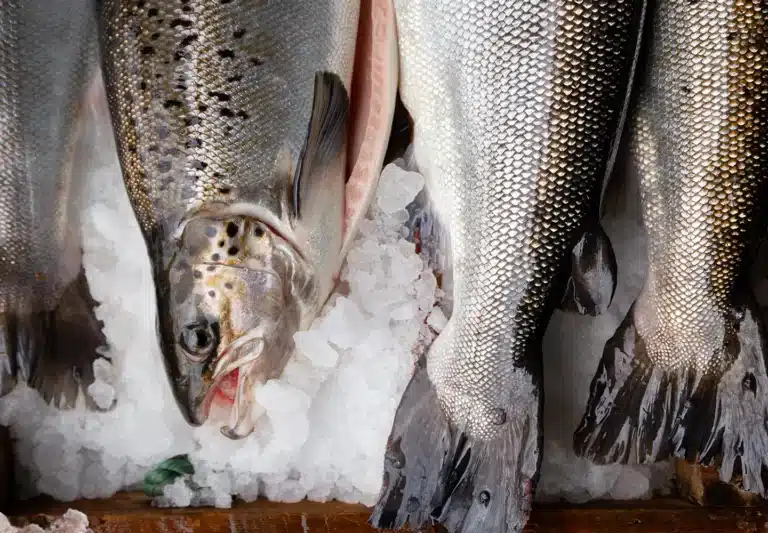
Salmon is the gold standard. High fat content keeps it moist through cooling and reheating. Firm structure means it holds together when portioned. Strong, slightly sweet flavour cuts through grain bowls, salads, and rice dishes without disappearing. Sustainable Blue salmon holds up particularly well because of how it’s raised and handled. Three days in the fridge, gently reheated, still tastes like salmon.
Shrimp is the most forgiving option. Quick to cook, easy to portion, holds texture well when reheated carefully. The key is undercooking slightly the first time so it doesn’t turn rubbery on day two. Pacific White Shrimp works for stir-fries, grain bowls, and salads. Pre-cooked coldwater shrimp is even easier because you can just thaw and use, no cooking required.
Haddock and cod are leaner and require more care, but they work for meal prep if you cook them gently and reheat properly. Best for dishes with sauces or moisture (chowders, fish tacos, baked fish over grains). Avoid for plain reheated fillets, which dry out fast. Wild-caught Atlantic haddock holds its mild flavour well.
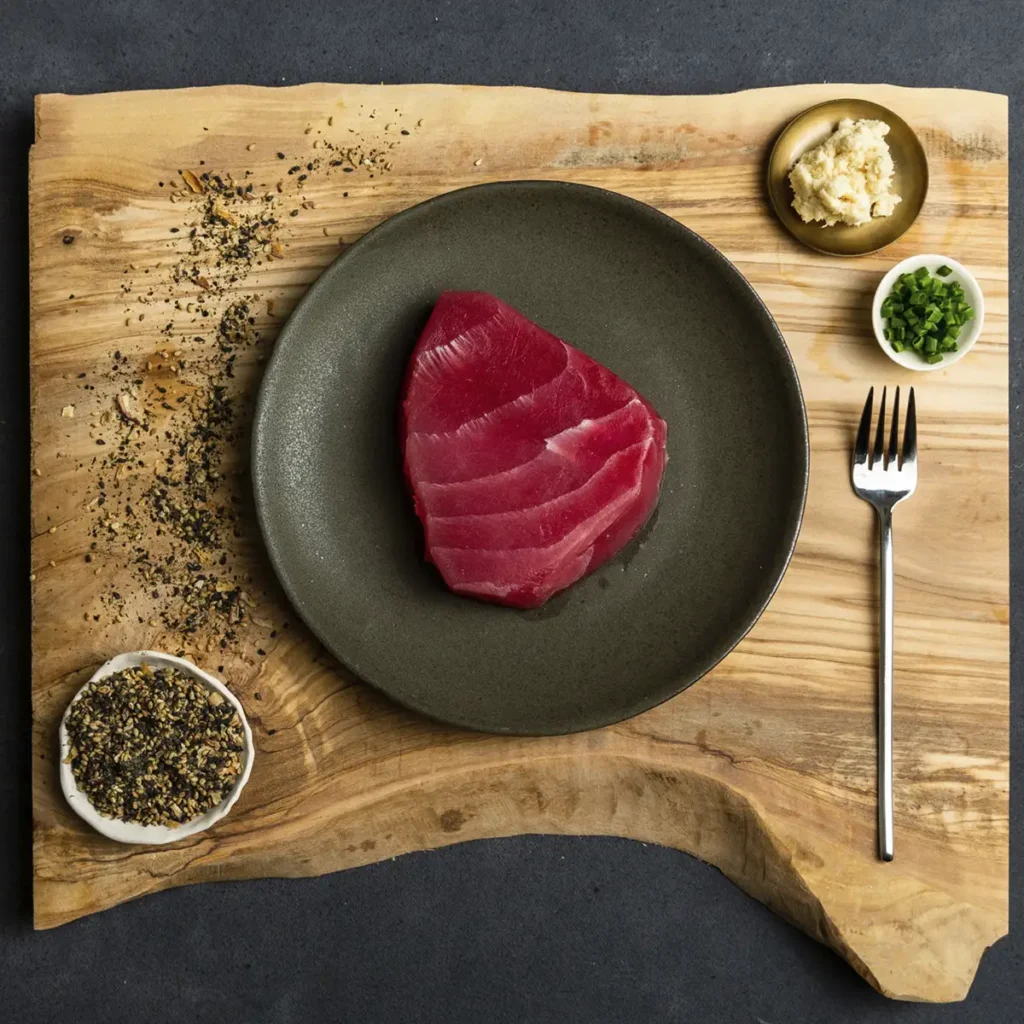
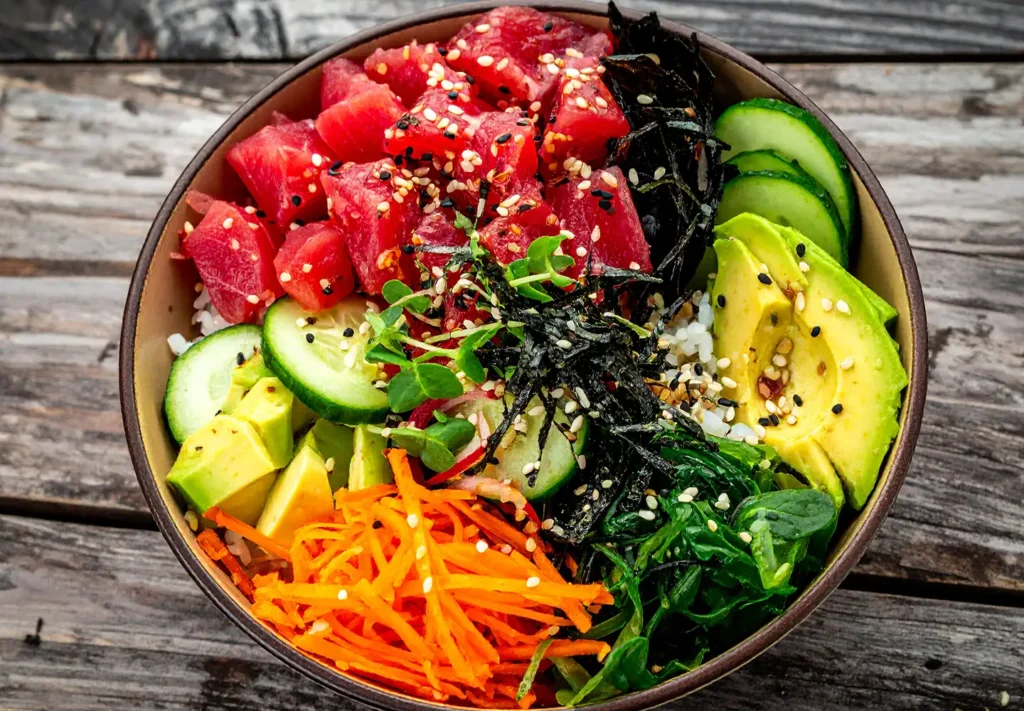
Tuna (cooked) works for meal prep if you don’t overcook it the first time. Aim for medium or medium-rare, then store. Reheats best when added to warm grain bowls or pasta rather than reheated on its own. Raw tuna preparations like poke bowls are another excellent option, though they require different handling.
Scallops and bacon-wrapped scallops are exceptional eaten immediately but lose texture quickly during storage and reheating. Not the best choice for meal prep. Cook these fresh.
Fish cakes are an underrated meal prep option. They hold together, reheat well in a skillet or oven, and add variety to your week without the risk of dried-out fillets.
If you want a curated list of frozen seafood worth keeping on hand for situations exactly like this, our guide to the best frozen seafood to always keep in your freezer covers the products that perform best for home cooks.
Why frozen seafood is great for meal prep
Here’s a counterintuitive truth: properly frozen seafood is often better for meal prep than fresh.
The reasons are practical. Frozen seafood lets you thaw exactly the portion you need for that week, instead of buying more than you can use before it expires. It has a much longer safe shelf life, so you can plan ahead. Frozen seafood frozen at peak quality often outperforms fresh fish that has spent days in transit.
IQF (individually quick frozen) seafood is the meal prep specialist. Each piece is separate, so you can pull out three fillets without thawing the rest of the bag. Quality is locked in at the moment of freezing, not after days of refrigeration. Less waste, more flexibility, better results.
For complete guidance on thawing without ruining texture, see our article on how to thaw frozen fish. For storage details, our guide on how to store frozen fish covers freezer organization.
Best cooking methods for meal prep fish
Cook it like you mean to reheat it. That changes everything.
Bake at moderate heat. A 175°C (350°F) oven gives even cooking and minimal moisture loss. Use parchment or a covered dish to trap steam.
Steam or poach. Gentle methods preserve moisture. Excellent for cod, haddock, and any fish you plan to flake into bowls or salads.
Pan-sear with restraint. A quick sear adds flavour and texture, but stop cooking just before the fish is fully done. It will continue cooking from residual heat, then finish cooking again during reheating.
Avoid high-heat methods for meal prep. Broiling and grilling are excellent for fish eaten immediately, but they push moisture out too aggressively for fish you plan to reheat. Save these methods for night-of cooking.
The key principle: slightly undercook fish that you’ll reheat later. Pull it from the heat at 52-60°C (125-140°F) internal temperature. When you reheat it properly, it will finish cooking and reach a safe final temperature without becoming dry.
Health Canada recommends cooking fish to 70°C (158°F) and reheating leftovers to 74°C (165°F) for food safety. These are the targets when fully cooked or reheated, not when initially cooking for meal prep.
How to store cooked fish safely
Speed and cold are the two things that matter.
Cool cooked fish quickly. Don’t let it sit on the counter for more than an hour after cooking. Bacteria multiply rapidly in the temperature danger zone between 4°C and 60°C.
Refrigerate at 4°C (40°F) or colder. Most home refrigerators run between 3°C and 5°C, which is acceptable. Store in airtight containers to prevent moisture loss and odour transfer to other foods.
Use within 2 to 3 days for best quality. Fish loses quality faster than other proteins. Two days is ideal. Three days is the outside limit. Beyond that, quality and safety both drop significantly.
Store sauces separately when possible. A wet fish in a wet sauce becomes mushy fast. Keeping them separate until you reheat preserves texture.
Portion into individual containers. This makes grabbing meals easier and prevents repeated opening and closing of one container, which exposes the fish to temperature swings and bacterial growth.
How to reheat fish without ruining it
Reheating is where most meal prep fish gets destroyed.
Use gentle heat. Reheat at 120-150°C (250-300°F) in the oven. Lower and slower is better than fast and hot. The microwave works on low or medium power, not full blast.
Add moisture. A splash of water, broth, butter, or sauce in the container prevents drying. This is non-negotiable for lean white fish.
Cover the fish during reheating. Trapping steam keeps moisture in the fish where it belongs.
Stop when warmed through. The goal is to bring the fish to safe eating temperature, not to cook it again. Overheating tightens proteins and drives out the moisture you’ve worked to preserve.
For fish that’s particularly delicate or prone to drying, consider not reheating at all. Salmon, tuna, and cooked shrimp can all be eaten cold on grain bowls and salads. This sidesteps the reheating problem entirely.
Quick meal prep fish ideas
Three combinations that work consistently:
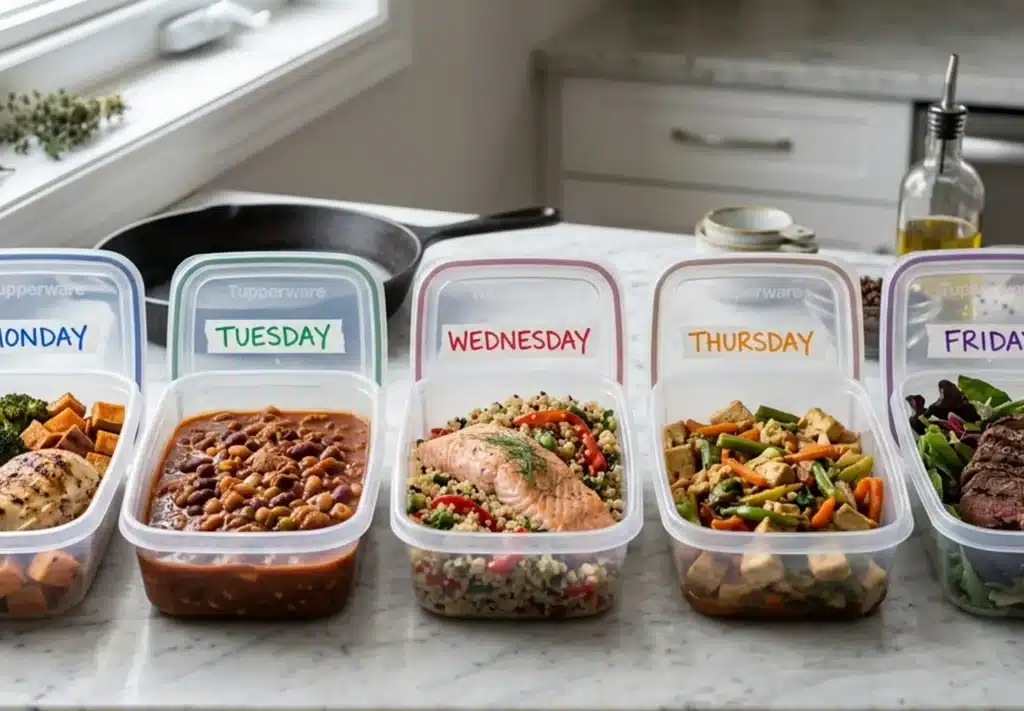
Salmon with grains and greens. Bake salmon at 175°C with olive oil and lemon. Portion over cooked rice, quinoa, or farro. Add roasted vegetables or fresh greens. Reheats well or eats cold.
Shrimp stir-fry. Cook shrimp briefly with vegetables and a soy-based sauce. Portion over rice. Reheats well in 60 seconds in the microwave.
Haddock fish tacos. Bake haddock with spices, flake it into pieces, and store. Assemble tacos fresh each day with slaw, lime, and tortillas. The fish reheats gently while the toppings stay crisp.
For more tested techniques, browse our recipe collection for meal-prep friendly fish recipes.
Quality matters as much as method
The fish you start with determines the ceiling on how good your meal prep will be.
Poor-quality fish, with damaged protein structure from rough handling or improper freezing, releases moisture faster during cooking, cools poorly, and falls apart on reheating. No technique fixes this. You’re working with damaged structure from the start.
Good-quality fish, handled properly and frozen at peak freshness, holds its structure through cooking, storage, and reheating. The same recipe with better fish produces dramatically better results.
This is why sourcing matters for meal prep more than for one-off dinners. You’re going to eat this fish four times. It needs to perform every time. Quality seafood from our shop is handled with care from harvest to freezer, which gives you the best starting point for meal prep that actually works.
Final thoughts
The best fish for meal prep is fatty fish with intact structure, cooked gently, cooled quickly, and reheated carefully. Salmon leads the list. Shrimp follows. Lean white fish works with more care. Quality matters as much as method.
With the right fish, the right approach, and proper storage, fish becomes one of the easiest proteins to meal prep with, not one of the hardest.
Start with quality seafood from our shop and you’ll understand why some meal prep fish lasts the week and some doesn’t make it past Tuesday.