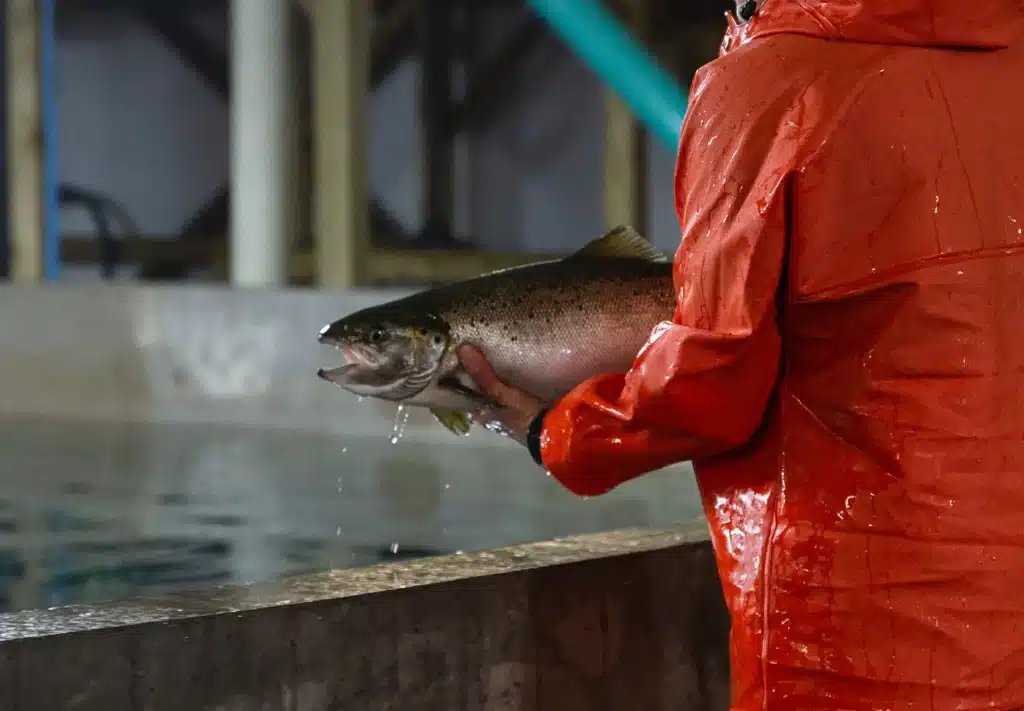
Most Atlantic salmon on the market is farmed in open-net pens floating in coastal waters. Land-based salmon farming is the alternative, and it’s the only kind we carry. The salmon you’ll find in our shop is raised entirely on land in Centre Burlington, Nova Scotia, by a company called Sustainable Blue.
We could carry five different Atlantic salmon products. Norwegian, Scottish, wild Pacific labelled as Atlantic, conventional farmed, organic farmed. The shelf at most fish markets carries all of them, and the customer picks based on price or the prettiest label. We chose to carry one, and we chose carefully.
The decision wasn’t accidental. We make sourcing calls every week, and most of them are quiet. This one is loud because the salmon section is the most-trafficked corner of any seafood market, and the question we get most often is, “Why don’t you carry wild salmon?” or “Why not Norwegian?” or “What about the cheaper option?”
The honest answer is that we looked carefully at every category of Atlantic salmon on the market, and Sustainable Blue is the only one that meets the standard we set for ourselves. This article explains why.
The problem with conventional Atlantic salmon
Most Atlantic salmon you can buy comes from open-net pen aquaculture. Fish are raised in mesh enclosures suspended in coastal waters. The system is efficient, scalable, and has been the dominant model for decades. It also creates problems.
Disease and parasites. Densely packed fish in shared water are vulnerable to sea lice, bacterial infections, and viral outbreaks. The industry response has historically been antibiotics, anti-parasite chemicals, and increasingly sophisticated treatments. The chemicals don’t stay contained.
Fish escapes. Net pens fail. Storms damage them. Predators tear holes. Farmed Atlantic salmon, often selectively bred and genetically distinct from local wild populations, end up in the ocean. They compete with wild fish for resources and can interbreed with wild stocks, diluting the genetic resilience of populations already under pressure.
Effluent discharge. Fish produce waste. In open-net pens, that waste flows directly into the surrounding water column. Concentrated under intensive farms, it can create dead zones beneath the cages where sediment accumulates and oxygen levels drop.
Wild salmon impact. This is the part where the evidence is strongest and most local. A science advisory report from Fisheries and Oceans Canada assessed the risk that escapees from east coast salmon farms pose to wild Atlantic salmon, and found the risk to the genetic character of wild populations ran from low in some areas to high in the Outer Bay of Fundy and South Newfoundland West. It also found that the risk rises with proximity to and intensity of aquaculture operations, and rises again as wild populations shrink. Internationally, a study in Science Advances tracing scale samples from more than 6,900 wild adult salmon across 105 rivers found that genes from farmed escapees change growth, seaward migration and age at maturity across the whole life cycle. The science is contested in some specifics and broadly clear in the direction: wild salmon do worse where intensive ocean farming is concentrated.
We’re not opposed to aquaculture. Done right, it converts feed to protein more efficiently than most land-based animal farming. But conventional Atlantic salmon farming, as it’s been practiced for decades, has externalities that get paid by the ocean and by wild fish populations. That’s a price we don’t want to be part of charging. Land-based salmon farming offers a way out of those trade-offs without giving up the protein.
For a deeper look at the broader aquaculture conversation, our guide on aquaculture in Canada covers the full picture.

Why wild Atlantic salmon isn’t an option
The other question we get is why we don’t sell wild Atlantic salmon. The answer is simpler than people expect.
You can’t buy wild Atlantic salmon commercially in Canada. Fisheries and Oceans Canada began closing commercial Atlantic salmon fisheries in 1984, and a full moratorium across eastern Canada took effect by 2000. What remains is recreational and Indigenous food, social and ceremonial fishery, with strict catch limits to protect the few populations still hanging on.
When you see “Atlantic salmon” on a menu or in a store, it’s farmed. Always. Wild salmon in North American markets is almost exclusively Pacific species: sockeye, coho, chinook, pink, chum. Different species, different flavour, different fat profile.
For the long version of this story, our pillar guide on wild vs farmed salmon explains what’s actually available and why.
So the real choice for Atlantic salmon is not wild vs farmed. It’s which kind of farmed. And that’s where Sustainable Blue separates from the rest.
What makes land-based salmon farming different
Sustainable Blue raises Atlantic salmon entirely on land, in a closed-loop saltwater system in Centre Burlington, Nova Scotia. No ocean contact. No fish escapes. No effluent discharge. No antibiotics. No growth hormones.
This isn’t marketing language. It’s a description of how the system actually works.
The closed-loop system recirculates all water through filtration and treatment. Nothing flows back to the ocean. Water that would be discharged from a conventional facility is cleaned, oxygenated, and returned to the tanks.
Fish waste is filtered from the water and converted to electricity through a biodigester. Solid waste that would settle on the seabed under an open-net pen becomes energy that powers the facility.
The fish themselves never touch the ocean. They hatch in freshwater tanks, migrate to saltwater grow-out tanks (mimicking the natural life cycle of wild salmon), and reach harvest weight in about two years. Because the system is closed, they’re not exposed to wild diseases or parasites. Because they’re not exposed, antibiotics and chemical treatments aren’t necessary.
Per Sustainable Blue’s own published technical breakdown, the four core operating standards are zero antibiotics, zero fish escapes, zero growth hormones, and zero wastewater. These claims are verifiable through the closed system itself, not through certification alone.
The result is Atlantic salmon raised in a system with no route to the ocean, so the three mechanisms that put farmed salmon in contact with wild ones, escapes, disease transfer and effluent, are closed off by the design rather than managed down. That’s not a typical claim in aquaculture. It’s a specific outcome of a specific engineering approach.
Why land-based salmon farming aligns with our values
Afishionado has been built around shortening the seafood supply chain and being honest about sourcing. Every product we carry is Ocean Wise recommended at minimum, and we vet producers ourselves on top of that. Sustainable Blue fits because the values are aligned, not adjacent.
We don’t carry Sustainable Blue salmon because they’re local, although they are. We carry it because the production model addresses the specific problems we have with conventional salmon farming. The result happens to be a product we can stand behind without qualification.
If we sold five Atlantic salmon products and let customers pick, we’d be signalling that the choice doesn’t matter. We think it does. Carrying one option, and explaining why, is more honest than offering a range and hoping you’ll choose well.
The trade-off is that some customers wish we carried cheaper salmon or different brands. We understand. But we’d rather lose those sales than sell something we don’t believe in. That’s not a marketing position. It’s how our business is structured.
Part of a broader movement
Afishionado is a member of Off the Table Canada, a campaign of chefs, restaurants, and food businesses working to take open-net pen farmed salmon off Canadian menus. The campaign is a collaboration between Living Oceans, the Atlantic Salmon Federation, and the UK-based charity WildFish.
It’s worth being honest about a nuance in the movement. WildFish, the UK parent organization, takes the harder line: no farmed salmon at all, including land-based. Their position is that wild fish are the only legitimate source, and that any form of intensive aquaculture has externalities worth questioning.
Off the Table Canada draws the line slightly differently. The Canadian branch’s position is that open-net pen aquaculture is the specific problem, and that land-based salmon farming using closed-loop systems is a legitimate alternative. That’s the position we share. It’s why we sell Sustainable Blue salmon and not any of the conventional alternatives.
We don’t think the UK position is wrong. We think it’s a different threshold for the same underlying values. The question isn’t whether salmon farming has impacts. Every food system does. The question is whether those impacts can be reduced to a level that’s genuinely defensible. We believe land-based, zero-discharge salmon farming clears that bar. WildFish doesn’t. Reasonable people can disagree.
What matters is that the choice isn’t between “all farming is bad” and “all farming is fine.” There’s a real distinction between open-net pen aquaculture and what Sustainable Blue is doing, and our job as a seafood seller is to make that distinction clear instead of selling both and letting customers sort it out.
What Sustainable Blue salmon actually tastes like
The technical case is one thing. The practical case is whether it’s worth eating.
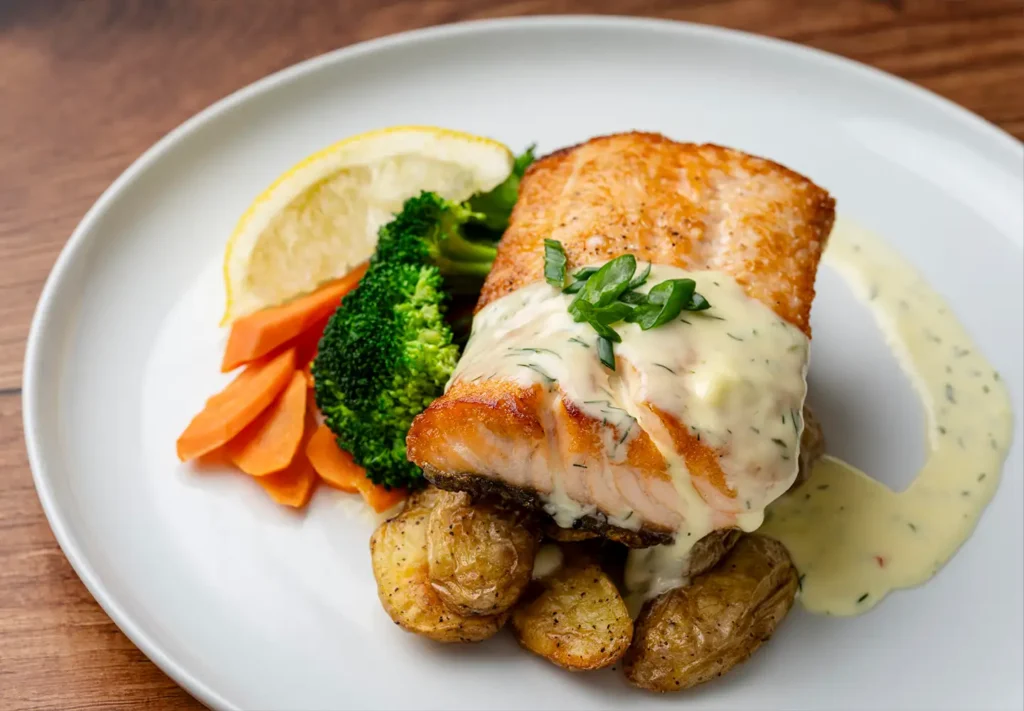
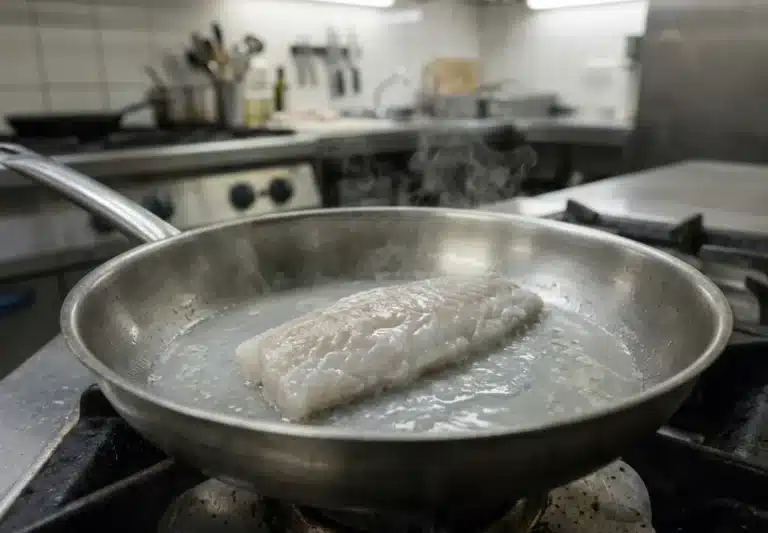
Sustainable Blue salmon has a rich, clean flavour with a firm, dense texture that holds up to any cooking method. The colour is deep orange-red. The fat layers between the muscle are well-distributed, not pooled. When you cook it, it releases noticeably less of the cloudy white albumin that salmon often pushes to the surface.

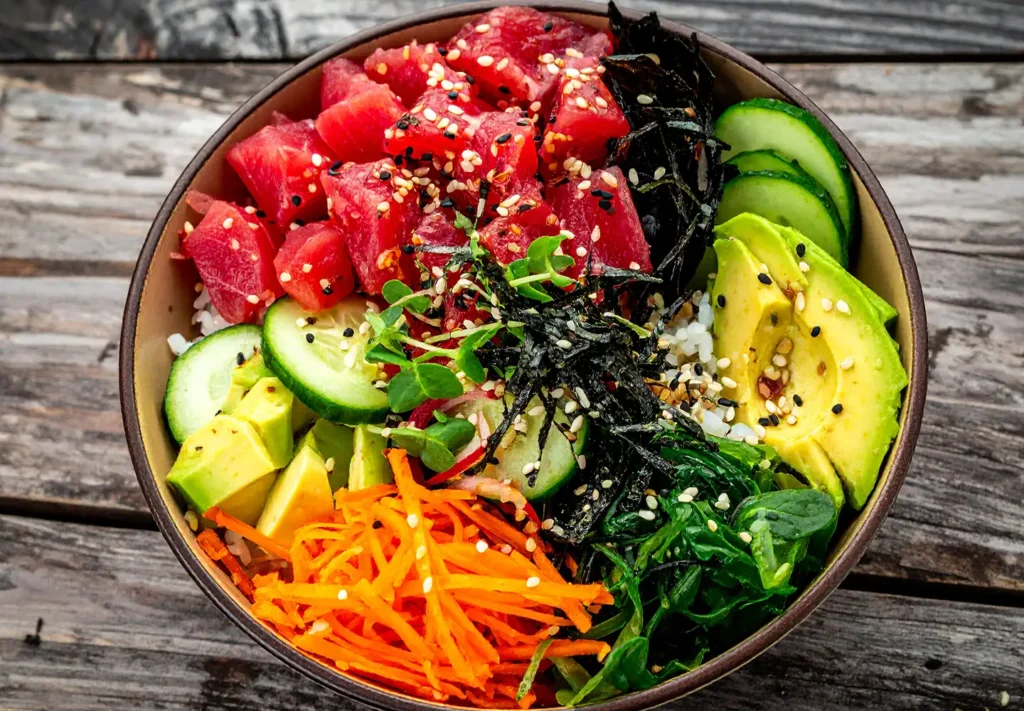
It cooks like good salmon should cook. Sears with a clean crust. Bakes evenly. Holds together in chunks for poke or crudo because the texture is firm enough to portion cleanly.
We offer two ways to buy it. The 12 portion pack gives you twelve 6oz individually-frozen portions, ideal for weeknight cooking and meal prep. The 24 portion pack gives you twenty-four portions of the same, better value for households that cook salmon regularly or want a freezer they don’t have to think about.
Both come frozen at peak quality, vacuum-sealed, and shipped directly to your door.
The case for one good option
When a company carries one of something, it’s usually because that’s all they could get. With us, it’s the opposite. We carry Sustainable Blue salmon because we looked at everything else and decided we didn’t want to.
That’s the kind of decision that’s easier to make when you’re not optimizing for volume. We’re not trying to be the biggest seafood seller in Canada. We’re trying to be the one our customers trust without thinking about it. That means making choices that some bigger competitors won’t make, including not selling certain things.
Land-based salmon farming is not the only answer to the problems with aquaculture, but it’s the answer that meets our standard right now. As the model evolves and other producers reach the same level of rigour, we’ll consider them. For now, Sustainable Blue is the one.
If you want salmon you don’t have to think twice about, browse our shop or go straight to the Sustainable Blue product line. If you want to cook it, our recipe collection has tested methods that showcase what good salmon does in the pan.
The choice we made is the only one we’ll defend. We think that’s the right way to sell salmon.